Development
Yearslong fight over users' right to tweak smart TV software heads to trial
May 20, 2026 Development Source: Ars Technica
Share this article



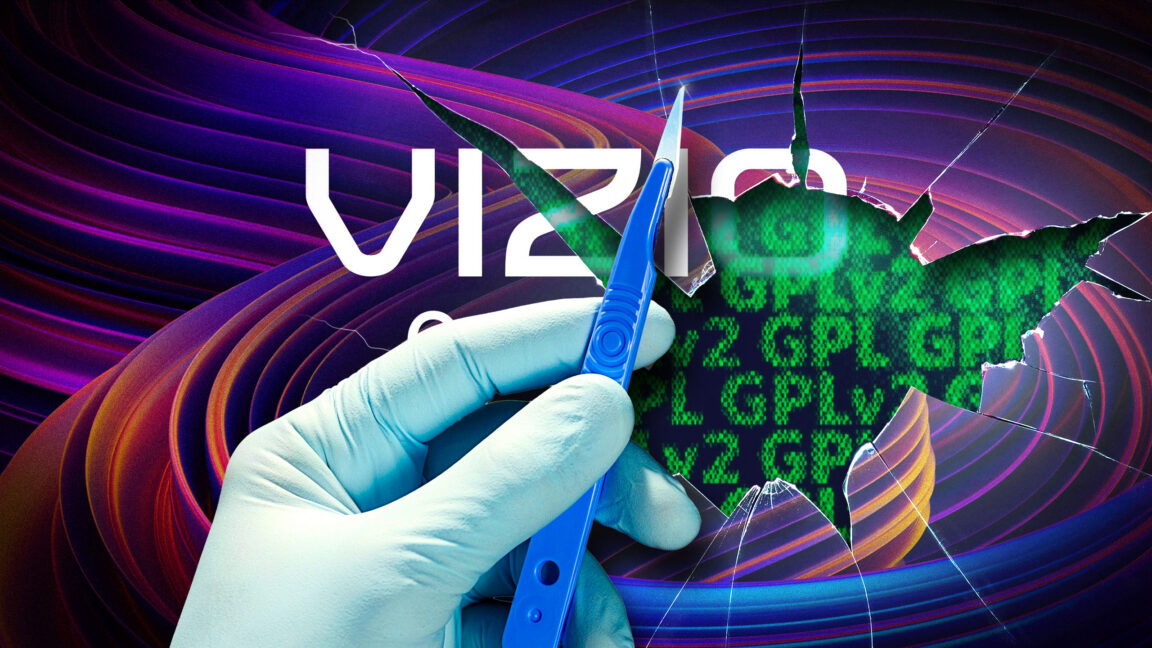
SFC’s lawsuit alleges that Vizio breached GPLv2 and LGPLv2.1 by failing to make available the complete source code for Vizio OS. The case is currently in the Orange County Superior Court of the State of California. The lawsuit targets Vizio specifically, but the impact could extend to other Linux-based smart TV OSes such as LG’s webOS, Samsung’s Tizen, and Roku’s Roku OS.
“We expect all companies who distribute Linux and other software using right-to-repair agreements like the GPL in their products would comply with these agreements,” Denver Gingerich, the director of compliance at SFC, told Ars.
SFC sued Vizio specifically because the group received numerous reports from concerned users about the company’s TVs, Gingerich said. Vizio has shared some of its operating system’s source code, but SFC claims that code does “not include all files and scripts that would permit the code to be compiled into an executable form,” according to its amended complaint from 2024 (PDF).
“As a nonprofit charity with limited resources, we sadly cannot solve every violation of the GPL agreement, but we do work hard to solve those that are important to a wide variety of users, and the popularity of Vizio TVs suggested to us that resolving this case would be especially worth the effort,” Gingerich said.
The terms of GPLv2 say that “[f]or an executable work, complete source code means all the source code for all modules it contains, plus any associated interface definition files, plus the scripts used to control compilation and installation of the executable.”
FSF’s executive director, Zoë Kooyman, was deposed in the case in May 2025. When asked about the nonprofit’s stance, she said via email that the FSF supports SFC’s efforts and believes that “users should be free to enforce their right to source code under the GNU GPL licenses through any available legal mechanism.”
Vizio OS is believed to include at least two versions of the Linux kernel that are subject to GPLv2. The first appears to be tied to the Ubuntu distribution in the OS’s user interface and streaming platform, and the second seems to be tied to “a custom version supplied by VIZIO’s chip vendor for the lower-level operating system,” according to SFC’s amended complaint from 2024 (PDF).
In the definition of software freedom, which the FSF maintains, we explain the value of the four essential freedoms (run, study, modify, share). The definition clearly explains that access to the source code is a precondition for software freedom. Programs licensed under the GNU GPL can be assumed to have chosen this license to ensure users have these four essential freedoms, as *that is what the license was specifically designed to do*. There is no reason why these core requirements for software to be free would not need to be upheld.
Vizio OS also uses numerous other programs subject to the GPLv2, including BusyBox, dnsmasq, GNU Bash, GNU Tar, and SELinux. Other parts of Vizio OS, including DirectFB, FFmpeg, GNU C Library, SeLinux, and Systemd, are subject to the Lesser General Public License version 2.1 (LGPLv2.1).
Both GPLv2 and LGPLv2.1are copyleft licenses, meaning that they grant “permission to freely use, modify, and redistribute the covered intellectual property—but only if the original license remains intact, both for the original project and for any modifications to the original project anyone might make,” as Ars alum Jim Salter explained.
Critical to SFC and Vizio’s dispute, the actual text of GPLv2 reads:
Our General Public Licenses are designed to make sure that you have the freedom to distribute copies of free software (and charge for this service if you wish), that you receive source code or can get it if you want it, that you can change the software or use pieces of it in new free programs; and that you know you can do these things.
SFC expects a ruling within three to six months of the conclusion of the trial, which is currently scheduled for August 10.
Absent a response from Vizio and Walmart, Vizio’s legal filings provide insight into the company’s defense.
In 2023, Vizio filed a motion for summary adjudication (PDF) seeking to avoid a trial (a judge denied the motion later that year (PDF). In the motion, Vizio argued that “SFC is not an intended third-party beneficiary to GPLv2 or LGPLv2.1 and, thus, doesn’t have the right to sue Vizio to enforce license terms.”
… nothing in the text of the GPLs suggests that third parties have the right to enforce alleged violations of the GPLs. Further, the FSF has made clear that it never intended third-party enforcement, stating publicly that ‘the copyright holders of the software are the ones who have the power to enforce the GPL’… and that ‘[i]f you think you see a violation of the GNU GPL [or] LGPL . . . you should send a precise report to the copyright holders of the packages that are being wrongly distributed . . . [because] we cannot act on our own where we do not hold copyright.
Vizio also argued that GPL is a software license, not a contract, so the company has no contractual obligation to provide SFC with Vizio OS’s source code, even if SFC were considered a third-party beneficiary of GPLv2 LGPLv2.
SFC’s Gingerich thinks these fears are “overblown,” and he compared them to 1980s concerns about VCRs killing the US film business. But with virtually every smart TV brand increasingly focusing on monetizing software through ads and tracking, the entire industry is likely to resist anything that could significantly curb ad revenue potential.
Another concern is that people tinkering with their TVs’ software could gain access to digital rights management (DRM) keys that Netflix and other streaming companies provide to OS operators for decrypting protected videos, Gingerich said, adding:
We have repeatedly and emphatically informed Vizio that we do not want these keys, and they are free to delete any such key material from the TV before modified versions of Linux or other open source programs are installed onto the TV. They have not responded to this reply of ours.
Despite these obstacles, the SFC is doubtful that its lawsuit will push Vizio or other smart TV OS operators to adopt a completely closed OS that would make customization and repairs impossible for users.
“Because of how valuable and flexible Linux and other open source programs are, it is generally not practical to change to a fully proprietary operating system,” Gingerich said.
A judge has already ruled that Vizio is not required to provide source code in a way that guarantees a TV will continue working properly if a user reinstalls a modified version of the OS. In a December 2025 ruling (PDF), Judge Sandy Leal wrote, “Nothing in the language of the Agreements requires Vizio to allow modified source code to be reinstalled on its devices while ensuring the devices remain operable after the source code is modified.”
… the disputed language means that Vizio must provide the source code in a manner that allows the source code to be obtained and revised by Plaintiff or others for use in other applications.
In other words, Vizio must ensure the ability of users to copy, change/modify, and distribute the source code, including using the code in other free programs consistent with the Preamble and Terms and Conditions of the Agreements.
The SFC has said it “never” believed that any version of the GPL requires devices to function properly after someone installs a modified version of copyleft software.
The ruling even prompted a reaction from Linus Torvalds, the creator and lead developer of the Linux kernel. On a forum on kernel.org, Torvalds said he supported the judge’s finding, adding that it validates the premise that “GPLv2 is about making source code available, not controlling the access to the hardware that it runs on.”
“Vizio used Linux in their TVs without originally making the source code available, and that was obviously not ok,” he added.
Further, in December, Judge Leal issued a tentative ruling on the case, suggesting that Vizio may be obligated to share the Vizio OS source code, but that’s not a final decision.
“Personally, I’m excited to see [more] people interested in improving the devices they have, whether that be to extend their support lifetime for 10-plus years… so they can keep getting security updates after the manufacturer stops updating them, add new features like ad-blocking, or diagnose and fix hardware issues that require software changes,” Gingerich told Ars.
“The Vizio lawsuit is just one piece in the puzzle,” he said.