
Development
Iran demands Big Tech pay fees for undersea Internet cables in Strait of Hormuz
May 19, 2026 Development Source: Ars Technica
Share this article



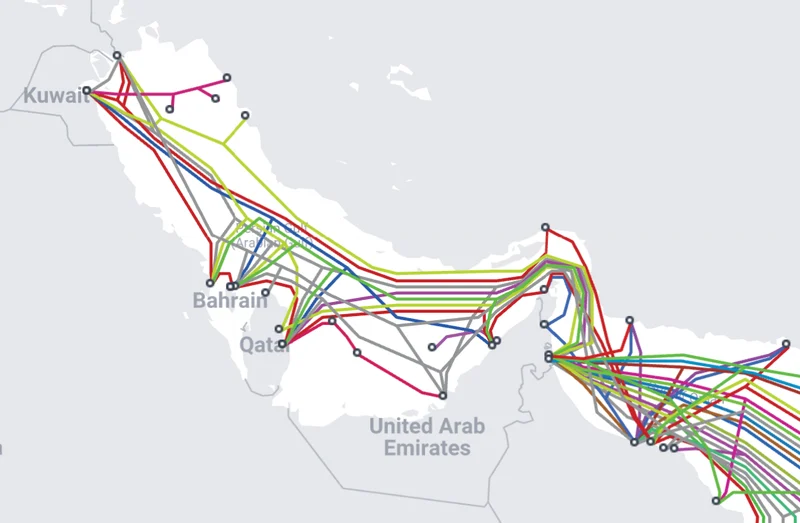
By comparison, there is “not much risk to Europe-Asia data traffic from hostilities in the Strait of Hormuz” because such Internet traffic primarily travels through cables in the Red Sea, TeleGeography wrote in a blog post. But undersea cables in the Red Sea have already seen a spate of damage in recent years, exacerbated by lengthy repair times and attacks by Houthi rebels allied with Iran.
Iran’s capability to threaten undersea cables as a way of imposing its will is uncertain at this point. Since the US and Israel started the war by attacking Iran on February 28, the US military claims to have destroyed 161 vessels of the Iranian navy, according to Admiral Brad Cooper, commander of US Central Command, in testimony given to the Senate Armed Services Committee on May 14. The US military has also sunk some of the small fast boats operated by Iran’s paramilitary Islamic Revolutionary Guard Corps when the latter threatened civilian shipping in and around the Strait of Hormuz.
The vast majority of damage to undersea cables comes from commercial ships accidentally dragging their anchors or fishing trawlers dragging weighted nets along the seafloor. So it’s not out of the realm of possibility for a more innocuous-looking Iranian ship to sneakily perform some subsea cable sabotage if it’s willing to run the gauntlet of US military surveillance and patrols in the strait.
Even a damaged commercial ship abandoned in the strait could end up dragging its anchor across some cables, as was the case with a drifting ship that damaged three cables following an attack by Houthi rebels in the Red Sea in 2024.
“Operators face a choice: pay protection fees and accept Iranian licensing over Middle East Gulf seabed activity, or accept that future faults may go unrepaired indefinitely,” said Windward, a maritime intelligence company, in a blog post. “A single transoceanic cable system costs between $300 million and $1 billion to deploy. The expected value of an Iranian protection fee, from Tehran’s perspective, is structured to sit well below that.”
The Strait of Hormuz has already been a no-go region for repair ships since the conflict began early this year—and new cable projects have also been halted. In March, the French state-owned company Alcatel Submarine Networks notified customers that it could not fulfill ongoing contracts due to one of its main cable-laying ships being stranded near Saudi Arabia, according to Bloomberg. That led to the suspension of a Meta-backed undersea cable project aimed at expanding Internet service across Africa.