
Development
Solar drone with jumbo jet wingspan broke a flight record—then it crashed
May 14, 2026 Development Source: Ars Technica
Share this article



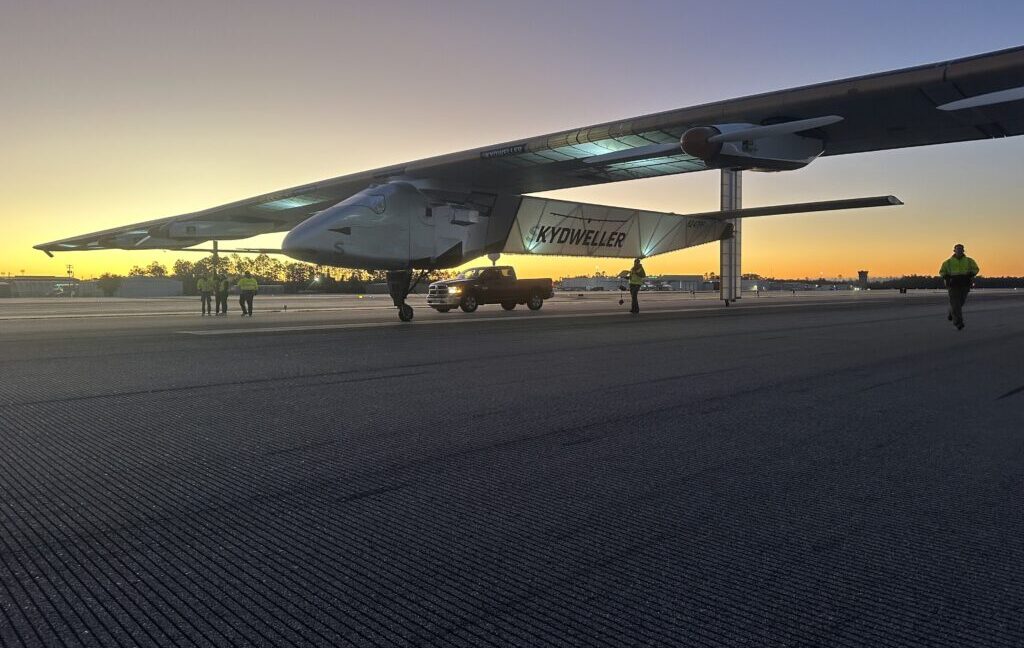
A solar-powered drone has been lost at sea after a record-breaking flight lasting eight days between late April and early May. The crash also marks the untimely demise of the pioneering aircraft Solar Impulse 2, which previously performed the world’s first solar-powered crossings of the Atlantic and Pacific oceans before becoming an uncrewed test platform for US military missions.
The carbon-fiber aircraft could perform such feats of aeronautical endurance while running solely on renewable energy and batteries because of a 236-foot (72-meter) wingspan—comparable to a Boeing 747 jumbo jet’s wings—covered with more than 17,000 solar cells. The company Skydweller Aero purchased and modified the original Solar Impulse 2 aircraft to become a test platform for “perpetual uncrewed flight” with the capability of carrying up to 800 pounds (363 kilograms) of payload.
Skydweller Aero was conducting test flights for maritime patrol mission scenarios with the US military, and the company also holds contracts with the Navy and Air Force. So the Skydweller drone was operating in that capacity when it took off on its final flight in the early morning hours of April 26.
After departing from Stennis International Airport in Mississippi, the Skydweller drone flew to join the US Navy’s annual Fleet Experimentation (FLEX) exercises near Florida’s Key West, according to a Skydweller Aero blog post. The Navy’s press release describes the FLEX 2026 event as testing AI and drone technologies for maritime patrols “in the fight against transnational organized crime.”
As part of the event, the drone used radar along with visual and thermal imaging to observe targets on the water during four days of continuous flight, according to Skydweller Aero. It also acted as a flying communications hub for Navy aircraft and warships while supporting AIS transponder-based tracking of ships in the area.
The Navy also highlighted the demonstration of a “sophisticated kill chain” which incorporated commercial drones with crewed US military helicopters and the Freedom-variant littoral combat ship USS Wichita. Together, such assets “successfully found, fixed, tracked, and targeted a captured drug boat” in a scenario leading up to “kinetic engagements destroying several captured drug boats,” according to the Navy’s press release.
It is unclear what role the Skydweller drone may have played in the exercise’s drug boat scenario. Ars has reached out to the US Navy for comment.
But the naval exercise comes as US Southern Command (SOUTHCOM) has conducted dozens of “lethal kinetic strikes” against alleged drug boats operating in the Caribbean and Pacific since September 2025. The lethal strikes have killed approximately 194 people to date, according to the nonprofit think tank InSight Crime—and legal and human rights experts have said the strikes violate both domestic and international law.
Following the formal end of the Navy exercise on April 30, the Skydweller drone spent several more days demonstrating “extended operational and airspace flexibility within the SOUTHCOM area of responsibility” by flying between Cuba and Mexico’s Yucatan Peninsula, according to Skydweller Aero’s blog post. The drone eventually positioned itself south of Cuba and north of the Cayman Islands while waiting out a period of bad weather.
By the night of May 3, the drone was encountering severe weather conditions that included “extreme vertical air mass variability exceeding 10 times typical climb and descent rates,” Skydweller Aero wrote. The company emphasized that all aircraft systems were nominal throughout the flight—but a lack of energy reserves to deal with the extreme weather eventually brought down the drone.
The Skydweller drone was last visible on the flight-tracking service Flight Radar 24 north of Cancun, Mexico, in the early morning hours of May 4. The company described the drone as eventually performing a “controlled water ditching” around 6:30 am Eastern Time, but the aircraft “subsequently sank due to its non-buoyant composite structure.”
By the time it went under, the Skydweller drone had performed a record-breaking, solar-powered flight of eight days and 14 minutes—longer than any previous flights as either a drone or crewed aircraft. The company Skydweller Aero commemorated it as an “operational prototype” that had “validated the practical military utility of a persistent, medium-altitude solar aircraft” despite the loss at sea.