
Development
The newest AI boom pitch: Host a mini data center at your home
May 13, 2026 Development Source: Ars Technica
Share this article



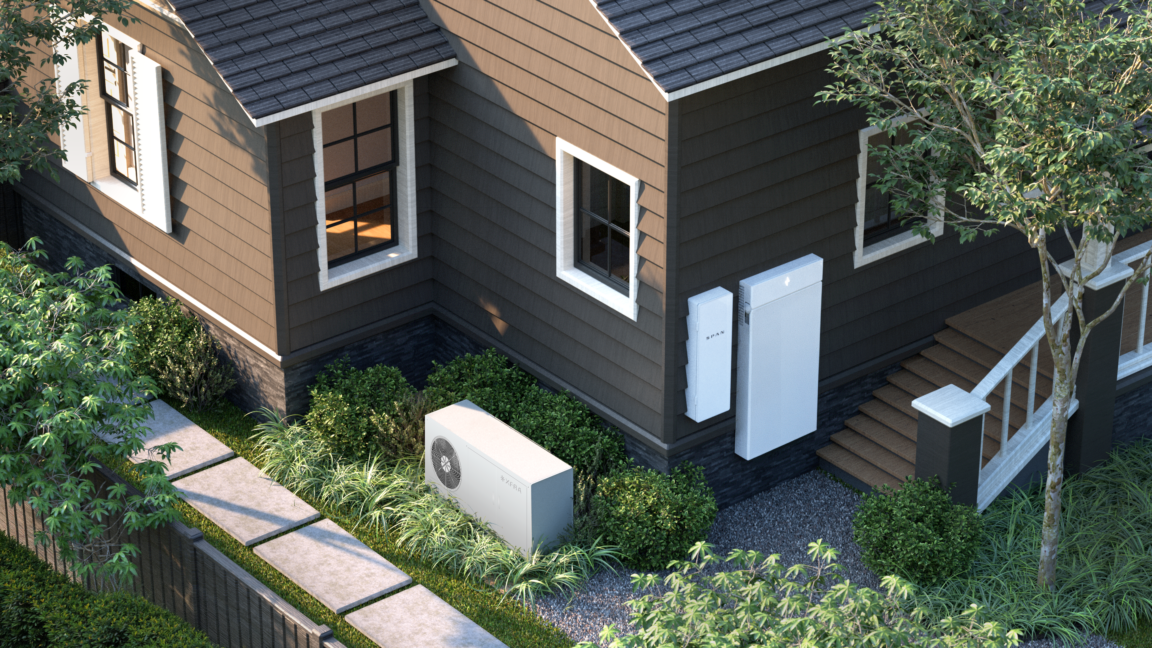
A SPAN whitepaper dangled the possibilities of retrofitting existing homes and installing larger node configurations for commercial customers. But the initial push would involve installing such nodes in newly constructed homes, with all the necessary equipment paid for and operated by SPAN.
So what does this mean for people who sign up to live in homes with attached data center nodes? SPAN would take on responsibility for paying the electricity and Internet bills for each household while offering residents either a flat utility fee—the company floated the example of a $150 fee—or possibly no fee at all, according to Realtor.com. The company is also still working out the specifics of household Internet service plans.
Residents can generally expect to use household electrical appliances without interruptions, according to the company. SPAN’s main strategy is to tap into excess power capacity in each home, with 200 amps of electrical service capacity representing the standard for most modern US homes built in the last 30 years.
“Virtually all homes with 200-amp utility services have 80 amps available at all times, so we set that as the maximum power consumption for a single XFRA node,” Lander said. He described how the XFRA nodes would “operate as always-on loads within verified residential capacity,” meaning they would run around the clock under normal circumstances.
A video animation distributed by SPAN suggests that an individual XFRA node would hold 16 Nvidia RTX Pro 6000 Blackwell Server Edition GPUs along with 4 AMD EPYC Server CPUs, backed by 3 terabytes of memory.
The node installations alongside each house would be paired with a wall-mounted SPAN smart panel and a 16 kilowatt-hour battery—overseen by SPAN’s proprietary PowerUp software—to help manage overall energy consumption. Rooftop solar panels may also be available in certain areas.
If “rare residential peaks” in electricity usage occur, the system is designed to first use the home battery backup to keep the node running as usual, according to SPAN’s white paper. In extreme cases, the system would temporarily reduce “non-critical flexible loads” like electric vehicle charging. However, homeowners would supposedly be able to use the PowerUp software to set priorities for what electrical loads can be curtailed and in what order—and Lander emphasized that such events would be “rare and brief.”
Only events such as power outages, utility demand response events or safety-triggered shutdowns would lead to node interruptions. In those cases, the system would quickly shift the affected node’s workload to other parts of the network before shutting it down. Meanwhile, homeowners would get to make use of the backup battery to keep appliances and circuits powered on during such events.
“This home backup is provided to the host at no cost to them, contributing to greater energy resilience in addition to affordability,” Lander said.
Such a distributed computing network makes sense in that “computation for AI inference can and should be distributed at the ‘edge,’ deployed on smaller platforms closer to population centers and users,” said Benjamin Lee, a computer architect and engineer at the University of Pennsylvania, in correspondence with Ars. “The strategy could impose much smaller impacts on the grid because inference requires a few GPUs, unlike training which requires thousands of them working in concert,” he said.
However, AI inference tasks can be as varied as document question-and-answer, software code generation, and multi-turn conversations—each with different computational requirements and performance expectations, Lee cautioned. So it will be important to ensure that individual compute nodes can deliver the performance necessary for each task, along with maintaining network connectivity among the nodes.
Lee also questioned whether it’s necessary to downsize data centers to the “granularity of a few GPUs” in order to reduce their burden on the power grid. He speculated that deploying conventional 20-megawatt data centers instead of 1-gigawatt hyperscale data centers could prove similarly beneficial.