
Development
Physicists think they've resolved the proton size puzzle
April 14, 2026 Development Source: Ars Technica
Share this article



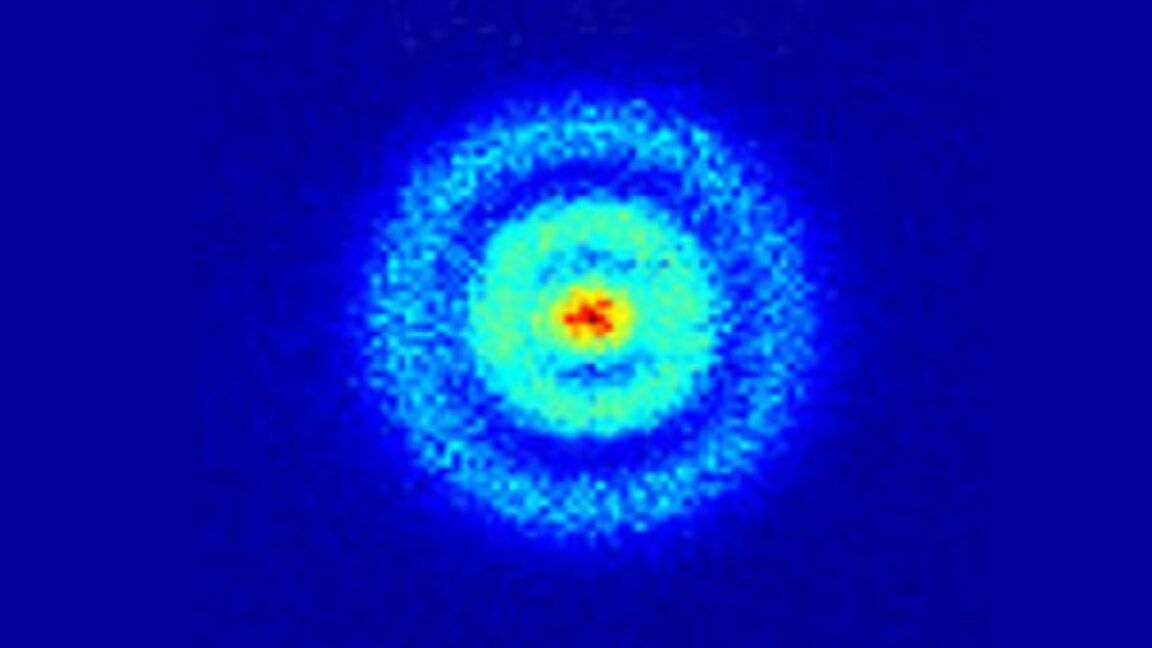
Hydrogen atoms are the simplest nuclei, with a single proton orbited by an electron, so that’s typically what physicists have used for their experiments to measure the proton’s charge radius. For a long time, the accepted value was .876 femtometers—a “world average” of many different measurements with sufficient error bars to allow for future measurements.
Muon spectroscopy measurements first caused the problem back in 2010. Physicists at the Max Planck Institute of Quantum Optics used muonic hydrogen, replacing the electron orbiting the nucleus with a muon, the electron’s heavier (and very short-lived) sibling. Since it’s nearly 200 times heavier than the electron, it has a much smaller orbital, and thus a much higher probability (10 million times) of being inside the proton. And that makes it 10 million times more sensitive as a measurement technique, because of its closer proximity to the proton.
The physicists expected to measure roughly the same radius for the proton as prior experiments, only with less uncertainty. There should be no difference (other than mass and lifetime) between the electron and the muon, theoretically. Instead, they measured a significantly smaller proton radius of 0.841 femtometers, 0.00000000000003 millimeters smaller, well outside the established error bars. It was five standard deviations from the value obtained by other methods.
If it was an experimental error—or if the underlying theory of quantum electrodynamics (QED, which describes how light interacts with matter) was somehow misapplied—it’s a significant one. Perhaps QED just needed a few careful tweaks. It could also be a hint of new physics beyond the Standard Model, but this was always considered the least likely explanation.
The PRL results obtained by Yost et al. are roughly three times more precise than the 2019 measurement, according to Yost, while Maisenbacher et al’s result was twice as precise as that, reaching the coveted 5.5 sigma threshold. Using their measured value, Maisenbacher et al. were also able to precisely test the Standard Model’s prediction down to 0.7 parts per trillion, finding no discrepancies—and hence no hints of a new force or particle lurking in the shadows.
“When the proton radius first came out, all the normal hydrogen measurements showed good agreement with each other, and muonic hydrogen was an outlier,” Dylan Yost, a physicist at Colorado State University who co-authored the PRL paper, told Ars. “This gave everyone great hope that maybe there was some new physics that was really related to the difference between muons and electrons. So this is disappointing for the discovery of new physics, but it is exciting that we are performing such stringent tests of the Standard Model. We are getting results in precise agreement with theory that are reaching parts-per-trillion levels. It is a real testament to some incredible theoretical and experimental work over many decades.”
Nature, 2026. DOI: 10.1038/s41586-026-10124-3 (About DOIs).
Physical Review Letters, 2026. DOI: 10.1103/lgl2-6cb8.