
Development
The unprecedented and deadly cruise ship hantavirus outbreak, explained
May 9, 2026 Development Source: Ars Technica
Share this article



“This is not COVID. This is not influenza. It spreads very, very differently,” Maria Van Kerkhove, WHO’s acting director for epidemic and pandemic management, emphasized in a press briefing Thursday.
Given the nature of this virus and the precautions and monitoring already in place, “the risk of widespread transmission to the general public is extremely low,” Michael Marks, an infectious disease expert and professor at the London School of Hygiene & Tropical Medicine, said in a statement Thursday.
The comments echo a reassuring risk assessment on Wednesday from the European Centre for Disease Prevention and Control, which elaborated that even if there is disease spread from passengers evacuated from the ship, the virus “does not transmit easily so it is unlikely that it would cause many cases or a widespread outbreak in the community, if infection prevention and control measures are applied.”
The US Centers for Disease Control and Prevention also deemed the risk to the American public to be “extremely low” in a brief statement on Wednesday evening.
So why are infectious disease experts and health officials so confident this is not going to mushroom into another global health crisis?
The virus spreading on the ship is a member of the large hantavirus family, which is spread out worldwide. These are enveloped, negative-strand RNA viruses whose genomes consist of three segments.
So-called Old World hantaviruses (including Hantaan, Seoul, Puumala, and Dobrava-Belgrade) are found in Africa, Asia, and Europe, with hotspots of activity in China, Korea, Russia, and certain European countries. The first awareness of these viruses dates back to the 1950s, with disease in soldiers fighting in the Korean War. These viruses cause hemorrhagic fever with renal syndrome (HFRS), a disease marked by fever, bleeding, and kidney damage. Depending on the specific hantavirus virus involved, mortality rates are roughly between 1–15 percent.
Based on that documented incidence, it is clear that person-to-person transmission requires close, prolonged contact. To date, though, it remains unclear whether breathing significant amounts of aerosolized virus from an infected person or exposure to an infected person’s respiratory droplets is behind the rare transmission.
Whether from rodent exposure or the ultra-rare person-to-person transmission, the incubation period for hantaviruses—the amount of time between exposure and when symptoms develop—ranges from about 7 to 42 days.
The currently recommended quarantine and/or active monitoring period for potentially exposed cases is 42 days.
Infections with ANDV cause Hantavirus Pulmonary Syndrome (HPS), like other New World hantaviruses. This disease starts with a prodromal phase—early, nonspecific symptoms that precede full-blown disease.
In the prodromal phase, infected people have vague flu-like symptoms, often including fever, fatigue, headache, body aches, abdominal cramps, and gastrointestinal disturbances. This lasts about three to six days before the respiratory system becomes compromised in full-blown disease.
Based on information from documented person-to-person spread of ANDV, this prodromal phase is often when person-to-person transmission happens. In a 2018–2019 outbreak with 34 cases, the sole exposure for half the cases (17 people) was close contact with an infected person who was knowingly ill and experiencing their first day of fever.
The estimated overall mortality rate of HPS can vary but is often reported as being between 30–40 percent. Those who develop the most severe respiratory symptoms face rates as high as 70 percent.
There are currently no vaccines or targeted therapies against hantaviruses and their diseases. For those who fall ill, supportive care is critical.
In Chile and other places where hantaviruses are more common, a standard recommendation for patients with respiratory symptoms is to swiftly transfer them to a high-level care facility, preferably one with extracorporeal membrane oxygenation (ECMO). This is a type of life support that performs the work of the heart and lungs, pumping blood outside the body through a machine that oxygenates it using a microporous membrane that allows for gas exchange. ECMO improves survival rates of people with HPS.
Collectively, the handful of ANDV outbreaks with documented person-to-person transmission suggests this type of transmission is rare and requires close, prolonged contact with people who are knowingly or visibly ill. It’s also clear that steps like isolation measures for ill people, quarantine for high-risk contacts, and active monitoring are highly effective at limiting and ending the outbreaks.
The first evidence of person-to-person transmission came from an outbreak that occurred from 1996 to 1997, starting in the southwestern Argentine town of El Bosón. Genetic and epidemiological data made clear that there was person-to-person spread among 16 people.
“[I]t is remarkable that all 16 cases… were obviously epidemiologically linked; each patient was in close contact (household, health caring, marital contact, and/or traveling together within a car) with one or more members of this group,” the authors concluded.
Before you get concerned about the car exposure, know that it was a 20-hour-long trip with a symptomatic infected person—the housekeeper of the index case. The female exposed in the car had other exposures, as well: she stayed with her infected parents, the sister and brother-in-law of the index case.
The first ANDV person-to-person spread confirmed by whole-genome sequencing was reported in 2014 and found similar close contact between the cases. That outbreak was just three cases, including 71-year-old twin brothers who shared a bedroom. Both died from the infection. The third person was a nurse for one of the brothers, who survived.
The 2018–2019 outbreak with 34 cases in the southern Chubut province of Argentina was fueled primarily by three superspreader events. First, the index case spent 90 minutes at a birthday party while sick with a fever and fatigue. Of the approximately 100 guests at the party, the index case transmitted the viruses to five people sitting close to them.
One of those five people, a man, was the most likely source of six subsequent infections. Those six cases included the man’s spouse, while the rest were social contacts who were likely infected during crowded social encounters the man had during his prodromal phase. The man subsequently died, and his spouse attended his wake with a fever. Ten more people who attended the wake fell ill. Of the 34 cases overall, 11 people died.
Notably, investigators who meticulously examined the outbreak identified 82 healthcare workers at one hospital who were exposed to symptomatic cases. None of them fell ill. The 82 workers included 45 who worked in the intensive care unit or the emergency department. Only a small number of those 45 used personal protective equipment, such as N95 masks, goggles, or disposable lab coats, the investigators noted.
Overall, the investigators concluded that “high viral titers in combination with attendance at massive social gatherings or extensive contact among persons were associated with a higher likelihood of transmission.”
While the possibility that people incubating ANDV are flying on planes may sound alarming, this would not be the first time it has happened. In 2018, CDC and state officials reported the first confirmed ANDV case in the US—a woman who had returned from a trip to Argentina and Chile and brought the virus home with her. She developed her first symptoms four days after returning, but then, three days later, she took two commercial flights while sick. She was hospitalized in Delaware three days later, where doctors identified the infection, which she survived.
CDC investigators identified 53 people across six states who had contact with her, including 28 healthcare workers, 15 airline contacts, and 10 other contacts. Investigators were able to contact and monitor 51 contacts, conducting testing on six with symptoms. All were negative, no other cases were identified over the 42-day incubation period, and the investigation was closed.
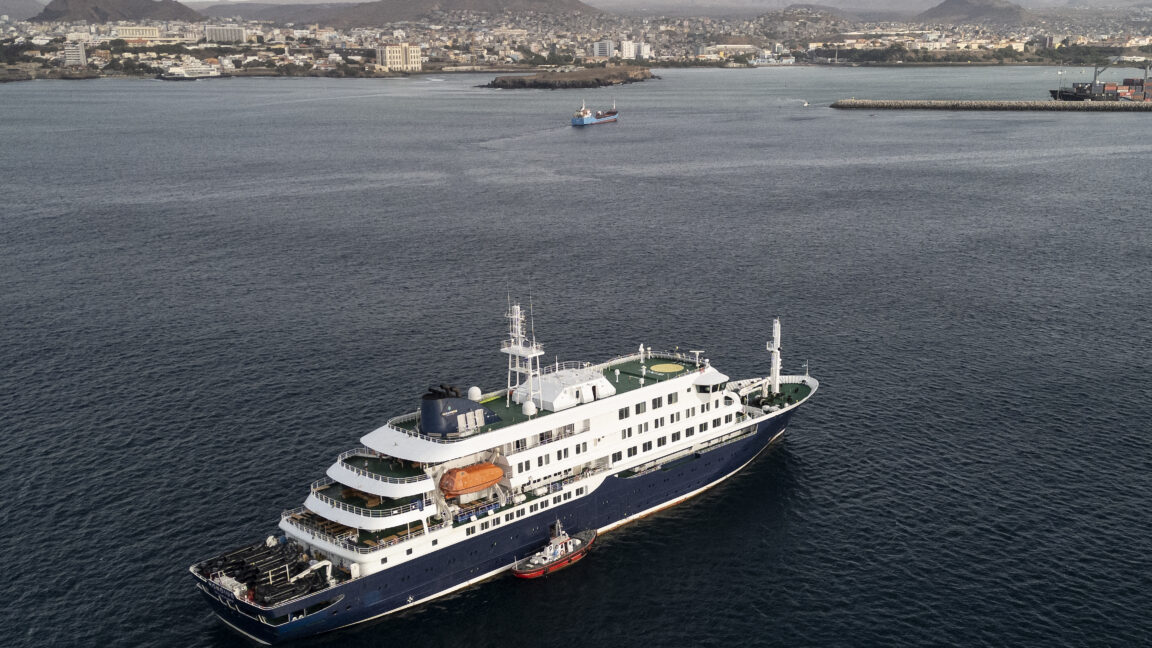
Health officials are still working to understand what has happened on Hondius, amid speculation that human-to-human transmission has occurred.
The boat left the southern tip of Argentina on April 1, with plans to stop at Antarctica and several islands in the South Atlantic.
The first case was in a man who developed symptoms on April 6. The man was traveling with his wife. Before boarding the ship, the Dutch couple had traveled through Argentina, Chile, and Uruguay on a bird-watching trip, WHO Director-General Tedros Adhanom Ghebreyesus said Thursday. The areas they visited included sites where the rat species known to carry ANDV is present.
The man died aboard the ship on April 11, and at the time, hantavirus was not suspected because his respiratory symptoms resembled those of other diseases. His wife then disembarked at St. Helena on April 24, along with her husband’s remains. She had symptoms. She deteriorated on a flight from the island to Johannesburg, South Africa. There, she collapsed at an airport and died on April 26. Test results from the wife confirmed a hantavirus infection on May 4.
Back on the ship, a third passenger developed symptoms, presenting to the ship’s doctor on April 24. He was evacuated on April 27 from the island of Ascension and traveled to South Africa, where he is now in intensive care. On Thursday, Dr. Tedros reported that the man has shown improvements.
On April 28, a fourth passenger on the ship, a woman, developed symptoms and died aboard on May 2, marking the third death in the outbreak.
Also on May 2, testing from the man in intensive care in South Africa provides the first results showing hantavirus.
For now, WHO officials are working on a plan to get the remaining 147 people off the boat safely. As of May 8, the ship’s operator reports that no one on board has symptoms. However, with the possibility of person-to-person spread, an incubation period up to 42 days, and the last onboard illness onset of April 28, it will take more time before the coast is clear. Health officials will also need to identify and trace the contacts of the people who disembarked the ship amid the outbreak.
In the press briefing on Thursday, WHO officials acknowledged that 42 days is a lengthy quarantine. At this time, the United Nations’ health agency is not recommending that people stay confined for that whole period; rather, the recommendation is to do active monitoring for symptoms, such as daily temperature checks, given that person-to-person spread has only been seen from symptomatic people. Whether people are quarantined in addition to that is up to health authorities in the places with affected people.
Researchers around the globe are also anxious to get the genomic data of the ANDV virus. Questions have swirled over whether the virus on the ship carries mutations or other changes that might explain the never-before-seen outbreak.
But WHO officials on Thursday were careful to note that the main differentiator of the outbreak so far is simply that it was on a ship. No other major features of the outbreak appear out of line with previously documented ANDV outbreaks involving person-to-person spread.
In the 2018–2019 outbreak, researchers noted that virus genetics didn’t seem to make a difference between an infected person who transmitted the virus to 10 people and an infected person who didn’t transmit the virus at all. The viruses looked about the same. The difference, they concluded, seemed related to individual people and their behavior.
“The absence of evidence for ANDV adaptation within or between hosts or for differences in viral diversity between spreaders and nonspreaders indicates that permissive ecology and social factors have a more substantial influence than genetic changes in sustaining person-to person transmission in human hosts,” they concluded.