
Development
Court rules Trump's 10% tariff is just as illegal as the tariff it replaced
May 9, 2026 Development Source: Ars Technica
Share this article



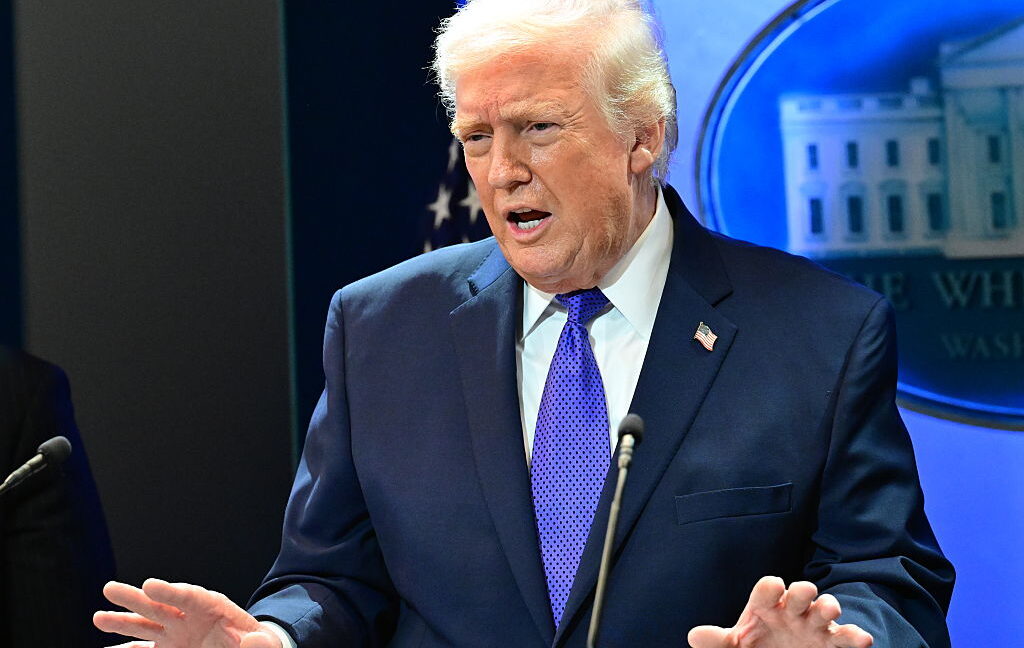
“So, we always do it a different way,” Trump said. “We get one ruling, and we do it a different way.”
In a 2-1 ruling, Chief Judge Mark A. Barnett and Judge Claire R. Kelly decided that tariffs that Trump imposed under Section 122 of the Trade Act of 1974 were illegal.
Trump had tried to argue that the law allowed him “to impose temporary surcharges up to 15 percent” in order to combat “fundamental international payments problems” and “to deal with large and serious United States balance-of-payments deficits.” If the court allowed the temporary tariffs, he had planned to impose even steeper tariffs under the authority, but the unfavorable court ruling obviously hobbled that strategy.
Fatal for Trump, his argument relied on the caveat that he was authorized to decide what was considered a “balance-of-payments” deficit. Trump’s advisors had agreed that was a “malleable phrase.”
Disputing that, the importers suing successfully argued that Trump had unlawfully redefined the term. They alleged he’d twisted its meaning in a way that ignored the circumstances when the law was initially drafted—which was back when the US dollar was pegged to gold. The importers emphasized that “the President lacked authority to invoke Section 122 because large and serious balance-of-payments deficits cannot occur in a floating exchange rate monetary system,” which the US adopted after abandoning the gold standard. To sum it up, Trump had no authority because the US no longer uses the gold standard, they argued.
The court agreed that Congress couldn’t have intended to grant Trump such expansive authority as he argued was acceptable under the law. “If the President has the ability to select among the sub-accounts to identify a balance-of-payments deficit, unless every sub-account is balanced, the President would always be able to identify a balance-of-payments deficit,” the majority ruled.
In a footnote, the majority said that Trump had also argued that the phrase “fundamental international payments problems” should not constrain him “at all.” The court did not have to rule on that matter, but judges clarified that “the court cannot accept Defendants’ interpretation that disclaims the existence of any meaningful intelligible principle in either ‘fundamental international payments problems’ or ‘balance-of- payment deficits.’” In its summary, the court ruled that words have meanings.
Ultimately, the court put forward its own interpretation of the statute, which rejects both sides’ readings of Section 122, the dissenting opinion from Judge Timothy C. Stanceu said.
That judge did not fight for Trump to keep his tariffs, necessarily. Instead, he disagreed with the court’s interpretation, as well as the timing of the ruling, arguing that parties should have been given time to respond to the court’s interpretation before the court issued an opinion.
“We are not experts in international macroeconomics matters and should hesitate to question whether it was reasonable for the President to rely on” calculations that the majority deemed in line with legislative history, “rather than a calculation of his own that may have been acceptable,” Stanceu wrote.
Claiming there were no factual disputes to weigh, the majority agreed that plaintiffs showed that harms from unlawful tariffs were imminent and ongoing, requiring relief in the form of a permanent injunction that must be granted once the court reached a decision on how to interpret the statute.
Trump’s efforts to block the injunction by arguing that it would intrude on his conduct of foreign affairs were “unpersuasive,” judges ruled, finding instead that “enjoining unlawful conduct is in the public interest.”
Trump has made it clear that he is not happy about court-ordered refunds, which some businesses should start receiving next week, Reuters reported. Last month, he cheered news that Apple and Amazon had yet to request refunds, which CNBC reported was due to fears of “offending” Trump. Deeming that response a sign that those companies understood the way Trump operates, he said, “I’ll remember” any companies that “honor” him by letting the US keep the unlawfully collected IEEPA tariffs.
Ars could not reach Apple or Amazon to clarify their positions on IEEPA tariff refunds.
Most likely, Trump is relieved that the international trade court did not require a similar universal injunction or widespread refunds on Section 122 tariffs. Notably, the president had griped that the Supreme Court failed in its opinion to include a line that said, “you don’t have to pay back tariffs that have already been received,” CNBC reported, suggesting that one part of his tariff strategy was to seize as many duties as he could and hope the courts would not order refunds.
No matter what happens with Section 122 refunds, Trump will probably prioritize concluding “two trade investigations under a legal provision known as Section 301” now that future Section 122 tariffs are unavailable, the NYT reported.
Currently, the United States trade representative is holding stakeholder hearings on those investigations, with the last hearing scheduled Friday and new tariffs expected to be announced as soon as this July.
Advocating for narrow tariffs are groups representing tech stakeholders, including the trade group the Consumer Technology Association and the think tank the Information Technology and Innovation Foundation (which Apple “supports”), Politico reported. They’ve urged USTR to narrowly focus on China—rather than all of the US trading partners—when imposing Section 301 tariffs. Otherwise, Trump’s goal of forcing more manufacturing into the US will face impediments, as tech companies will once again be rocked with high costs and supply chain uncertainties, they warned.
“Broad, economy-wide tariffs raise costs for US manufacturers, retailers and consumers while delivering limited enforcement benefits,” CTA’s vice president of international trade, Ed Brzytwa, reportedly testified. “Restricting access or increasing the cost of inputs that aren’t manufactured in sufficient quantities in the United States—or aren’t made here at all—can increase costs, reduce competitiveness and discourage investment in US manufacturing.”