
Development
Former NASA chief takes helm of national security space firm
May 7, 2026 Development Source: Ars Technica
Share this article



Before he became NASA administrator in 2018, Jim Bridenstine was a naval aviator who then served as a US representative from Oklahoma for three terms, sitting on the Committee on Armed Services. Now, five years after leaving NASA, Bridenstine is returning to those military roots.
This week, Bridenstine was named chief executive of a Maryland-based company, called Quantum Space, that builds “advanced maneuverable spacecraft.”
“For us, national security space is a priority,” said Bridenstine in an interview.
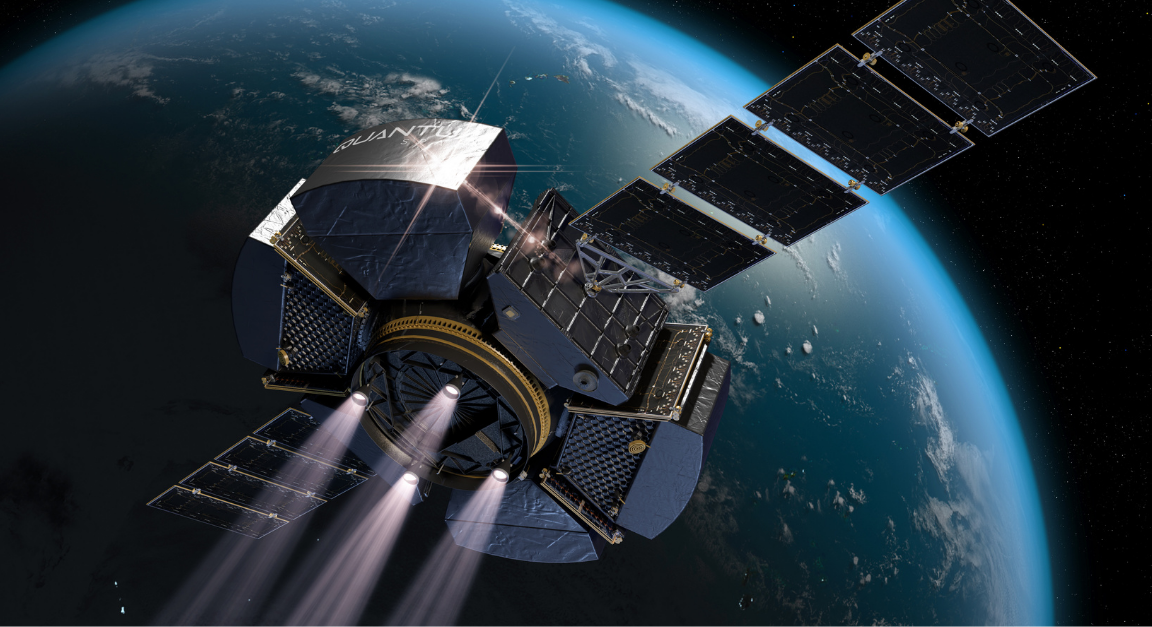
The company is developing a spacecraft, Ranger, that is about the size of a Volkswagen Beetle before its solar panels are deployed. Ranger is intended to provide the military an unparalleled maneuvering capability in space, from low-Earth orbit to geostationary orbit to cislunar space. Ranger will carry 4,000 kg of hydrazine propellant on board to enable rapid maneuvering.
“This is high energy,” Bridenstine said. “The fuel gets burned quickly. The spacecraft can also be refueled, and it can refuel others.”
Bridenstine said the US Space Force is interested in bringing on new capabilities for in-space maneuvering. He believes Ranger can meet this demand with its large fuel tanks, capacity to be refueled, and a proprietary “multi-mode” technology that allows the spacecraft to operate in both high-thrust maneuvering mode and high-efficiency operations. To that end, Quantum Space acquired Phase Four last September.
He noted that, in President Trump’s budget request for fiscal-year 2027, funding for the Space Force would increase by approximately 80 percent, to $71 billion.
So, what might the military use Ranger for?
Quantum Space has already won a contract to support the LASSO program for the Defense Advanced Research Projects Agency, which aims to develop spacecraft capable of flying in very low orbit all around the Moon (potentially as low as 10 km above the surface) to characterize the concentration of water on the lunar surface. The company is also involved in the Air Force Research Lab’s Oracle-P program to build space situational awareness spacecraft in cislunar space. Finally, Quantum Space is one of 14 competitors in the $6.2 billion Andromeda program to develop surveillance and reconnaissance satellites.
Bridenstine joins a company with about 75 employees, founded by billionaire businessman Kam Ghaffarian, who previously founded two other space companies, Intuitive Machines and Axiom Space. Quantum Space is currently privately capitalized, having raised $80 million in Series A funding, and Bridenstine said he will be considering various opportunities to raise further capital.
The company plans to launch its first Ranger spacecraft in July 2027 to demonstrate a number of the vehicle’s propulsion capabilities. Quantum is developing some elements of the spacecraft, but sourcing others from industry, including some of its propulsion capabilities.
While he was at NASA, Bridenstine created the Artemis program, which represents the space agency’s efforts to return humans to the Moon in a more permanent way than Apollo. During his tenure leading NASA, Bridenstine championed commercial space as a means of reducing NASA’s costs while increasing its capabilities. He now hopes to be part of a generation of commercial space companies also doing this for the US military.
Bridenstine said he applauded efforts by NASA’s current administrator, Jared Isaacman, to increase the cadence of Artemis launches to accelerate America’s return to the Moon.
“I think it’s important, and I think he’s making the right decisions for the right reasons,” Bridenstine said of Isaacman’s initiative. “I also think it’s overdue. He talks about making sure we’re exercising our muscle memory, and that’s what we need to do. I’m super excited about the success of Artemis II. We need to benefit from the success of Artemis II.”