
Development
Grand Theft Auto VI: The Ars Technica review
November 18, 2026 Development Source: Ars Technica
Share this article



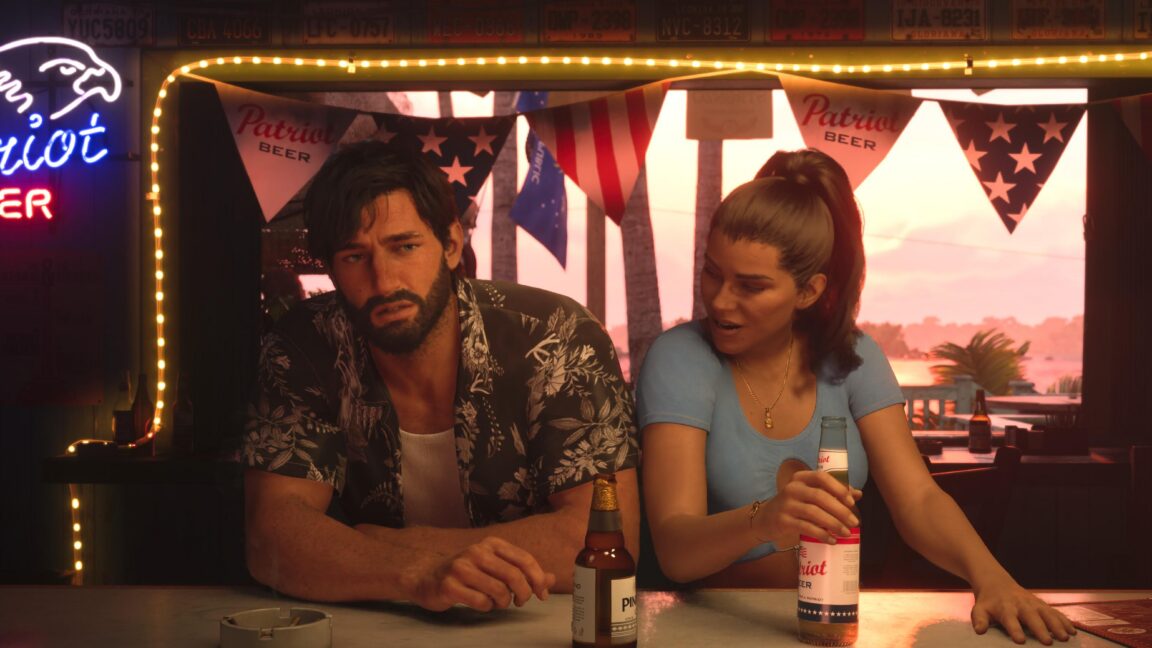
A large part of why this works so well is Jason and Lucia, the dual protagonists whose relationship drives the story. While that relationship starts off a bit awkwardly—thanks chiefly to Lucia’s brief prison stint—it quickly develops into a true criminal and life partnership. Both sides of the relationship are driven by a mutual desire to move up in the criminal world and eventually settle down to a legit family life, if they can just earn enough from the next big score.
Grand Theft Auto VI has a gift for finding excuses to lure you into an expertly designed space and then throwing together a reason for why you have to shoot/punch your way out. That might sound snarky, but I actually mean it more or less sincerely; I was frequently surprised by the scenarios the writers dreamed up to turn what seemed like a routine trip to some beautiful locale into a firefight with way more armed goons than seems strictly necessary.
The moment-to-moment shooting will feel very familiar to Grand Theft Auto fans, by which I mean it’s dead simple to hide behind convenient cover and pop up to pick off relatively stupid enemies one by one with a dizzying array of available weaponry. The rare enemies that do manage to flank you seem to have incredibly bad aim, even at close range, and both Jason and Lucia can take a whole lot more punishment than the average quick-to-crumble grunt.
While most of these side activities offer money or improve character stats, some are simply there to be experienced. Completionists will have a bear of a time tracking down every single hidden collectible, rare car, robbable location, and beautiful landmark the developers have placed throughout the city. Grand Theft Auto VI seems set to be one of those games you can just load up to hang out in long after the main story missions are done.
Even with a fast vehicle, much of that “hang out” time can be spent simply crossing the game’s massive map. Getting from the depths of the wilderness in the north to the tip of the keys in the south is a six-plus-mile trip (measured at an apparently real-world-accurate scale) that can take 10 minutes to weave your way across on a good traffic day. During these cross-city treks, the tenor of the city’s architecture morphs noticeably as you pass from rich gated communities through the glitzy skyscraper-laden downtown and on to downtrodden neighborhoods, backwoods swamps, and laid-back island beach communities.
As nice as Vice City’s outdoor architecture is, GTA VI’s interiors are where the game’s developers really show off. Practically every story mission seems to introduce a new cavernous indoor space that’s fully furnished and lovingly crafted to look naturally lived-in and also utterly unlike anything you’ve seen before. And while you can’t go into every one of the thousands of buildings you pass on the streets of Vice City, you can enter a surprisingly large number, each with its own distinct layout and decorations.
Grand Theft Auto VI’s spaces also seem specifically designed to show off the game’s incredible lighting system, which really shines on a PS5 Pro. The effect is most apparent at night, when car headlights streaming through a window or the rotating blue-and-red of a cop car can cast the entire world in an otherworldly glow.
But even in “normal” lighting conditions, I’d occasionally find myself slack-jawed at the details: a laptop screen partially reflected in a character’s glasses, the way rotating pyrotechnic laser effects played across dancers in a crowded club, the fluttering shadows cast by a leafy tree near sunset, or the finger smudges visible on your cell phone in bright sunshine.