
Development
In elephants, the resilience of communities has its limits
November 14, 2026 Development Source: Ars Technica
Share this article



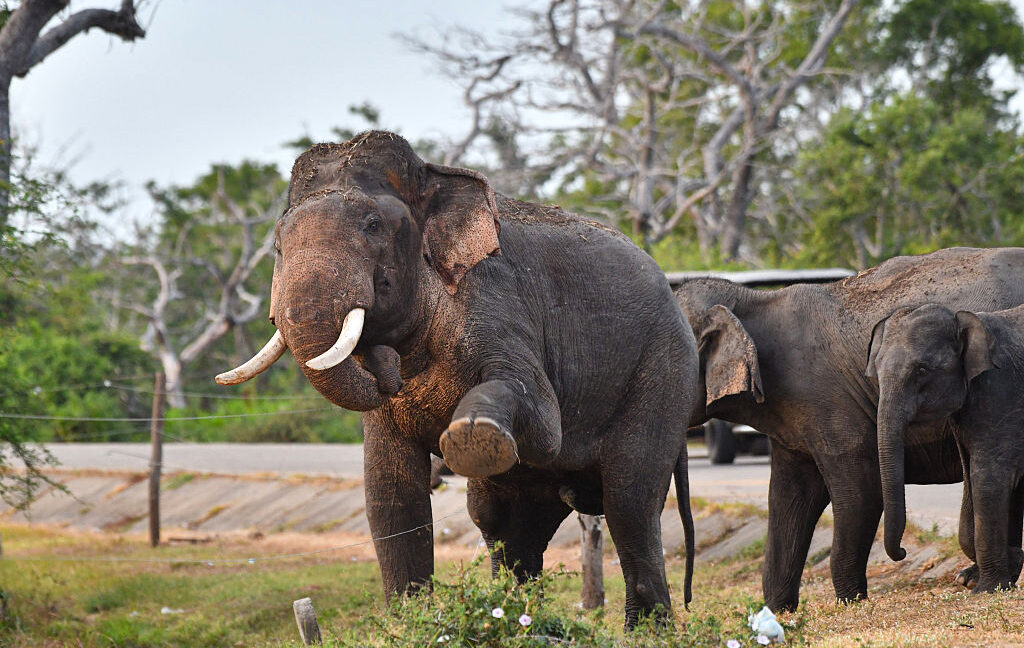
Her team watched this transformation from a vehicle, driving random routes along the park’s roads about three days a week. The team identified elephants mostly by their floppy ears, which collect holes, tears, and cuts with age. “Their ears are very individually distinct, so it’s like a fingerprint,” de Silva said. Between 2007 and 2018, the team identified 443 adult and subadult females that roamed the park.
The team focused on females because males lead more solitary lives, ranging widely in search of mates. Females live in a so-called fission-fusion society. “It’s kind of similar to humans,” Madsen said. “You might have your work friends, you might have your family, and you’re not always with those same individuals at the same time, but they’re all part of your social network.” Unlike African savanna elephants, where families follow older matriarchs, Asian elephants move more independently. This may be because Asia’s rainy environment ensures that food and water are rarely far apart and usually easier to find, so following an experienced individual brings less benefit.
Madsen reconstructed the elephants’ social network for each year, measuring the strength of each relationship by how often two animals were seen together. “You can think of it as a probability that you will see those two individuals together,” she explains. An algorithm commonly used for analyzing human social networks then picked out communities—clusters of elephants with many strong ties to one another.
For the first few years of the study, these communities seemed to hold very well. But then cracks started to appear.
A shrinking population naturally makes for a smaller network, so the team checked whether this was just a numbers game. They looked at a population of 59 elephants seen every year of the study, which the team referred to as residents. “If it was just an artifact of the data, those core individuals should have fairly consistent relationships. But that’s not what we saw,” Madsen said. “They were changing their relationships with each other, even though they were still there.” Among these residents, the fracturing came one to three years after the decline began.
Madsen suspects some of the lost elephants were the glue holding groups together. “If you go to a city hall meeting, it’s maybe the same group of people that constantly comes in. You’re not friends with every single other person in that group, though,” she said. “There could have been some key individuals that were lost that were holding these subgroups together.”
The first ties to go were the weakest, the casual acquaintances. These weak relationships, Madsen says, could represent animals that merely tolerate each other: “Tolerance is really important in a society, especially in large animals. If they get into conflict, it could be serious.” These weak ties, researchers argue, may still be important because they can carry information between communities.
De Silva links this fracturing to the disappearing grass. “As the competition becomes more severe, your social sphere sort of shrinks,” she said. “It’s as if they’re emphasizing the quality over the quantity of the relationships.”
Before the breakup, some network statistics fluctuated from year to year, which complex systems scientists call flickering. “If you have a light bulb that’s right on the edge of dying, it might start flickering,” Madsen said. “It’s on, it’s off, it’s on, it’s off. And then suddenly it dies.” Spotted early, she argues, such signals could serve as an early warning sign. “Hopefully, park managers and conservationists can detect that and intervene before the population collapses,” Madsen said.
The challenge is that this detection requires long-term data, and we don’t have that for many populations. What worries the researchers most is that, without early detection, we may only recognize problems after it’s too late. “If you are taking the boards out of a ship and you’re not replacing them, the ship starts to take on water,” Madsen said. “There was a point of no return where there was structural damage, but you might not have noticed it until later.”
The study’s data end in 2018, but de Silva says things haven’t improved. Her team predicted a decline in the park’s elephant population in 2019, and it now appears to be happening faster than expected. “They don’t appear to be breeding very well. A lot of the calves are not surviving,” she said. Many adult females die in their 30s and 40s, and they should be living roughly twice as long.
Part of the reason they die so young is conflict with humans. Female Asian elephants have no tusks, so ivory poaching isn’t the main threat. Instead, elephants get shot when they raid crops or startle people. Occasionally, de Silva says, they also eat explosives hidden in pumpkins some locals place to get rid of wild boars. But the bigger problem, she says, is that elephants can’t survive in the protected areas alone.
More than half of Asian elephant populations live in poor-quality habitats, and the species has lost nearly two-thirds of its likely historic range. “Management really has to be about entire landscapes,” de Silva said. “Roads and infrastructure, irrigation canals—those are the things that are hurting the elephants. It’s not really a wildlife management problem.” Her team now works with farmers outside the park, testing crops elephants are less likely to damage. “Their long-term persistence really depends on people and elephants being able to share the space safely,” she said.
Science, 2026. DOI: 10.1126/science.aef6714