
Development
You know the launch market is tough when satellite companies start building rockets
November 6, 2026 Development Source: Ars Technica
Share this article



Let’s start with a little history. SpaceX became the first purely commercial launch startup to announce plans to build a new medium-lift rocket about two decades ago, in 2005. The company holds the record for the fastest time to orbit with the Falcon 9 vehicle, with a development time of 4.7 years.
But SpaceX had some significant advantages. By then, the company had been operating for more than three years, had extensive experience with the Merlin engine, and was less than a year away from its first launch of the smaller Falcon 1 rocket. In retrospect, it’s also clear that the company had an insanely talented team of engineers. Finally, the Falcon 9 was quite a bit smaller than the recently announced vehicles, Blacklift and Big Iron. In its initial form, Falcon 9 had a lift capacity of about 10 tons.
Yes, engines are typically the hardest part of a rocket’s development. And procuring Miranda engines will shave some time off Blacklift’s development. But it will probably be a year or two, not five. Procuring the Miranda engine—which likely remains at least two years from being tested in flight on the Eclipse rocket—does not eliminate the enormous engineering, manufacturing, testing, and regulatory effort required to develop a medium-lift rocket.
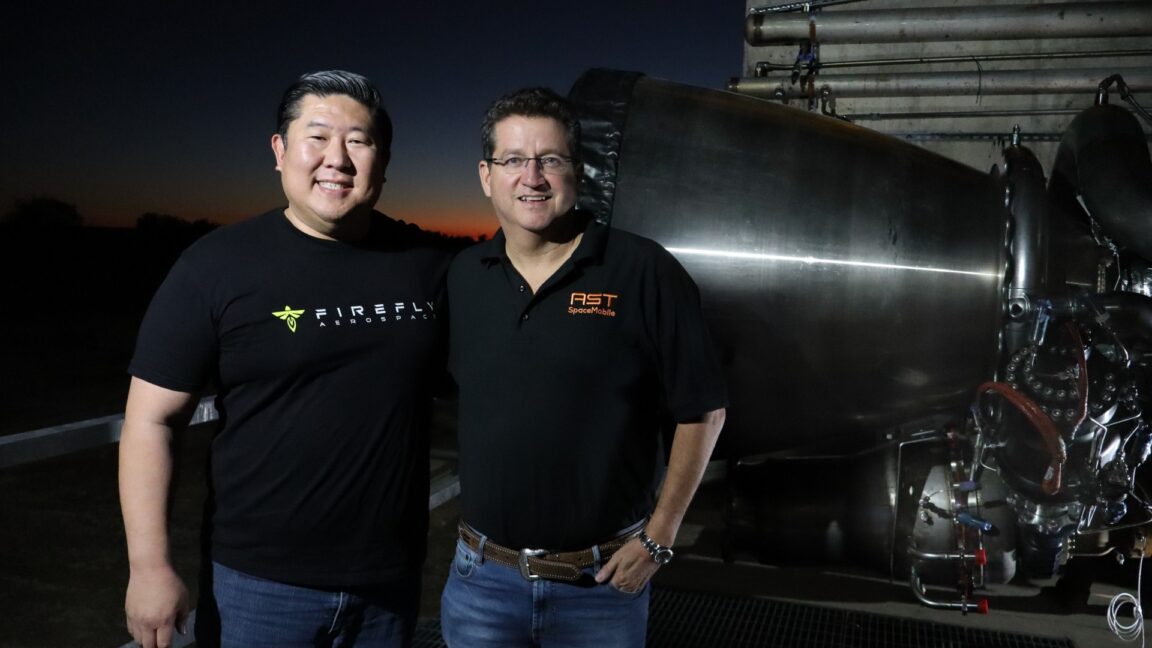
AST SpaceMobile is also paying a pretty penny for this privilege. It has committed $1.3 billion to Firefly for the engine license ($800 million), 27 Miranda engines and nine Vira engines ($250 million), and engineering support ($250 million). If we look just at the engine costs for a single Blacklift rocket, that’s $83 million per vehicle for the first three.
The bottom line is that AST SpaceMobile has made a launch timeline claim that is profoundly disconnected from the historical record of every comparable rocket development program this century. Maybe they’re a bunch of geniuses who will vibe-code the vehicle with Claude or Grok and shock us all.
More likely, though, is that this is a company that desperately needs to launch about 90 more of its massive BlueBird direct-to-cell satellites. Yes, the company has some existing commercial launch contracts with SpaceX, Blue Origin, and other companies. And in its news release, it said, “AST SpaceMobile will continue to use external providers, with agreements now covering in total over 100 BlueBird satellites to be deployed cumulatively between 2027 and 2028.”
But that raises an obvious question: If AST already has agreements covering the deployment of more than 100 BlueBird satellites by the end of 2028, what precisely is Blacklift supposed to accomplish? Do you spend several billion dollars to develop a rocket you don’t actually need?