
Development
2026 iPad mini review: Maximizing the mini
November 5, 2026 Development Source: Ars Technica
Share this article



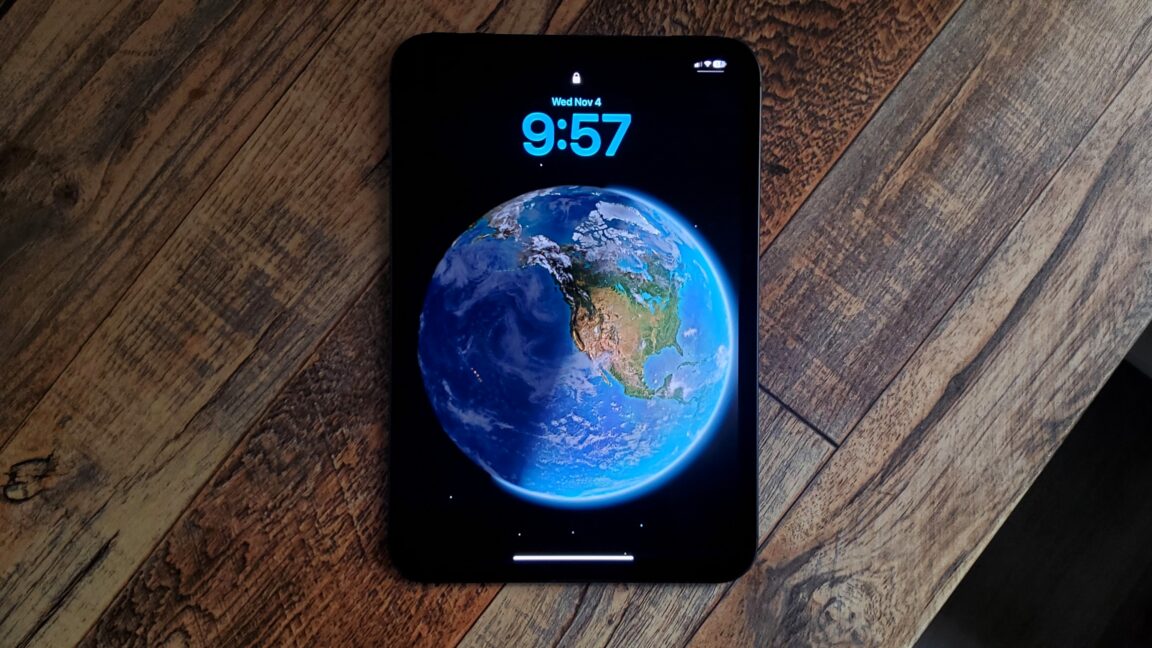
And you’ll certainly want to watch content on the 2316 × 1512 OLED display, which packs 326 pixels per inch. OLED displays often lack the brightness of their LCD-LED counterparts, but the gap has narrowed in recent years. The new mini is brighter than its IPS-based predecessor, with Apple claiming full-screen brightness of up to 600 nits, compared to 500 nits on the previous model. It’s also much better suited to HDR content, with peak HDR brightness reaching 1,200 nits for highlights and a contrast ratio of 2,000,000:1.
Since content consumption is arguably the mini’s strongest use case, it makes sense for Apple to focus on changes that enhance the viewing experience. Watching shows and movies feels as luxurious as possible on a screen this size, and the mini maximizes its display in nearly all the ways that matter.
I say “nearly” because the mini still has a 60 Hz refresh rate; 120Hz is limited to the iPad Pro. A 120 Hz refresh rate makes little difference when watching most shows or movies, but it can make some tasks, such as scrolling through long documents, look smoother. Still, the difference is less noticeable on a smaller screen.
Overall, the refresh rate didn’t feel like a drawback during regular use. Apple has gone a step further, noting that OLEDs typically have faster response times than IPS displays. That’s generally true when discussing gray-to-gray (GtG) response times. However, moving picture response time (MPRT) can be a better indicator of potential persistence-related motion blur, including during scrolling, because it measures how long an image remains visible on the display, contributing to blur as your eyes track moving content. GtG, by contrast, measures how quickly individual pixels transition between shades. Slower pixel transitions can create motion artifacts such as ghosting.
Siri AI is still in beta, so we won’t cover that in this review. But the tablet supports features under the Apple Intelligence umbrella, including various generative AI capabilities. Tasks like removing objects from photos, changing a photo’s perspective, or extending a photo’s borders should take roughly the same amount of time on the 512GB iPad mini as they do on the iPhone 18 Pro. In my experience, that’s usually about 20 seconds.
The mini is surprisingly loud. Its speakers are powerful enough to make TV dialogue easy to hear, even with my noisy heater running in the background.
The tablet has two woofers designed to deliver higher volume and stronger bass than the prior mini. A pair of custom-designed tweeters between the tablet’s glass and aluminum enclosure are intended to improve the clarity of higher frequencies.
You won’t get the deepest bass or the crispest high notes, but the speakers surpassed my expectations when playing music. I didn’t immediately feel the need to connect the iPad to dedicated speakers.
And the mini pulls this off without any visible speaker holes in its chassis.
These improvements come with a pricing predicament, though. Today, the iPad mini starts at $699 for the 128GB version, putting it just $50 below the 11-inch iPad Air (M4) at its lowest configuration. The 512GB mini I tested, which came with a more powerful A20 Pro chip, is $999. In 2024, the iPad mini started at $499, and the iPad Air 11-inch (M2) started at $599.
The mini’s OLED screen is a standout, but the Air remains a better choice for those seeking a balance between power and portability. Its more capable processor and still-excellent, larger IPS display make it more versatile. It also offers comparable battery life, though it lacks fast charging. Meanwhile, the Pro series remains the best option for demanding workloads and extensive multitasking. The Mini is much more capable of handling serious work, multitasking, and editing than it was before, but it still isn’t the best iPad for these purposes.
Despite narrowing the gap with other tablets, the mini is still a niche product. The biggest reason to pick it over other iPads is if you truly want the smallest device, primarily for content consumption. My preference for devices that are easy to handle without straining my smaller hands or weighing me down, combined with my appreciation of high-end displays, love of streaming, and interest in using secondary screens to boost productivity, confirms that this niche has an audience. Many of Apple’s improvements make the mini more enjoyable for these users.
Beyond comparisons with the rest of the iPad lineup, though, the mini makes the most of its small design. Apple fit just about everything it could into a device that’s somehow even smaller than its predecessor.
For anyone looking for an ultraportable tablet primarily for enjoying content on an excellent, high-end display, the mini is a markedly better device than it used to be.