
Development
Why large dogs age faster than small ones, and other October research highlights
November 3, 2026 Development Source: Ars Technica
Share this article



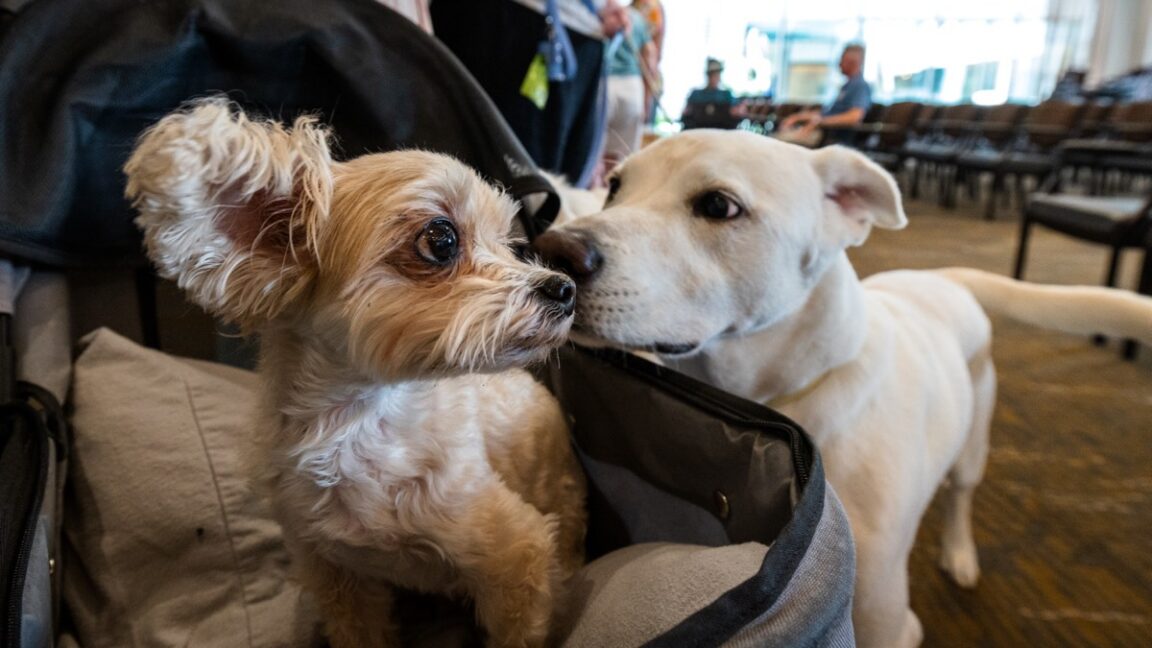
“This is one of the clearest molecular signatures we’ve seen that aligns with the well-known size-lifespan trade-off in dogs,” said co-author Blaise Mariner. “It suggests that faster aging in larger dogs may be driven, at least in part, by reduced control over these jumping genes.”
Science, 2026. DOI: 10.1126/science.aeb2986 (About DOIs).
Physical Review Letters, 2026. DOI: 10.1103/gbkc-6nlj.
Matter & Light, 2026. 10.1016/j.matlit.2026.100119.
Credit: Pre-Construct Archaeology Ltd./CC BY-ND Credit: Pre-Construct Archaeology Ltd./CC BY-ND
It was long believed that Simonetta had succumbed to tuberculosis, but it was argued that she may have suffered from a pituitary tumor (adenoma) that gradually increased in size due to prolactin and growth hormone secretions, citing her appearance in several portraits as evidence. This could have caused a sudden tumor-related fatal apoplexy. They examined letters between Simonetta’s father-in-law, Piero Vespucci, and Lorenzo de Medici, which described how Simonetta had collapsed during a ball a few days before her death. Her symptoms included headache, hallucinations, vomiting, and a high fever, all symptoms of a rapidly expanding pituitary tumor, per the authors.
Pozzilli et al. are back again with a paper published in the journal Medical Humanities providing further evidence for their hypothesis about Vespucci’s cause of death. They argued that the tumor could also explain the irregular eye positioning in the Birth of Venus, suggesting the model had a squint or eye misalignment. After more closely studying how Botticelli depicted the model’s eyes in Birth of Venus and several other portraits, the authors noted pronounced swelling around the left eye, likely due to fluid buildup, while some of the tissue covering the white part of the eye is loose. This and the telltale squint support the theory that Simonetta had a tumor in her pituitary gland.
Medical Humanities, 2026. DOI: 10.1136/medhum-2026-014199.
Credit: Public domain Credit: Public domain
Other astronomers have previously suggested that The Starry Night is not just a symbolic representation, but shows the actual night sky at the time it was created, specifically in June 1889. This new analysis—which takes into account simulations, historical weather patterns, star positions, and van Gogh’s letters from that year—shifts that date to just before dawn on July 22, 1889. Co-author Elijah Jeong-hyun Kim told Gizmodo that his interest was piqued when he came across previous research identifying the constellation Aries. Kim thought the lights in the painting more closely resembled the Hyades star cluster in the constellation Taurus, suggesting the July date. While van Gogh said that his work exaggerated the point of view he painted, the authors note that such exaggeration “presupposes a real object to amplify.”
Kim et al. are in good company in forensic astronomy. As we reported in 2020, the so-called “celestial sleuth,” Donald Olson, applied similar tools to determine that Vermeer’s View of Delft most likely shows the city on September 3 or 4, 1659 (or earlier), at 8 am. Over the years, Olson has found evidence that the blood-red sunset that inspired Edvard Munch’s The Scream was likely an aftereffect of the 1883 eruption of Mount Krakatoa in Indonesia; that the Moon may have contributed to the sinking of the Titanic; helped identify the precise location of Julius Caesar’s landing site in Britain in 55 BC; and showed that Mary Shelley was probably telling the truth about a moonlit “waking dream” that inspired Frankenstein. And in 2015, Olson determined the precise time of day that Life magazine photographer Alfred Eisenstaedt took his most famous photograph (V-J- Day in Times Square) on August 14, 1945.
Scientific Reports, 2026. DOI: 10.1038/s41598-026-73025-5.