
Development
Once again, NASA is asking for ideas to rescue Hubble from certain death
October 31, 2026 Development Source: Ars Technica
Share this article



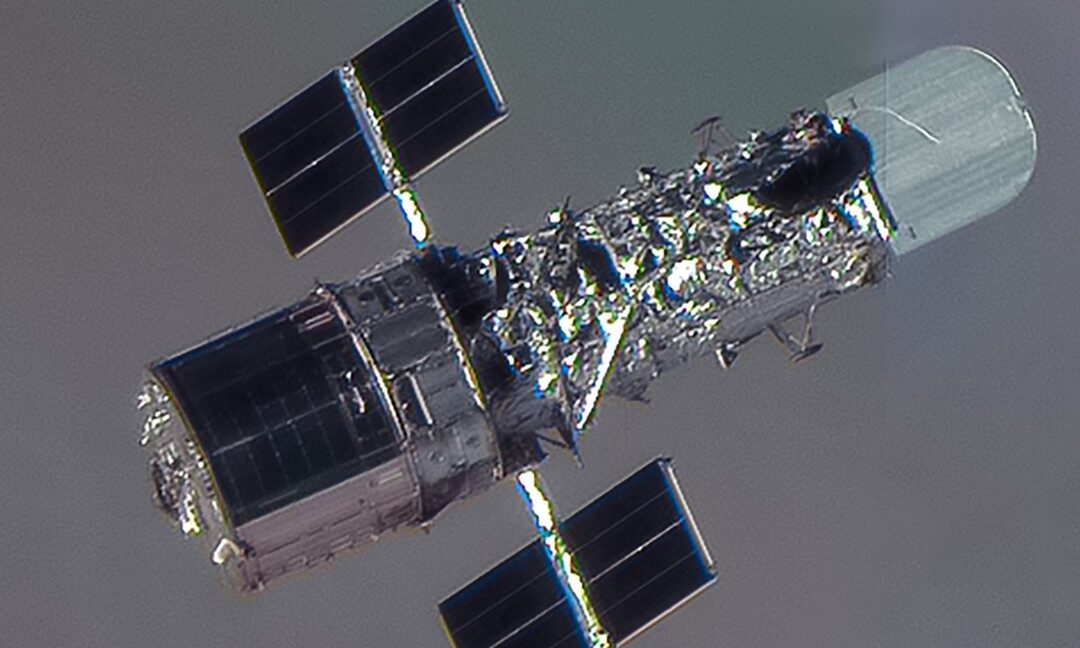
You’ll be forgiven if you’ve heard this before. Jared Isaacman, a billionaire commercial astronaut, approached NASA in 2022 about a servicing mission to Hubble with a team of astronauts on SpaceX’s Dragon spacecraft. He proposed funding most of the mission, which would have reboosted Hubble by at least 30 miles (50 km). Engineers also studied using Dragon to attach a rescue pod onto Hubble with new gyroscopes to overcome problems with the telescope’s debilitated pointing system.
NASA also released an RFI in 2022 for other teams to share how they might boost Hubble’s orbit. The agency received eight responses, including a joint robotic reboost proposal from Astroscale and Momentus to pair their satellite servicing technology and in-space transport capabilities.
Agency officials announced in 2024 they would pursue a reboost mission after reviewing the responses. Mark Clampin, the head of NASA’s astrophysics division at the time, said the servicing plans from Isaacman and SpaceX “were really just notional concepts.”
The Swift rescue attempt showed a servicing mission doesn’t have to cost billions of dollars, as one of NASA’s now-canceled servicing demo projects was predicted to cost. But Hubble is a significantly more expensive asset than Swift, so if NASA goes forward with a rescue mission, the agency would like to give a contractor more than $30 million and nine months.
NASA does currently not have any funding allocated to procuring a Hubble reboost or servicing mission.
“Hubble still has important science ahead of it, and we should be looking at every reasonable opportunity to keep it delivering for as long as possible,” Isaacman said in a NASA statement. “If there are innovative and cost-effective ways to extend the life of an asset already on orbit, we owe it to the American taxpayer and the scientific community to explore them. Extending Hubble’s life would mean more discoveries, more science, and more opportunities to expand our understanding of the Universe.”
A crewed servicing mission like the one Isaacman envisioned in 2022 is unlikely to happen now. SpaceX aims to retire its Crew Dragon fleet by 2030. In a post on X, Isaacman wrote that he expects the new RFI will “draw interest from robotics companies.”
NASA’s newer flagship observatories, sometimes described as successors to Hubble, are not actually one-for-one replacements. Hubble is tuned to observe the Universe in visible and ultraviolet light, while the Webb and Roman telescopes peer deeper into the infrared Universe. Astronomers will likely have to wait for the launch of NASA’s Habitable Worlds Observatory in the 2040s for an improvement on Hubble’s visible and ultraviolet vision.
“Commercial industry has rapidly evolved in recent years to offer new capabilities for in-space satellite capture and servicing,” said Nicky Fox, NASA’s associate administrator for science. “Given the time we have until Hubble’s anticipated reentry, we are eager to explore the breadth of possibilities to boost Hubble to a higher orbit while we develop the flagship mission to follow.”