
Development
2027 Nissan Rogue Hybrid: Drives like an EV, but there's no plug involved
October 30, 2026 Development Source: Ars Technica
Share this article



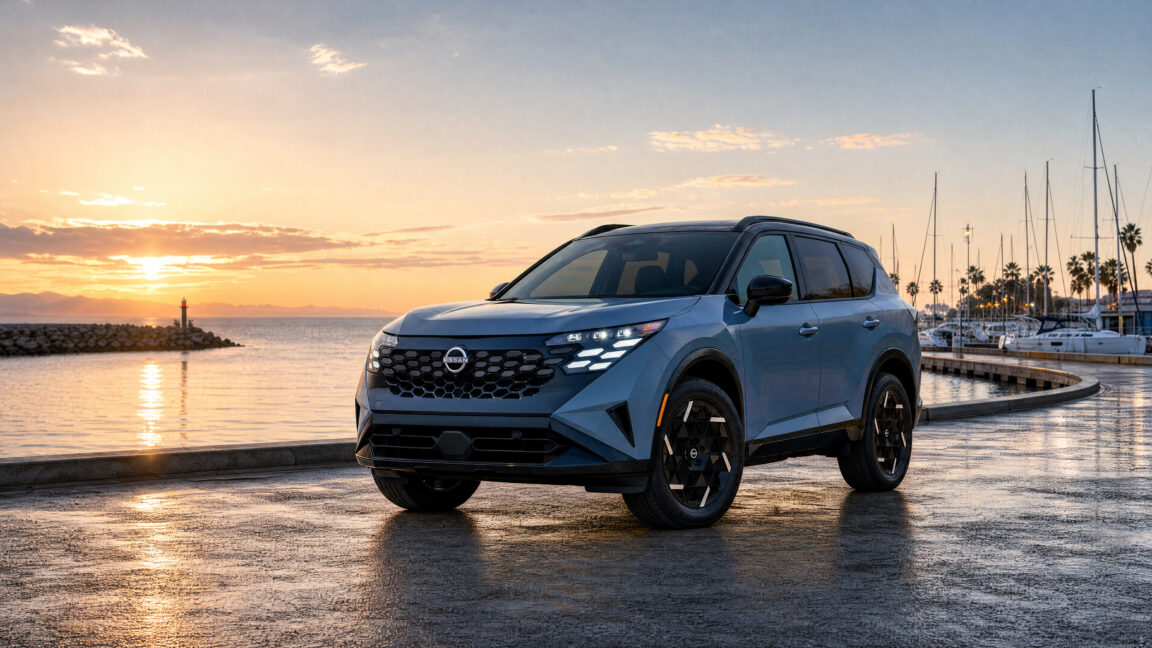
Nissan has a new version of its best-selling Rogue SUV, and it’s launching the model here with the latest version of its e-Power hybrid system, which Ars tested back in February. Most of the hybrid cars you can buy today are parallel hybrids, which means that they have an internal combustion engine and an electric motor, both of which drive some or all of the wheels—everything works in parallel. But there’s another approach. Instead of connecting the engine to the wheels via a transmission, it can act as a generator and charge the traction battery, which in turn powers the electric motor. Since the engine and motor work in series, this is known as a series hybrid.
That’s mostly how the Chevrolet Volt worked. As does Honda’s hybrid CR-V. Well, mostly; engineers worked out it was more efficient for those cars’ gasoline engines to directly drive the wheels at highway speeds, something that to this day makes a certain subset of hybrid car enthusiast irrationally angry. If you know anyone like that in your life, send them to wherever the nearest Nissan dealership is, because the 2027 Rogue Hybrid is exactly what they’ve been asking for.
Under the hood, with its crisp shut line and slim horizontal lights that give me something of a Range Rover vibe, there’s a 1.5 L, three-cylinder turbocharged direct-injection engine that generates 148 hp (110 kW). It only revs to 5,200 rpm because it’s optimized to charge the battery, not cope with the various loads of an engine connected to a gearbox and the wheels. That also allows the engine to operate at a rather impressive 42 percent thermal efficiency—we would need to look at Formula 1 engines to find higher.
Although this is the first time Nissan has offered the e-Power hybrid system here in the US, it has been on sale in Japan for a decade now, with more than 1.4 million cars on the road in that time. Those versions weren’t considered quite sufficient for our roads, so Nissan retuned the system for the Rogue Hybrid to be able to cope with harder acceleration and bigger vehicles.
From behind the wheel, you could very easily forget this wasn’t just a new EV—a replacement for the gone-too-soon Ariya, perhaps. Throttle tip-in is immediate, like any good electric car, and there’s enough torque to get you on your way without any fuss, even if a 0–60 mph (97 km/h) time of 6.4 seconds isn’t particularly fast by 2026 standards. Nissan has had plenty of expertise in calibrating one-pedal driving setups, and when you access the Rogue Hybrid’s by pushing a button on the center console, you’ll find it’s no different here.
The Rogue Hybrid SR we drove is rated at 41 mpg (5.7 L/100 km) in the city, 36 mpg (6.5 L/100 km) highway, and a combined 38 mpg (6.2 L/100 km), not quite as good as the RAV4 hybrid but still competitive with the segment.