Development
Tesla gave up the EV crown. Now it wants to win the autonomy race
October 26, 2026 Development Source: Ars Technica
Share this article



Although Tesla ceded its position as the world’s largest electric vehicle manufacturer to BYD last year, Musk has claimed his company remains ahead of Chinese competitors in autonomous technology.
“The biggest driver for demand is Full Self-Driving. And today, there’s really no competitor for FSD in any car that you can buy,” he said at an earnings briefing on Wednesday where the company revealed it had its largest car order backlog in four years.
The proportion of new Teslas sold in North America with the company’s supervised version of FSD reached more than 75 percent, while it now has 1.7 million active FSD subscriptions globally, up 67 percent from a year ago.
The company has not disclosed how much recurring revenue is generated by FSD, which is priced differently depending on market but costs $99 a month in the US.
However, Ives noted that the technology was already the highest-margin segment of Tesla’s business, with the potential to “transform the whole financial model” if it were to be expanded to about 50 percent of its global customer base from roughly 10-15 percent at present.
He argued that such an expansion would contribute more to the business than selling an extra 50,000-100,000 cars a year: “For every dollar of FSD revenue, the market rewards it 50-70 percent more than that dollar they would generate from selling an actual car.”
But realizing that potential will depend on overcoming regulatory hurdles in multiple markets.
Tesla has yet to win any approval for its fully autonomous version of FSD.
Musk’s company and Volkswagen-backed Xpeng are in heated competition to win European approval for their advanced driver assistance and autonomous driving systems.
Tesla’s supervised version of FSD has been approved in the Netherlands and several other European countries, but it is seeking wider EU backing to roll it out across the bloc through a vote of member states that has been delayed until December.
Xpeng is working with German authorities and is targeting EU approval for its FSD rival XNGP after the bloc adopts regulations on advanced driver assistance and autonomous driving, expected early next year. “We aim to be one of the first,” said Xpeng’s general counsel Zheng Yeqing.
“My concern is that trouble in AI could spread across the group, putting otherwise strong businesses at risk,” he added. “SpaceX’s success should be protected, not used to bankroll an ever wider set of ambitions.”
Whether or not the companies merge, Tesla’s technological ambition is already commanding the attention of traditional rivals.
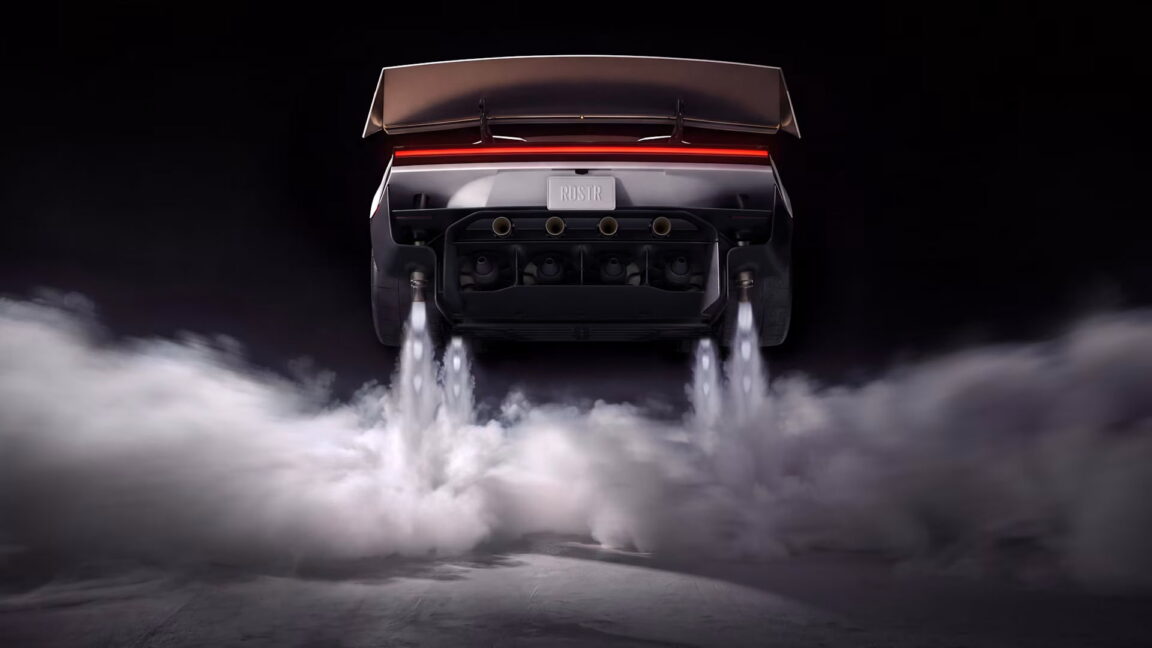
The flying Roadster “certainly shows that even in the car world there’s a lot to do,” Ferrari’s chief executive Benedetto Vigna said at a recent automotive conference in Milan.
Tesla is already driving wider change in the industry. Like Musk’s company, China’s Xpeng, South Korea’s Hyundai, and Japan’s Toyota are expanding their robotics businesses while General Motors and Ford in the US are pursuing new revenue from their energy storage businesses.
Autonomous driving in particular has become a major battleground for the global car industry as EVs with similar ranges and pricing proliferate.
Tom Narayan, an analyst at RBC Capital Markets, said Tesla was “a classic case of an innovator that disrupts and the other follows because they don’t want to be left behind.”
Among traditional carmakers, General Motors last year hired former Tesla executive Sterling Anderson to oversee the Detroit carmaker’s product development, with a mandate to develop a new generation of fully autonomous personal cars.
Other European carmakers such as BMW and Mercedes-Benz have also partnered with technology groups such as Qualcomm and Nvidia to bring a “Level 2 plus” driver assistance system, which requires active monitoring by a human driver behind the wheel.
“The leading carmakers today… are trying to reconsider their strategy completely,” said Igal Raichelgauz, chief executive of Israeli autonomous driving technology start-up Autobrains. He added that manufacturers wanted to move to a subscription model with a more advanced eyes-off technology to generate new revenue.
Volvo Cars chief executive Håkan Samuelsson acknowledged Tesla’s position as the frontrunner in autonomous technology.
“Tesla is probably leading the development in the West,” he told the FT, while claiming that Volvo was still firmly leading in software. “We will, together with Nvidia, develop our cars to be door-to-door automated and that will come in a new Volvo car pretty soon here.”
Additional reporting by Mari Novik in London.
© 2026 The Financial Times Ltd. All rights reserved. Not to be redistributed, copied, or modified in any way.