
Development
Rocket Report: SpaceX says no thanks to military launches; Spanish rocket nearly ready
October 23, 2026 Development Source: Ars Technica
Share this article



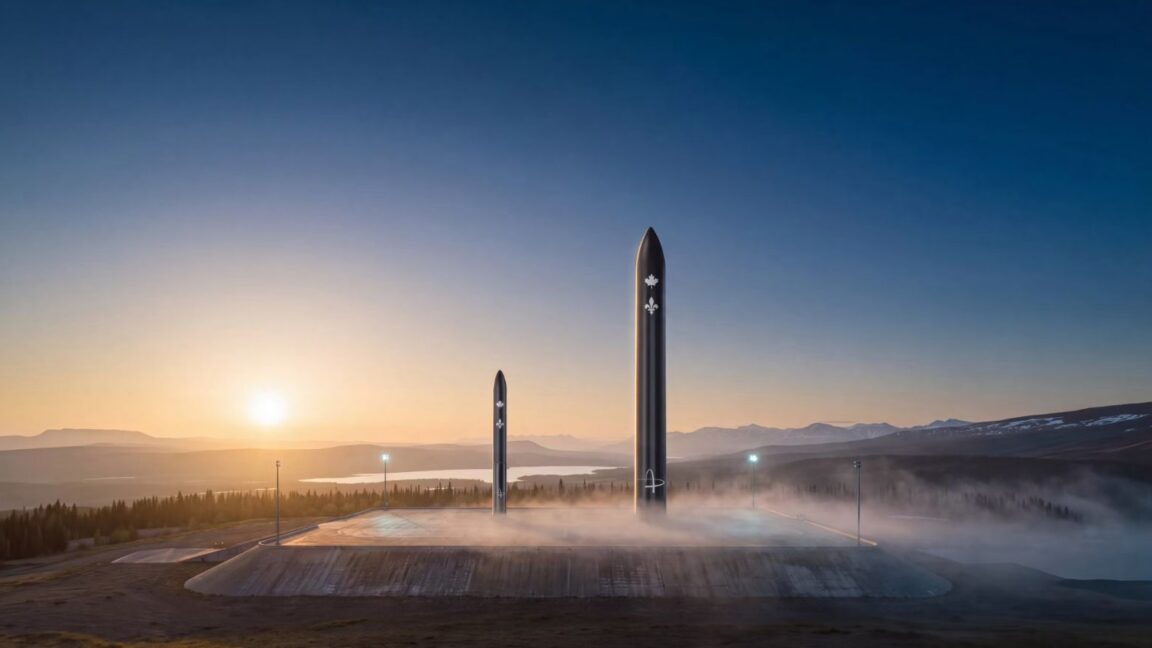
You’ve got the aurora, and the borealis … With a lift capacity of 6 tons to low-Earth orbit, Borealis would carry a little under half of the advertised payload capacity of Rocket Lab’s Neutron vehicle. “We founded Reaction Dynamics because we believe Canada should be able to reach orbit on its own terms,” the company’s founder and chief executive, Bachar Elzein, said. “Aurora is how we get to orbit in 2028. Borealis is how we deliver sovereign access to orbit, at scale, by 2031.” Both of the dates appear to be highly aspirational, but we wish them luck.
No one else has capacity … The three Space Force missions that didn’t find a ride were listed through the National Security Space Launch initiative. Two of the missions were for the Space Development Agency. The agency is a branch of the Space Force that’s building a network of hundreds of military satellites in low-Earth orbit to provide expanded data services, and missile warning and tracking capabilities. Other potential launch providers, United Launch Alliance and Blue Origin, are both working through setbacks with their launch vehicles. Zarybnisky remained optimistic that Blue Origin and ULA will work through their technical problems and that new competitors will get up and running in time.
Who will win the medium-lift launch race? It has been 13 years since the debut of a new medium-lift rocket in the United States, the Antares vehicle developed by Orbital Sciences Corporation. Nearly a decade and a half later, there is a new generation of medium-lift vehicles coming online, and they are starkly different from Antares, which had not just Russian engines but a core stage manufactured in Ukraine.
Which comes first … In a new article, Ars updates the status of four medium-lift rockets under development in the United States: Stoke Space’s Nova, Relativity Space’s Terran R, Rocket Lab’s Neutron, and the Eclipse vehicle being built by Firefly and Northrop Grumman. The publication also (somewhat hazardously) predicts the order in which the four rockets will make their debut.
Japanese rocket launches historic Phobos mission. Japan launched a $578 million mission Monday on a five-year expedition to land on the largest moon of Mars and retrieve samples for return to Earth, Ars reports. The robotic Martian Moons eXploration mission, known as MMX, lifted off at 3:41 pm EDT Monday (4:41 am Japan Standard Time Tuesday) from Tanegashima Space Center in southern Japan.
This has been tried before … The MMX spacecraft rode into orbit atop a 207-foot-tall (63-meter) H3 rocket, Japan’s flagship launch vehicle. The rocket assigned to MMX debuted a new souped-up configuration with four strap-on solid rocket boosters, full-throttle main engines, and an extended payload shroud to accommodate the demands of Japan’s heaviest and most ambitious interplanetary mission to date. MMX is not the first mission to attempt a sample return from Phobos. Russia’s Phobos-Grunt sample return mission failed soon after launch in 2011, before it could set off for Mars. (submitted by tsunam)
Chinese rocket debris found in Midwest. In September, a Chinese rocket took off from a remote spaceport in the Gobi Desert, released 10 satellites into orbit, then reignited its engine and put itself on a trajectory to rain down debris over the American Midwest, Ars reports. The rocket’s flight on September 15 lasted between 75 and 80 minutes, and it came down without completing a full orbit of the Earth. Social media posts at the time showed streaks of fiery debris falling from the sky, heading north over Kansas toward Minnesota. The overnight spectacle was also visible on the western horizon from Wisconsin.
A surprising find … The exact time, location, and direction of the debris allowed experts to connect it to the launch of a Zhuque-2E rocket, a medium-lift vehicle built by a Chinese company called LandSpace. The rocket had launched from Dongfeng, a commercial launch zone co-located with the military-run Jiuquan Satellite Launch Center in northwestern China, less than two hours before. The incident was largely forgotten until the last few days, when a farmer in rural Minnesota discovered a circular metal object about 11 feet in diameter lay amid the forest of corn stalks.
Arianespace targets Nov. 23 return for Ariane 6. Arianespace has announced that the next Ariane 6 launch will take place no earlier than November 23, marking the rocket’s return to flight after ground testing reportedly revealed an issue with one of its turbopumps, European Spaceflight reports. The flight will carry 36 Amazon Leo satellites aboard an Ariane 64, the rocket’s four-booster configuration. It will be the fifth Ariane 6 flight of 2026 and the tenth since the rocket’s inaugural flight in July 2024.
Situation is on track … Arianespace’s new announcement follows a report from French newspaper La Tribune, published a day earlier, claiming ArianeGroup had resolved an anomaly affecting a liquid hydrogen turbopump that had disrupted the rocket’s launch schedule. According to the report, the anomaly was first detected during an engine acceptance test shortly before the start of summer. Asked by European Spaceflight to comment on the report, an ArianeGroup spokesperson declined to address it directly and instead pointed to the newly announced launch date. “The next launch has been announced today, so the situation is on track.”
Working with the FAA … Both catches would happen at the company’s launch site in South Texas, Starbase. SpaceX is currently targeting November for this 15th test flight. One of the big hurdles is regulatory, as the Starship vehicle must return to the launch site over land, including northern Mexico. “We have had significant constructive engagement with the FAA, and we expect the license for our Flight 15 to include return to launch site and tower catch for both stages,” SpaceX President Gwynne Shotwell said.
Blue Origin goes bigger on New Glenn. Blue Origin announced a major expansion of its already considerable Florida launch facilities last Friday with the intent of eventually flying more than 100 rockets a year from there, Ars reports. The company said it would add two launch pads for the New Glenn rocket, in addition to two already under construction at Cape Canaveral. The company is also investing heavily in a new manufacturing facility that will produce up to 150 upper stages for a larger variant of the New Glenn rocket.
More missions … The company also plans to procure two additional landing ships to catch and return the first stage of the New Glenn rocket (it currently has one, named Jacklyn). Finally, Blue Origin said it would add a new customer integration facility, built in conjunction with the US Space Force, that will feature four payload bays to process multiple missions at the same time. “These investments are centered on one goal: building the capacity to support more missions, more reliably, and more efficiently,” said Ian Richardson, senior vice president of operations at Blue Origin.
October 23: Electron | We’re Not Hawking Around | Māhia Peninsula, New Zealand | 07:00 UTC
October 23: Long March 6A | Unknown payload | Taiyuan Satellite Launch Center, China | 10:15 UTC
October 23: Long March 4B | Unknown payload | Jiuquan Satellite Launch Center, China | 19:25 UTC