
Development
Japan launches mission to bring home a piece of the Martian moon Phobos
October 20, 2026 Development Source: Ars Technica
Share this article



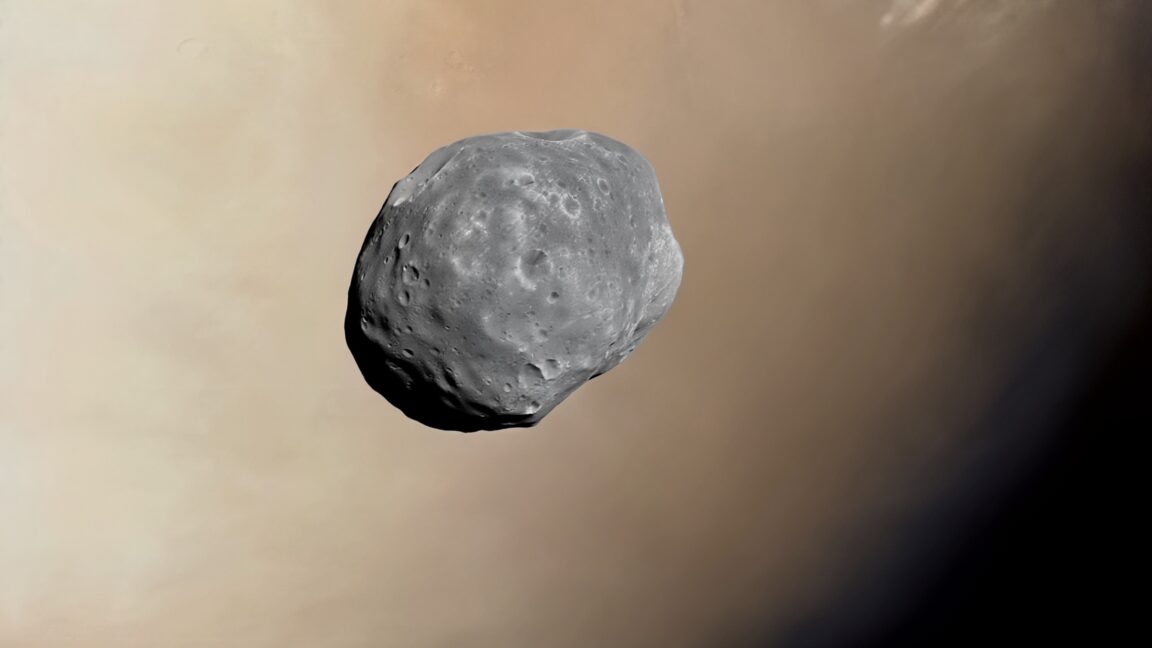
Japan launched a $578 million mission Monday on a five-year expedition to land on the largest moon of Mars and retrieve samples for return to Earth, a daring international project that could yield new insights into the formation of the Solar System.
The robotic Martian Moons eXploration mission, known as MMX, lifted off at 3:41 pm EDT Monday (4:41 am Japan Standard Time Tuesday) from Tanegashima Space Center in southern Japan.
The MMX spacecraft rode into orbit atop a 207-foot-tall (63-meter) H3 rocket, Japan’s flagship launch vehicle. The rocket assigned to MMX debuted a new souped-up configuration with four strap-on solid rocket boosters, full-throttle main engines, and an extended payload shroud to accommodate the demands of Japan’s heaviest and most ambitious interplanetary mission to date.
The rocket’s upper stage accelerated the MMX spacecraft to a top speed of more than 24,000 mph, fast enough to break free of Earth’s gravitational pull for the 10-month voyage to Mars. The nearly 9,900-pound (4.5-metric ton) spacecraft—two-thirds of its mass comprised of propellant—separated from the H3 rocket about 71 minutes after liftoff.
With the Hayabusa missions, sample returns from deep space have become a “speciality” for Japan’s space program, Kawakatsu said. For MMX, Japan attracted contributions from NASA and space agencies in Europe.
The climax for MMX will come later in 2029, when the main spacecraft will attempt up to two landings on Phobos. The probe’s landing gear is designed to absorb energy of each landing to mitigate the risk of tipping over or bouncing back into space, a real concern with the feeble and uneven gravity field on Phobos.
The spacecraft will stay on the surface of Phobos for several hours, using two independent mechanisms to capture samples from the Martian moon. A coring drill on the end of the probe’s robotic arm will scoop out a cigar-shaped specimen, while a NASA-provided pneumatic sampler on one of the craft’s landing legs will fire a cartridge of high-pressure nitrogen gas to sweep bits of Phobos in a collection canister.
All told, scientists expect MMX to retrieve at least 10 grams, or one-third of an ounce, of material from Phobos. After climbing back into space, MMX will discard its landing gear and fire its engines in 2030 to head for Earth, where it will guide a sample return capsule toward a remote landing zone in South Australia in 2031.
Scientists will recover the samples for analysis in laboratories in Japan. US researchers will get 15 percent of the Phobos specimens in return for NASA’s contributions to the MMX mission, which include one of the spacecraft’s samplers and a gamma-ray and neutron spectrometer to measure the elemental makeup of the Martian moons.
“One of the most intriguing questions about Phobos and Deimos is simply why these two little moons are there in the first place,” said Tom Statler, lead scientist for solar system small bodies at NASA. “In some ways, they resemble asteroids from the outer part of the asteroid belt, so they could be asteroids that were captured by Mars’s gravity. But there are other lines of evidence pointing to these moons being remnants of a giant impact early in Mars’s history.”
“By going to the Martian moons, studying them up close, and bringing samples back to Earth, we’ll be able to determine whether Phobos material is more consistent with an asteroid composition or with debris created by a collision involving Mars,” Statler said.