
Development
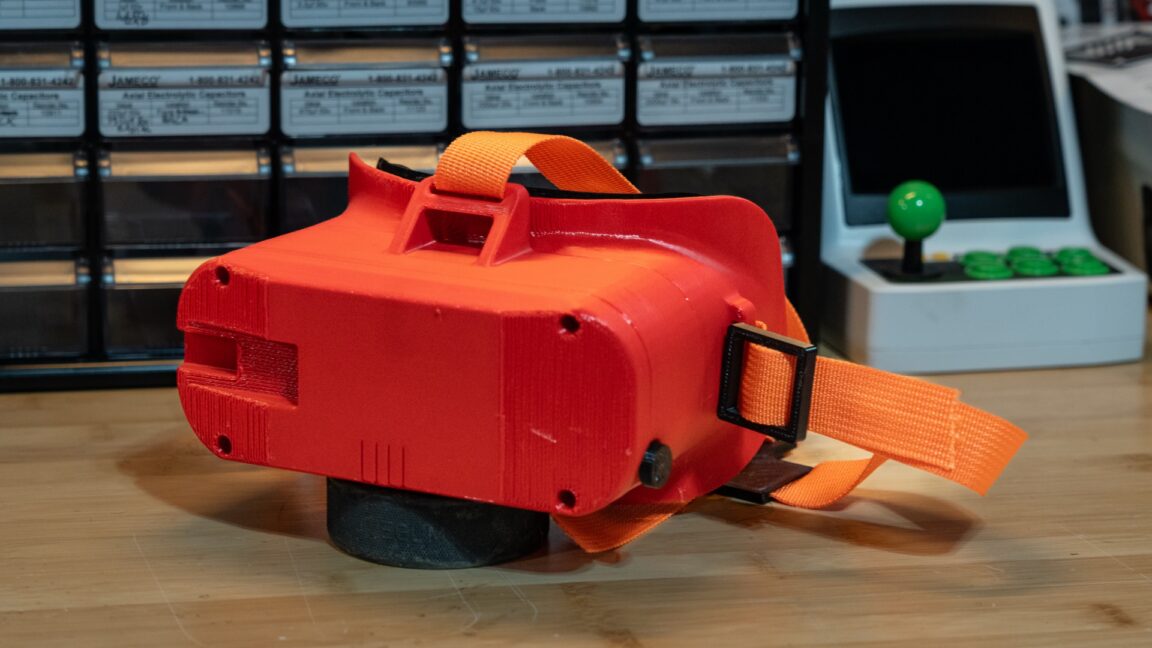
DIY VR: How to build your own headset, and why you probably won't want to
October 19, 2026 Development Source: Ars Technica
Share this article



That’s when I found YouTuber CNCDan’s video on building a VR headset for $150. The price was certainly compelling, and as someone with a particular set of electronics skills developed over years of disassembling and repairing pinball machines, I thought it sounded kind of fun.
That opened the door to a rich landscape of DIY VR development, complete with software tools and hardware advice on how to get started.
The best starting place is Relativty VR. This project, started in the late 2010s by Jonas Ceccon, Gabriel Combe, and Maxime Coutté, includes all the code, configurations, and guidance you’ll need to get started.
But there are others, like OpenVR Arduino HMD, Project North Star, and the full-body tracking SlimeVR. There are plenty of ways to piece together your headset. As my first attempt, I kept it simple, sticking with the Relativty software and relying on the 3D headset models provided by CNCDan as part of his build. First step: the hardware.
Regardless, you need to buy quite a few things. Let’s start with the most expensive: displays. You might think a pair of panels small enough and good enough for a VR headset would be difficult to find and prohibitively expensive, and you can certainly spend a lot here, but the standard option is a set of 2.9-inch LCDs, which can be purchased with the necessary controller for about $125.
Each has a 1440×1440 resolution. They offer 150 nits of brightness and a contrast ratio of 600:1. Not exactly world-class specs, but plenty enough for this application, and though they’re pretty ugly to view from odd angles, since you’re literally going to be sticking them a few inches from your eyeballs, that’s not really an issue.
As I learned (the hard way), this is a disconcertingly commonplace experience. Many shady electronics companies are happy to sell you the wrong component for the wrong price. The two devices are compatible and operate much the same way, but without the magnetometer, tracking performance drops substantially.
Once I updated the code to reference the 6500 I had and not the 9250 I thought I had, everything flashed beautifully, and I was instantly up and running. I calibrated my IMU through the Arduino IDE, and I was ready for final assembly.
But sensor drift and headset comfort were real issues. Without a proper cable-routing solution, the headset kept tugging to one side, and despite the padding, it was smashing my nose and cheeks.
I’ve done hourslong endurance races in multiple mass-market VR headsets. After 15 minutes in this one, I was ready to quit.