
Development
R.I.P. Margaret Hamilton, whose code saved the Apollo 11 Moon landing
October 9, 2026 Development Source: Ars Technica
Share this article



Computers were still a novelty at the time, and neither Lorenz nor Hamilton had any programming knowledge; they taught themselves. Per a 2019 Quanta article, Lorenz was amused by her unusual methods: for instance, she once bypassed the “clunky debugging process” by rolling out the paper tape down the hallway and editing the binary code by hand with a pencil. “I’d poke holes for ones, and I’d cover up with Scotch tape the others,” she recalled. Hamilton moved to another project in 1961, but not before training her replacement: a recent math graduate from Mount Holyoke named Ellen Fetter. Lorenz acknowledged the contributions of both women in his papers.
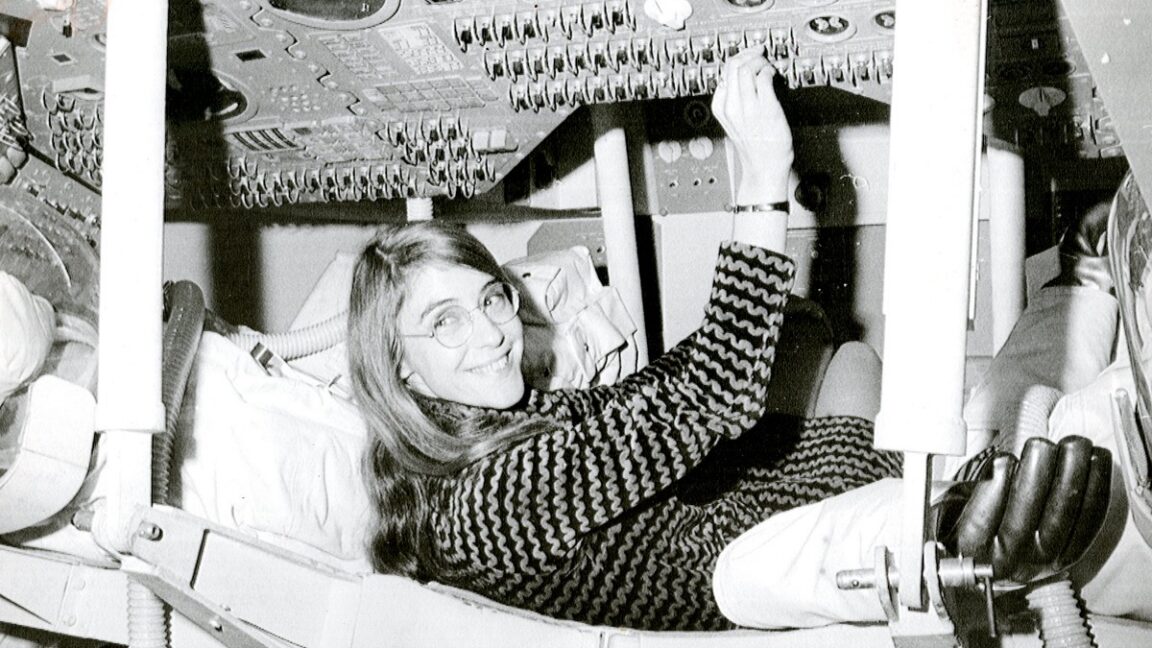
Hamilton would often bring her 4-year-old daughter, Lauren, to the lab on nights and weekends. The child loved pretending to be an astronaut in the simulators, and one day all her random button-pressing caused the system to inexplicably crash. Apparently Lauren had typed “P01,” a pre-launch sequence, in the middle of the mission. Hamilton asked NASA if she could add a safeguard to prevent this from happening on an actual mission, but the higher-ups didn’t take it seriously. Then astronaut Jim Lovell actually made that error during the Apollo 8 manned mission to orbit the Moon, causing the navigational data to vanish. Hamilton was called in to retrieve the data, jokingly referring to this as the “Lauren bug.”
By 1968 Hamilton was assistant director in charge of the Command and Service Module team. Hamilton had the idea to incorporate a failsafe into the system software’s “priority display” interface routines, should the onboard guidance computer become overloaded with more tasks than it could handle in real time.
After the Apollo program ended, the Instrumentation Lab became the independent Draper Laboratory. Hamilton worked there until 1976, when she founded Higher Order Software, based on her work on error prevention and fault tolerance. In 1985 she left the company to found Hamilton Technologies. Its main product is the Universal Systems Language (USL) for developing complex software systems that prioritized error prevention and defensive programming.
Hamilton is survived by her daughter, Lauren Hamilton; her son-in-law, Richard Selesnick; two grandsons; four great-grandchildren; and her siblings John, David, and Kathryn.