
Development
If you're looking, here's a "good deal" for NASA and the European Space Agency
October 7, 2026 Development Source: Ars Technica
Share this article



So what does a good deal in international spaceflight look like in the Trump era? Isaacman cited a couple of examples: Japan’s commitment to provide a pressurized rover for astronauts on the Moon and Italy’s agreement to build what will likely be the first habitat for the Moon Base.
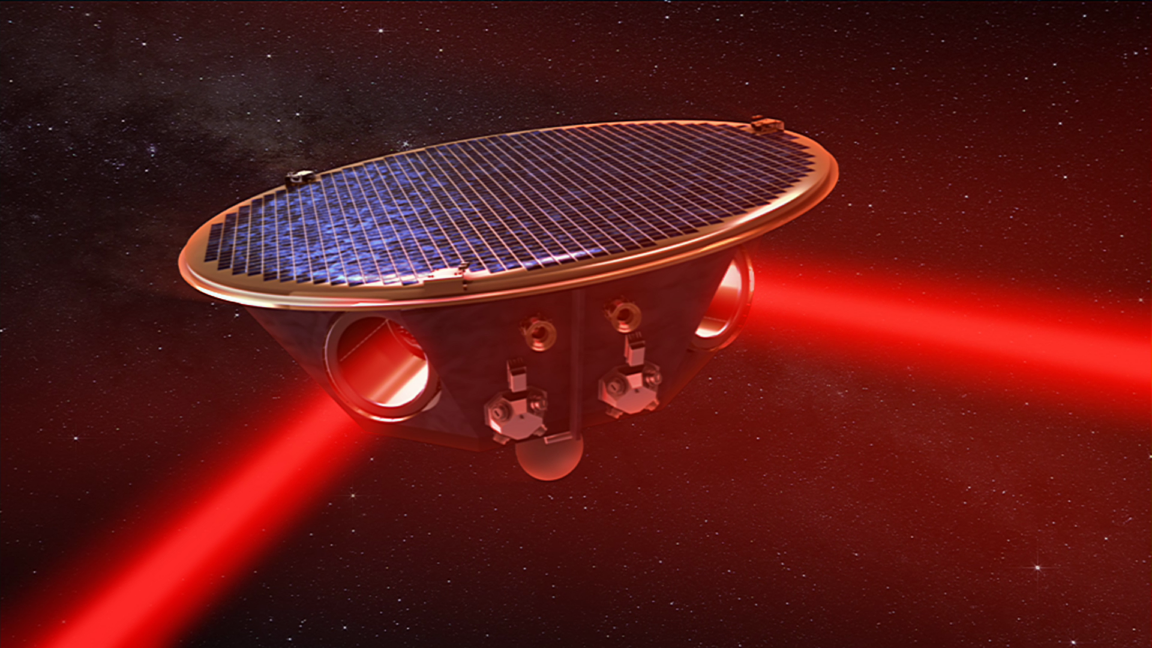
Under its agreement with ESA, NASA is responsible for supplying the transmitters and telescopes for the lasers. NASA will also provide charge management devices to reduce the buildup of electric charge on the proof masses inside each spacecraft and support data analysis on the ground to find the sources of LISA’s gravitational wave detections. Europe will build the spacecraft, launch them, and operate them.
This is exactly the kind of international partnership NASA should hold onto, according to Ira Thorpe, a gravitational wave astronomer at NASA’s Goddard Space Flight Center and leader of the US science team for the LISA mission. NASA isn’t working on its own gravitational wave observatory for space, and the agency likely couldn’t afford it if it wanted to.
“I think this is the largest science mission that ESA has attempted to do. Full stop,” Thorpe said. The LISA mission has a long history, with the first concepts for a gravitational wave observatory dating to the 1970.
“It’s bounced back and forth, depending on how the political winds have shifted on both sides of the Atlantic over decades,” Thorpe said. “I think we’re in a very stable system where ESA is going to clearly lead. NASA is going to be the major partner, a critical partner, for the project.”
But the Trump administration injected doubt into LISA’s future last year when the White House proposed canceling NASA’s participation in the project, alongside dozens of other science missions. Congress rejected the cuts and restored funding for fiscal year 2026, but the Trump administration again proposed cancellation in its 2027 budget request released earlier this year.
“That caused some concern in Europe, which I think is understandable,” Thorpe said. “But at the same time, speaking from the project side, we continue to do our work. We try to just focus on making our deliverables. We’ve met every deliverable commitment to ESA so far. We have not missed.”
“I think we’re in very good shape going forward,” Thorpe said.
The NASA official overseeing all of the agency’s astrophysics missions is Shawn Domagal-Goldman. Despite the White House’s attempt to end NASA’s contribution to the LISA mission, the 2026 budget passed by Congress and subsequently signed into law by President Trump should signal to ESA that Washington supports the project.
“Something this complex is always challenging, but it’s why it’s important that we reaffirm our commitment with the funding that we have in the FY ’26 appropriations bill,” Domagal-Goldman said. “As long as we have a continuing resolution or anything at our current funding levels, we will maintain our commitment to the LISA mission.”
“I’m really happy for that because when LISA launches, it’s going to answer some of these other big questions that you can only do with a space-based gravitational wave observatory,” he said.
LISA’s scientific pursuits include investigating the origins of black holes and galaxy formation. It could potentially be sensitive enough to detect gravitational waves originating shortly after the Big Bang, allowing scientists to test the theories about the birth of our Universe, according to NASA.
“These are propagating disturbances in space-time,” Thorpe said of gravitational waves. “They can carry energy. They can carry momentum, and I think most interesting for astronomers, they can carry information about the systems that produce them, and we can use them to understand the Universe.”
Physicists will use detections from LISA to test Einstein’s general theory of relativity. Some of the most cataclysmic events in the cosmos, such as mergers of supermassive black holes, should produce a very specific gravitational wave signature, according to general relativity. LISA will be more sensitive to lower-frequency gravitational waves than ground-based observatories, like LIGO, corresponding to the kind of waves scientists expect to be generated by the most massive black holes.
“GR gives us an exact prediction for what this waveform would look like, so any small deviation would give you some hint as to what might be going on,” Thorpe said. “I like to think if GR is going to break—and I don’t generally like to bet against Einstein—but if it is going to break, these are the kinds of places where it may break down.”