
Development
How I kept cool with NYC's free battery program for window AC units
October 2, 2026 Development Source: Ars Technica
Share this article



Many companies have established virtual power plant programs to offer utility companies greater flexibility and resources for managing electricity demand on the grid. Every Electric stands out for piloting a free power bank program that loans batteries to apartment renters and other households in exchange for a temporary deposit, which the company has reduced from $50 to $30 per battery.
The deposit is returned when a household decides to send the batteries back. Customers can also purchase the batteries outright for $650 each.
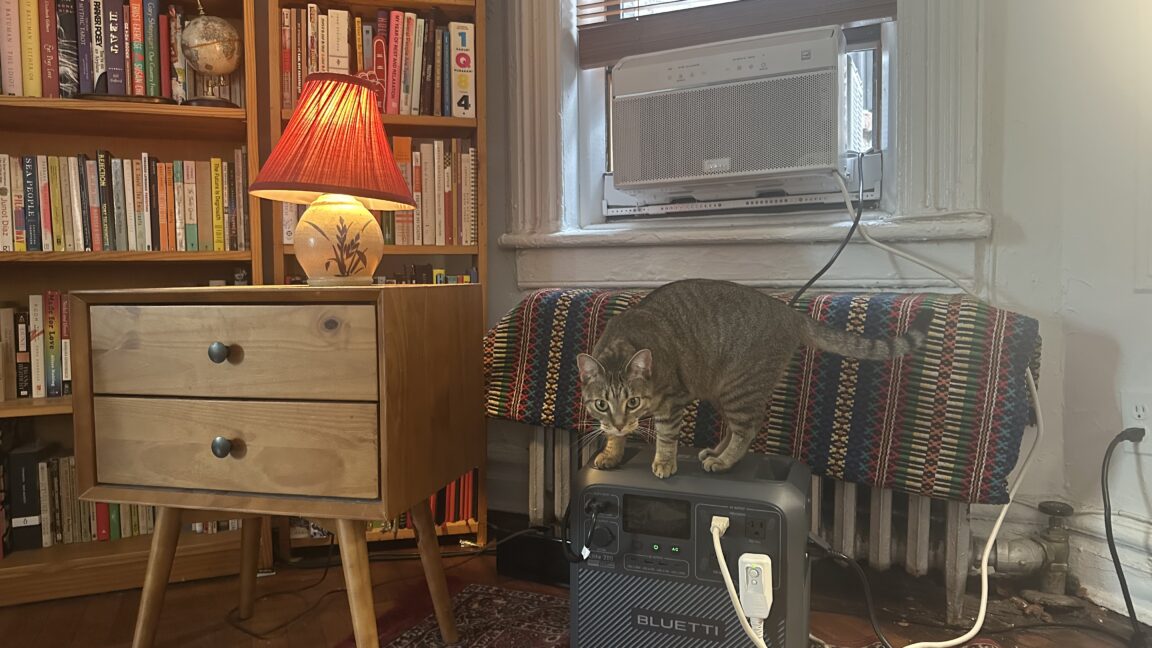
The battery delivery and setup process is straightforward. When the drop-shipped batteries arrived in their boxes, I plugged them into the appropriate wall sockets and followed a simple process to register the battery serial numbers with Every Electric and connect the batteries to my home Wi-Fi network.
Once connected to a local household’s Wi-Fi, the batteries act as power banks that automatically charge during low-demand periods at night and discharge their energy storage when air conditioners are running during peak demand periods. Every Electric automatically manages the battery cycles remotely.
Customers eventually get paid through Every Electric online accounts linked with Con Edison’s Smart Usage Rewards program. Every Electric gets paid directly by Con Edison as a program partner and, in turn, generally promises residents can earn $150 each year per air conditioner.
“There’s a business model innovation here where you make [household batteries] as easy and as accessible as possible, you get them as far and wide as possible, and then you essentially share in the value that you provide in the grid,” Wang told Ars. “We split the earnings so that households can see tangible benefits, and then we pay off the assets and grow the program as it goes along.”
The company initially deployed 100 batteries across 65 households in the first test run in the summer of 2025. This year, it scaled up deployment to 2,000 batteries across about 1,000 households, providing the total equivalent of four megawatt-hours of energy storage during the summer of 2026.
“If you picture one of the big utility-scale, containerized batteries, one of those blocks is usually four megawatt-hours,” Wang explained. “So we’ve sort of taken that up and broken it up into 1,000 pieces spread across the city.”
This approach opens the door for distributing residential batteries to many more households by making inroads into the largest US city with more than 2 million rental homes. And more than 80 percent of New York City housing was built more than 50 years ago, meaning that they typically rely on window air conditioners without central air conditioning.
But not every initial customer has been an apartment dweller—early adopters also include residents of single-family homes in the New York City boroughs of Queens and Brooklyn. Some residents have even paired the batteries with plug-in solar panels to make the most of combining household energy storage with renewable power.
Whatever the home configuration, Every Electric’s program has proven popular in its first two years. The wait list grew to requests for more than 15,000 batteries this past summer—and Every Electric is aiming to scale up to more than 10,000 deployed batteries in 2027.
Every Electric remains focused on New York City as its home court. But as the battery network grows, the startup is also exploring new ways for Con Edison and other utility companies to get value from the distributed energy storage system beyond just participating in the demand response program.
“We have new utility territories that are coming to us—they’re seeing that you can drop-ship literal megawatt hours to customers as a solution,” Wang said. “So we’re certainly looking at how to map this model onto new markets.”