
Development
NASA has a Dragon dilemma, and there appear to be no good answers
September 30, 2026 Development Source: Ars Technica
Share this article



Q. Can NASA compel SpaceX to keep flying Dragon?
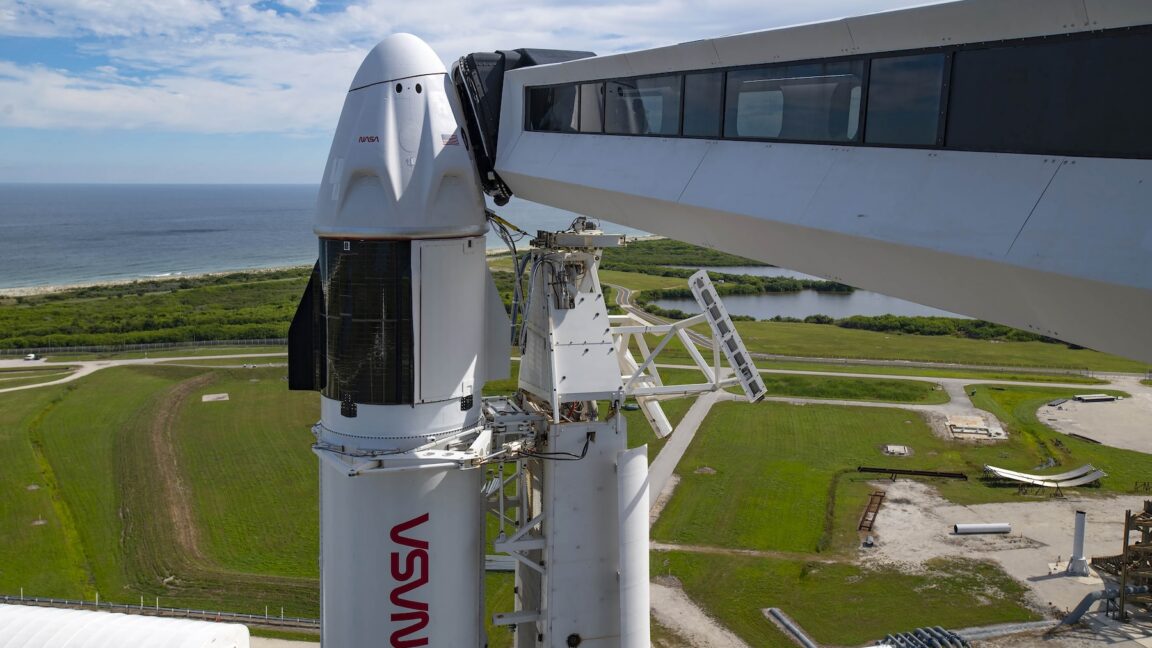
A. NASA invested $3.1 billion in the development and certification of Crew Dragon as part of the Commercial Crew Program. But SpaceX was only compelled to fly half a dozen missions. It has flown 13 missions for NASA to the space station, and will launch another one in a few days. The company had recently agreed to keep flying through the Crew-17 mission. SpaceX has therefore more than fulfilled its contract obligations to NASA.
Q. But isn’t NASA a really important customer for SpaceX?
A. It was in the past, yes. But SpaceX now derives a majority of its revenue from Starlink, and that proportion is likely to grow even more. Additionally, as part of the process of going public earlier this year, in financial filings, SpaceX made clear that it envisions a vast majority of its future revenue will come from Starlink and orbital data centers. The category of “space enabled solutions,” of which NASA is a fraction, represented approximately 1 percent of what SpaceX views as its “total addressable market.” In other words, NASA needs SpaceX more than SpaceX needs NASA. Going forward, SpaceX wants to focus on launching its own payloads—on the Starship rocket. NASA Administrator Jared Isaacman recognized this reality during a news conference on Monday, saying, “I do not think it’s a secret that SpaceX intends to sunset older platforms like Falcon and Dragon as they concentrate on their next-generation capability, Starship.”
A. Four astronauts currently launch on Dragon. Starship could potentially bring dozens of astronauts into orbit at a time. That would be revolutionary for access to low-Earth orbit and an economy there. However, SpaceX has told NASA it is not interested in developing Starship for human launches into Earth orbit at this time. (Again, they’re focused on their own payloads). Ascent and entry of Starship, carrying humans, would raise a tangle of safety and regulatory concerns and is not a priority for the time being. NASA has no real way to compel SpaceX, and any political capital the space agency might expend on Starship is going to be focused on getting a variant of the vehicle for a “Human Landing System” as part of the Artemis Moon program rather than human launches from Earth.
A. This is an important question. SpaceX’s original price per seat for early Dragon flights was approximately $55 million. For more recent missions, the price has increased to $78.8 million. (And if SpaceX were to magically decide to keep flying Dragon longer, the price would only go up). By contrast, the Starliner price to NASA is $90 million per seat during the International Space Station era. So what happens after Dragon retires? Let’s just say no one expects prices to go down. I asked Boeing Vice President John Mulholland about Starliner seat prices in the 2030s yesterday, and he replied, in part, “Obviously we want to be as competitive as possible.” But competitive with whom?
A. The space company founded by Jeff Bezos is developing a “Space Vehicle” for astronauts to launch on the New Glenn rocket. After some of my recent reporting, sources reached out to let me know that design work is “well advanced” along with demonstration work such as cabin pressure-vessel manufacturing, extensive parachute testing, in-house thermal protection system testing, life support systems, and more. I’ve heard “no earlier than” dates of 2031 for a crew launch. But that’s probably optimistic, and if NASA and private space station operators need to book transport in the early 2030s, Starliner is probably the only option.
A. You’re probably not going to like this, but the only real hope for a significantly lower sticker price for sending humans into low-Earth orbit is Starship. If incentivized, SpaceX probably could bring this capability online by 2030 and radically reshape the market. But from all publicly available evidence, and based on private conversations, SpaceX seems unlikely to prioritize crewed ascent and reentry on Starship any time soon. Could that change? Certainly. Will it? Probably not. SpaceX and its founder, Elon Musk, will do what they want.
Q. So is SpaceX just being selfish, or what?
A. SpaceX is a business, and like a lot of other businesses, especially publicly traded ones, the goal is to maximize revenue. From their perspective, it makes sense to remove distractions (such as Dragon and Falcon 9) and focus on the future of the company (Starship).
One way of looking at the last 20 years of spaceflight history, and NASA’s efforts to stimulate a low-Earth orbit economy, is to view SpaceX as the exception to the rule. In some sense, an economy based on astronauts in low-Earth orbit got lucky that SpaceX executed so successfully on Dragon. This allowed for the creation of a market around the idea of access at a price of $50 million per seat. At the same time, transportation competitors in cargo (Northrop) and crew (Boeing) struggled mightily. The best SpaceX’s competitors could do was nearly twice the price, and even then, not as reliably.
NASA seems to think Starliner, even at higher prices, will provide the guaranteed access it needs to low-Earth orbit in the 2030s for its astronauts. But in terms of a broader space economy in low-Earth orbit—which for decades the space agency has explicitly sought to foster—it is difficult to see Starliner providing a suitable solution. So yes, SpaceX pulling out of this market harms the industry. But should it be incumbent upon SpaceX to continue a line of business solely because it benefits its peers and competitors?