
Development
Trump admin using AI to deny medical care for seniors in disastrous experiment
September 25, 2026 Development Source: Ars Technica
Share this article



So far, the program requires prior authorization for around a dozen medical services, including nerve stimulation, epidural steroid injections for pain, cervical fusions (permanently connecting bones in the neck), skin substitutes for wounds, and treatments for incontinence and impotence.
According to the documents released by the EFF, the program’s implementation was rushed, and the technology wasn’t ready. One vendor, Innovaccer, was so unprepared that it asked the government to delay the rollout, and when it didn’t, the vendor set up its program to automatically approve all requests temporarily.
“[A]uto-affirming is the only path available that avoids creating a backlog of unprocessed prior authorizations and claims while we finalize, validate, and deploy the full rules-based solution,” Innovaccer wrote, according to a letter it sent to government officials.
But others carried on. One vendor, Zyter, had data discrepancies for months because it apparently didn’t understand the difference between Medicare Part A, which covers inpatient/hospital care, and Part B, which covers outpatient services. Zyter’s CEO, Sundar Subramanian, told Ars Technica in a written statement that the company is now “fully functional across Medicare Part A and Part B claims.” The company is working closely with federal partners and the healthcare providers to “enhance the experience,” Subramanian said.
It was revealed in June that Virtix was put on a Corrective Action Plan (CAP) by the Centers for Medicare & Medicaid Services (CMS) for “noncompliance” with the 72-hour window. In a statement to Ars Technica, Virtix confirmed it was on a CAP but said it has since “reduced its average turnaround time for prior authorization to 1.18 days and prepayment review determinations to 1.17 days, well within the WISeR Model’s 3-day requirement.”
It’s unclear if any other vendors have been put on a CAP. The CMS and the Department of Health and Human Services did not immediately respond to Ars Technica’s request for comment and a list of questions related to WISeR in time for publication.
In its comment to Ars, Virtix said that it “understand[s] that any delay in care is difficult for patients, and we do not take lightly the impact that the prior authorization process can have on people who are in pain and seeking relief.”
That said,” the company continued, “the WISeR program uses long-established [National Coverage Determinations] and [Local Coverage Determinations] set by CMS, not by Virtix Health, to evaluate the medical appropriateness of each requested procedure.”
Virtix encouraged providers to consider resubmitting authorization requests and ask for peer-to-peer discussion about denials.
The suggestion to reach out for support is unlikely to assuage many providers who have experience with WISeR. From their perspective, technical snags, delays, and unexpected denials have led to real misery, and many providers have reported only radio silence from program vendors when they sought support.
The reality of WISeR’s implementation may best be captured by feedback from one healthcare provider in Ohio, which was working with Innovaccer, the vendor that initially auto-approved requests. In a survey response, the provider wrote (in all capital letters) about patients trying to get a minimally invasive surgery to treat compression fractures in their spines, saying:
I HAVE HAD TO WATCH 3 PATIENTS CRY AT BEDSIDE FOR NOT HEARING BACK ON THEIR PRIOR AUTH FOR KYPHOPLASTY/VERTABRAL AUGMENTIATION PROCEDURE. THESE PATIENTS ARE IN DEEP PAIN. SO MANY OFFICES OF MY PHYSICIANS ARE NOT HEARING BACK FROM INNOVACCER… THERE IS NO WAY TO GET A HOLD OF A HUMAN TO TALK TO… WHAT A DISGRACE TO THE HUMAN RACE IN AMERICA. THIS IS THIRD WORLD.
Another Ohio provider expressed similar frustration with Innovaccer about delayed care and lack of communication, writing in a survey response that the experience has been “extremely disappointing”:
A 3–4 day delay for necessary pain procedures is already difficult for vulnerable patients, but when providers cannot obtain answers for weeks, the situation becomes unacceptable… The lack of accessible support, accountability, and timely communication is deeply concerning. Programs affecting patient access to medically necessary procedures must have reliable provider support systems. Currently, that standard is not being met. Patients deserve better. Providers deserve answers. And systems designed to improve care should never result in preventable suffering.
Innovaccer did not respond to a request for comment from Ars Technica. In a statement to Stat News, Innovaccer said its technology is now “fully live” and that the company has “worked closely with all of our partners to refine and improve the program since its launch and we will continue to do so with the spirit of putting patients first.”
“Do the contractors in the model—who are the private companies conducting the prior authorization assessments—make more money if they deny care? Just ‘yes’ or ‘no,’” Murray asked in her opening question.
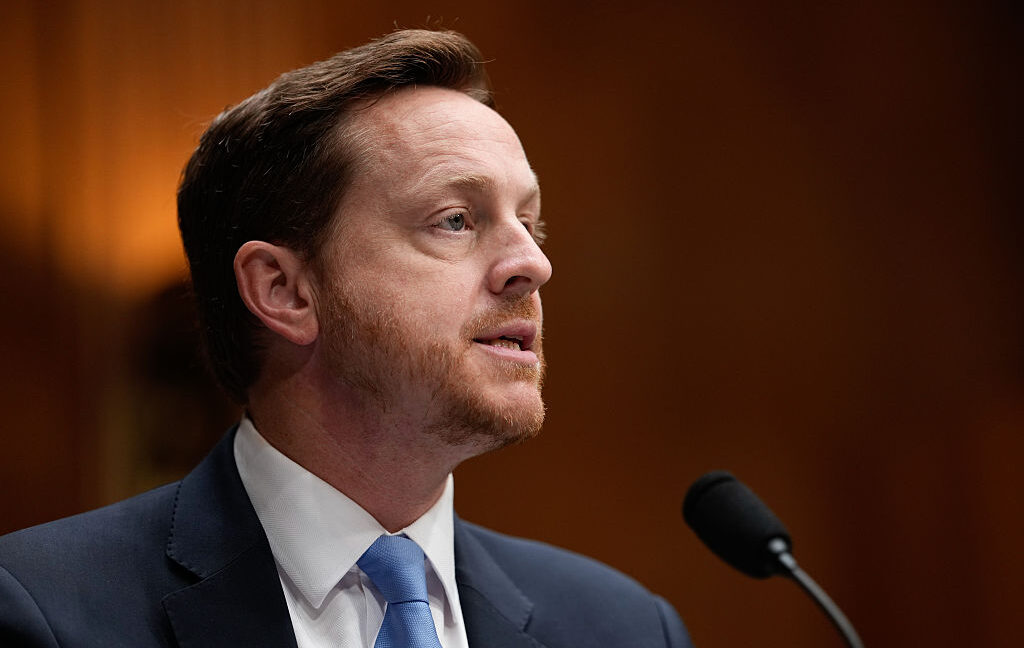
“My understanding is no,” Klomp replied.
Klomp’s understanding is inaccurate, which is notable given that he has been working as the deputy administrator of CMS and has been directing Medicare since last year. CMS documents, included in the packet obtained by the EFF, clearly explain that the companies implementing WISeR are financially rewarded for denying requests for care. CMS’s planning documents describes it as a “novel payment approach where the model participants are compensated based on a share of averted expenditures.”
CMS documents written as a guide for WISeR participants explain further that for every denied request, CMS will determine what the regional benchmark cost for that care would have been and then pay the company 25 percent.
Murray further quoted the CMS Office of the Actuary, which explained bluntly in a memo that “model participants will have an incentive to deny as many claims as possible.”
“And what do you know,” Murray said. “In the first three months of this year, the Washington state contractor denied more requests than they approved.”
Klomp defended the program, saying, “My understanding is that when they deny care, if they do so inappropriately, there are significant financial penalties and that CMMI [Center for Medicare and Medicaid Innovation] is carefully watching their performance and has the ability to terminate [contracts]. My understanding as well is that [CMMI] will be producing a report or a report card of something shortly that will show an accounting by vendor in the six trial markets… to drive an accountability.”
According to the CMS documents, Klomp was referring to the “Aggregate Quality Score,” a percentage-based score calculated for each company implementing the WISeR model. The score is partly based on whether companies appropriately deny or authorize care requests, and it’s then used as a “quality adjustment” to payments to disincentivize inappropriately denying care.
But the CMS documents reveal that this adjustment penalty for denying legitimate requests is small. A company that earns an AQS score of between 100 percent and 85 percent will be paid all 25 percent of the “averted” costs from denied claims. If a company’s score falls between 84 percent and 60 percent, it will be paid 95 percent of the 25 percent of averted costs—just a 5 percent drop in profits. If it scores below 60 percent—a failing grade by school standards—it will get 90 percent.
Companies won’t be paid if an authorization denial is appealed and overturned, but data suggests few people go through the appeal process. In Medicaid Advantage, for instance, only 11.5 percent of care denials are appealed—though 80 percent of appeals result in the denial being overturned.
While Klomp claimed that there would be accountability for companies wrongly denying care, Murray seemed to dismiss the assurance. She said she had already heard from seniors in her state—one of the six in which WISeR has debuted—who have suffered for weeks in pain as their doctors “battled with these contractors for approval.”
Hospitals in the state have said the situation has not gotten better since its rollout in January.
“I already know CMS is planning to expand this to oncology,” Murray said. “I am going to do everything I can to stop this. It is really hurting patients.”
According to the CMS documents, the Trump administration plans to expand WISeR’s prior authorization system from cancer treatments to air ambulance transport, advanced imaging (such as MRIs), cardiac catheterization, pacemakers, Implantable Cardioverter Defibrillators (ICDs), and genetic and molecular lab tests.