
Development
With PRIMA, NASA will try to build a billion-dollar space telescope in record time
September 25, 2026 Development Source: Ars Technica
Share this article



Flagship missions can take decades to design, build, and test before they make it to the launch pad. The Roman Space Telescope was the exception. It took 10 years from NASA’s approval to proceed into development until Roman’s launch last month on the way to an observation post a million miles from Earth.
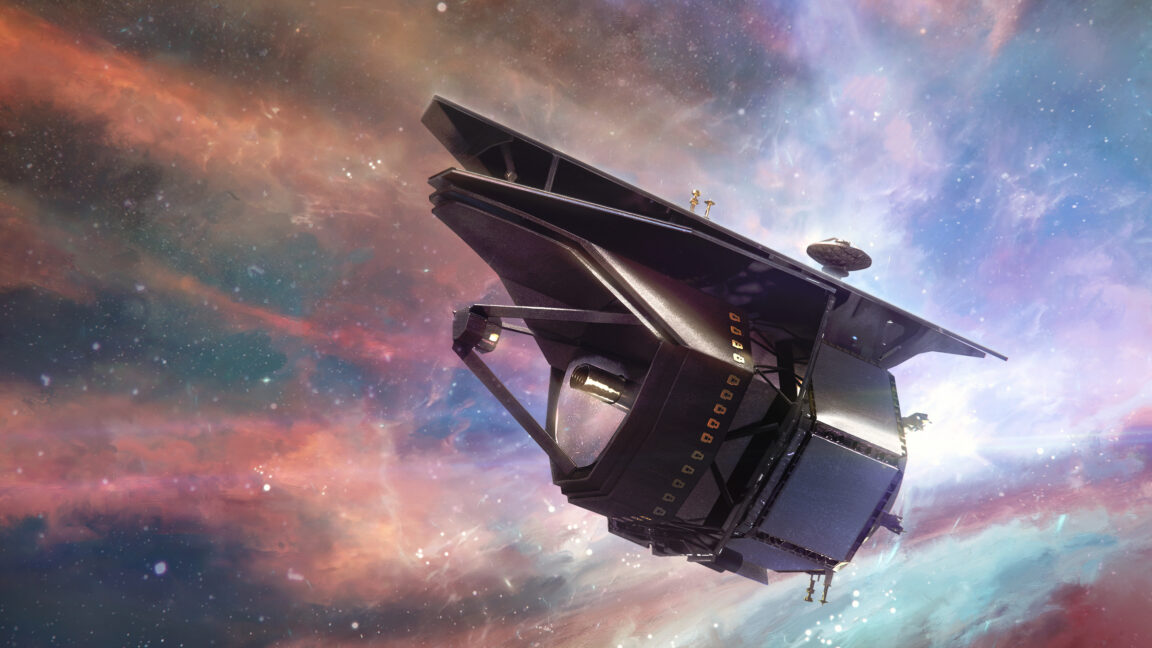
PRIMA, which has a cost cap of $1.2 billion excluding launch costs, will not be as big and complex as Roman, so it’s natural to assume a shorter development cycle. NASA wants to launch PRIMA seven years from now, in 2033. The telescope will observe the Universe in faint, far-infrared light in a range of wavelengths between 24 and 235 micrometers, requiring its primary optics to be cooled to 4.5 Kelvin, or minus 451° Fahrenheit.
This would usually require a brand-new build of a sophisticated cryocooler. PRIMA will instead use a spare leftover from the development of the James Webb Space Telescope, modified to use helium-3 instead of helium-4 as the cooling fluid. The focal planes of PRIMA’s kinetic inductance detectors will be chilled even lower to 100 milliKelvin, putting the mission’s optics in contention for the coldest ever sent into space.
Early cost estimates for the Habitable Worlds Observatory come in at around $11 billion, on par with Webb, which far exceeded its original cost projection.
“This is a sufficiently ambitious observatory where it’s going to require an all-of-nation [approach],” Domagal-Goldman said Tuesday in a meeting of the National Academies’ Committee on Astronomy and Astrophysics. “Frankly, we’re going to need our partners internationally to be a big part of this as well. But we need the best and brightest from throughout the country, whether they’re at Goddard, another NASA center, an industry partner, a new space commercial partner, or a university, to be a part of what we’re doing.”
Domagal-Goldman said this week that NASA aims to use its experience in developing and launching the Roman telescope on budget to help bring future flagships like HWO under tighter cost controls.
“We have proven with the launch of Nancy Grace Roman, ahead of schedule and on budget, that it is not a law of nature that these projects will go over schedule and over budget,” he said. “That doesn’t mean they’re easy, and it doesn’t mean we can be cavalier that they will always be on schedule and on budget because that’s also been disproven.”
The lessons NASA has learned about implementing flagship projects include the importance of defining the mission’s architecture and requirements and ensuring its underlying technologies are well understood before engineers start building flight hardware, according to Domagal-Goldman.
“To put it succinctly, you need to understand the challenge, have a mission where the challenge is incredibly well understood, and then once you understand it, then you put your pedal to the metal and take that observatory to the launch pad as quickly as you can,” he said.