
Development
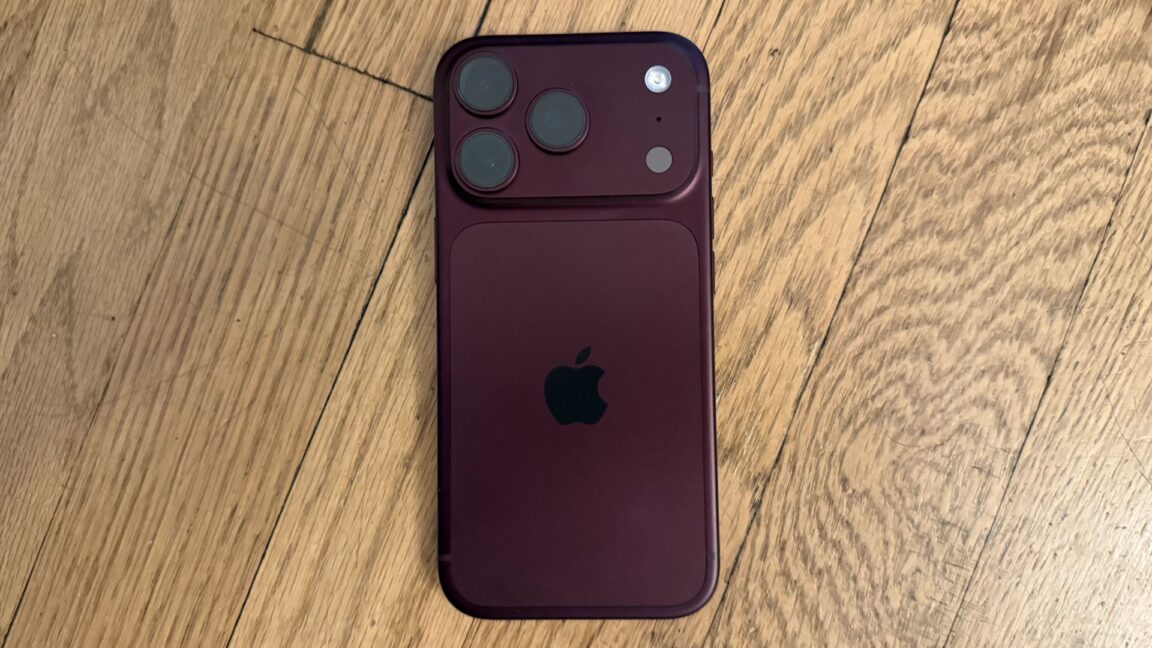
Review: The iPhone 18 Pro is Apple's coolest smartphone (but only literally)
September 26, 2026 Development Source: Ars Technica
Share this article



The main design difference this time around is a smaller Dynamic Island, that cut-out at the top of the screen that houses the front-facing camera and sensors. Apple has achieved this by moving the IR camera underneath the OLED panel, now in the top-left corner of the screen.
A new pixel arrangement allows infrared light to pass through in that spot, while the pixels in this region operate at twice the brightness to compensate for lower density, so there’s little visible effect on the image on the display. You can tell there’s something subtly going on in that corner if you know what to look for and look closely, but I don’t think most people will notice.
As I wrote when the Dynamic Island was first introduced, the way Apple combines the per-pixel brightness and absolute blacks of the OLED panel with creative software to turn what should be something of an albatross—a big, chunky hole in the screen—into an appealing feature by displaying live activities and other information around the sensors is one of the company’s more impressive design ideas in recent years. The execution is excellent and remains so.
Now, that hole is less big and chunky, making it sensible for Apple to now show up to three live activities at once in the region, not just one. The middle one has more information, while those on the left and right are basically dots with just enough to tell you something useful.
This isn’t enough of a reason to upgrade from an earlier Dynamic Island phone, of course, but it has made a good feature a little bit better.
It’s normally hard to notice the absence of a problem, but my own iPhone 16 Pro has gotten hot frequently enough over the past couple of years that the contrast has been real and felt.
We’ll leave the camera specs to the cameras section of the review, but there are a couple of other spec changes worth noting.
If you’ve read my iPhone reviews before, you may recall that I am not a photography geek. This is not the review to read if you want a deep dive on optics or how well this thing will work in a professional photo shoot. (I’ll leave it to more skilled and knowledgeable people to assess the phone from that perspective, as there are already many such reviews out there.)
I’m a point-and-shooter. Thanks to both new hardware features and developments in computational photography, that’s actually where some of the more interesting and fastest-moving developments have been happening in the iPhone and its Android competitors over the past few years.
Sure, the iPhone 18 Pro is “pro” in the sense that it will be used by content creators and others who approach snapping photos or capturing videos far more seriously and creatively than I do. But really, it’s the phone that sometimes lets non-pros like me produce quasi-pro-looking images despite ourselves.
Take the new variable aperture feature, which got the most fanfare when this handset was announced. The ability to tweak this setting manually is a niche proposal, really; many people will rarely, if ever, touch it. That said, it adjusts automatically based on what’s in the scene by default, so in many cases, even folks like me will get slightly better photos.
This includes four texture options: film, glow, soft skin, and standard. These options—especially the film one—allow the iPhone’s built-in Camera app to compete with some third-party apps that try to give photos warmer, more film-like looks. I won’t say it’s enough to make everyone drop those alternatives, but it’s good to have more options for those who are loyal to the main app.
Apart from these and a few other minor tweaks, it’s the same triple-48 MP rear camera system that we reviewed in last year’s iPhone 17 Pro, paired with the same front-facing 18 MP camera.
My daily driver is an iPhone 16 Pro, and I won’t be pulling the trigger this year, either. In fact, I think you’re still in great shape with your iPhone 15 Pro, if that’s what you have, provided your battery is still holding up.
Go further back than that, though, and all these little things start to accumulate into something enticing. That’s where we’re at, and that’s where we’ve been for a while now.
I wouldn’t go so far as to say the modern flagship smartphone is perfect in all respects; Apple and its competitors still find small ways to refine it and up the ante for specific types of users year after year, and I expect that to continue. And last year’s base iPhone 17 is still more than good enough for almost everybody.
But after almost two decades of competition and iteration, it’s at least directionally perfect. The basics are all here, and they don’t need to change. I wish the price hadn’t risen, but I suppose that’s the reality we live in right now.
If you want something new and flashy to impress your friends or to satisfy your brain with a novel experience, hold out for the iPhone Duo next month or venture into the slightly more energetic Android market. But if you just want a good phone that leverages all the latest technological progress without overdoing it for attention or progress’ sake, the iPhone Pro line is a good fit.