
Development
Woman's brain worm infection confirmed after eggs grow tails in lab test
September 23, 2026 Development Source: Ars Technica
Share this article



Out of nowhere, a woman’s right arm and leg started shaking uncontrollably. In the moments leading up to the experience, she seemed well; she had no headache, confusion, or weakness. But for about a minute, half of her body juddered.
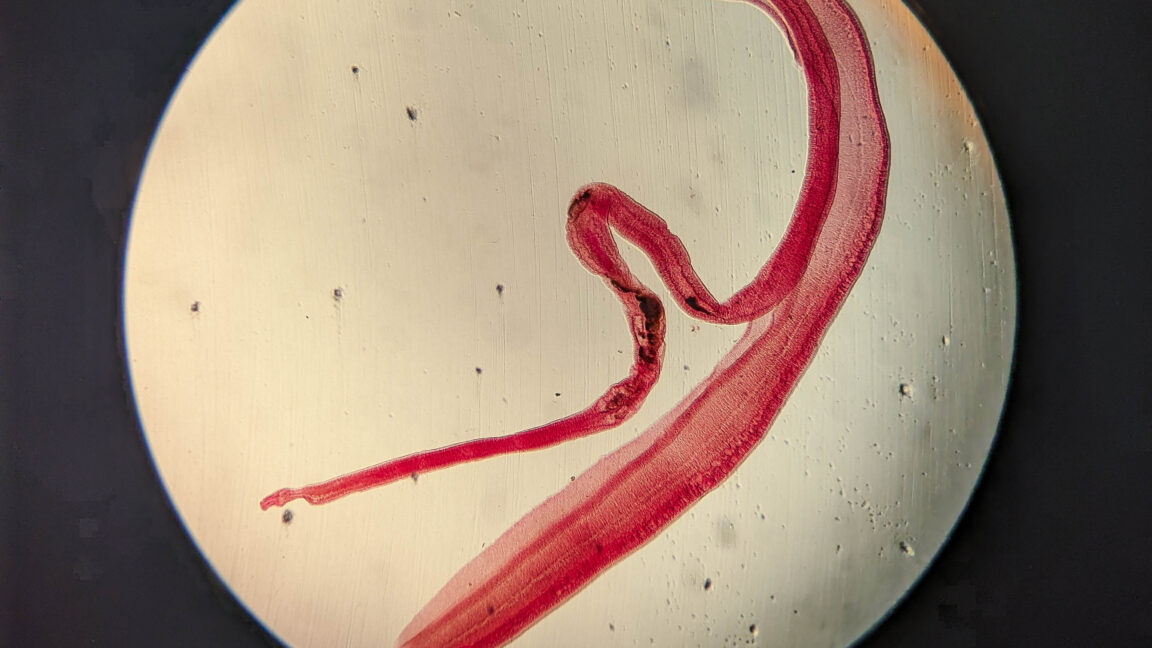
The woman, a rice farmer in the Philippines, headed to the emergency department. There, doctors gave her a physical exam and found nothing out of the ordinary. Then they took a look at her brain. Magnetic resonance imaging revealed a bright cluster of nodules surrounded by fluid in her left frontal lobe. The doctors had an immediate guess as to what they were: worm eggs.
Adult worms often go undetected in blood vessels, producing no noticeable symptoms, allowing the infection to become chronic. It’s the eggs that typically cause problems and give the worms’ presence away. They can spur inflammation, fibrosis, and organ-specific complications.
On rare occasions, S. japonicum eggs reach the central nervous system and cause problems. It’s not entirely clear how this happens; medical experts speculate that it may happen when either the adults or eggs get diverted into an unusual place, possibly due to a heavy infestation or vascular damage. However it happens, when eggs get lodged in the brain, they’re often linked to seizures or specific neurological problems.
The possibility of S. japonicum eggs in the woman’s brain seemed like it could explain her abrupt seizure, so her doctors began diagnostic tests. There is no single go-to test for schistosomiasis, and doctors often do various tests to confirm an infection. The woman’s doctors first turned to an old-school lab test called the circumoval precipitin test, which was developed in the 1950s. In this test, doctors obtain a reference sample of S. japonicum eggs and flood them with a patient’s serum. If the patient has an infection, their serum will contain antibodies that can target the egg. In this event, the antibodies can grab onto molecules dangling off the outside of the egg as well as molecules secreted by the egg. In the test, this leads to a tail-like structure of bound antibodies forming on the outside of the egg.