
Development
After being sidelined, Boeing's Starliner to get starring role in NASA's spaceflight plans
September 17, 2026 Development Source: Ars Technica
Share this article



NASA did, indeed, pay a lot for the Commercial Crew program. Dating to 2010, for development and certification of their vehicles, NASA has paid SpaceX approximately $3.1 billion and Boeing $5.1 billion. SpaceX has been the critical provider. With Dragon, the company has launched 13 crewed missions to the International Space Station for NASA, with its next one set for October. All flights to date have been successful.
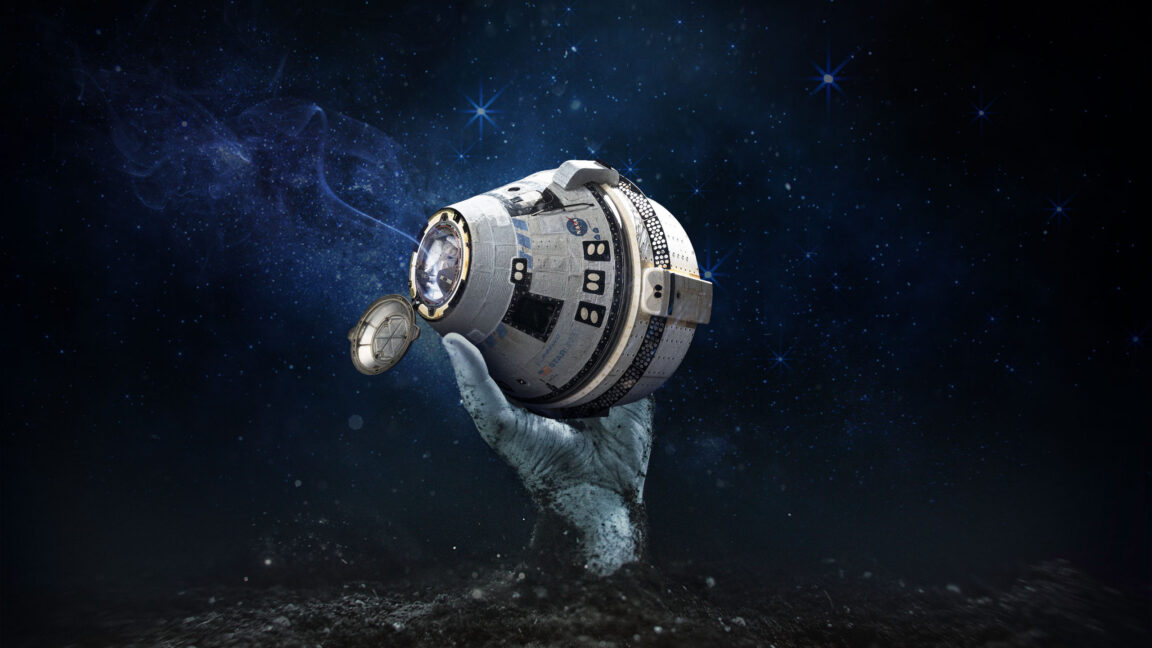
By contrast, Boeing has struggled mightily to bring the more expensive Starliner vehicle into service for NASA. Starliner experienced numerous issues on uncrewed test flights in 2019 and 2022; most seriously, thruster issues nearly led to the catastrophic loss of two astronauts during the spacecraft’s first crew test flight in June 2024. As a result, in February, NASA formally classified the 2024 flight of Starliner as a “Type A” mishap. The NASA astronauts on this flight, Butch Wilmore and Suni Williams, ultimately had to be returned safely to Earth on a Crew Dragon vehicle.
As part of this review, new NASA Administrator Jared Isaacman said the space agency also shared some of the blame for the near-disaster.
“Starliner has design and engineering deficiencies that must be corrected, but the most troubling failure revealed by this investigation is not hardware,” Isaacman wrote in a letter to the NASA workforce at the time. “It is decision-making and leadership that, if left unchecked, could create a culture incompatible with human spaceflight.”
NASA released a 311-page report detailing the findings of an investigative team that looked into the mistakes made by both Boeing and NASA. But despite all of this, half a year later, NASA is returning to Boeing to take a central role in its human spaceflight program.
But Ars now understands the space agency will provide some funding—it’s not clear how much—to Boeing to resolve the propulsion system issues experienced by the spacecraft in its last two flights. Critically, NASA will also help pay to certify an additional launch vehicle for Starliner. The Atlas V rocket, assembled by United Launch Alliance but which inconveniently uses Russian engines, is near retirement. There are six rockets left—one of which will be used for the uncrewed Starliner 1 test flight, and then five subsequent crewed missions.
There will likely be a competition for a new launch vehicle, which will almost certainly come down to United Launch Alliance’s Vulcan and Blue Origin’s New Glenn vehicles.
Why would NASA go to these lengths to keep Starliner in the game? There have been questions about Boeing’s commitment to Starliner in recent years, given its financial losses. Boeing might well have thrown in the towel. So it’s possible that NASA is meeting Boeing halfway to keep a needed spaceflight capability going. (It also helps that Boeing has excellent lobbyists.)
But NASA had limited choices given that SpaceX has repeatedly indicated that its plans to retire Dragon by 2030 are more than aspirational. Although the Dragon development program was financially backed by NASA, SpaceX has contractually fulfilled its obligations with the Dragon missions to the space agency. SpaceX can therefore do as it pleases with Dragon.
So if NASA wants to maintain a presence in low-Earth orbit, it needs a crew vehicle beyond 2030. In July, Ars wrote about how panic was setting in among companies seeking to develop private space stations in low-Earth orbit, where NASA is expected to be an anchor tenant after the end of the International Space Station. As they finalized plans for their stations, the companies were finding that SpaceX would not give them bids for crew transportation, and Boeing was not committing to a price for the 2030s, either. So they were building private space stations with no way to get people there, or back.
With this action, NASA is providing some security to private space station operators that at least one provider will be available, although the lack of competition raises some pricing concerns. Will Boeing be a considerate monopolist?
NASA does potentially have one other option. Although it has said little publicly, Blue Origin has had a dedicated team working on a crewed “Space Vehicle” for several years that will launch on its New Glenn rocket. According to sources familiar with the program, design work on this vehicle is well advanced along with demonstration work such as cabin pressure-vessel manufacturing, extensive parachute testing, in-house thermal protection system testing, life support systems, and more.
The space agency could have opened a new competition to Boeing, Blue Origin, and possibly other wild cards, such as The Exploration Company, for crewed missions in the 2030s. It appears the agency had no appetite for this and its associated costs, though, so soon after the Commercial Crew competition a decade ago.
Nevertheless, the potential to fly Starliner on Blue Origin’s New Glenn is real—and potentially valuable to the company beyond launch contracts.
Were Boeing to decide to fly Starliner on New Glenn, it would essentially give Blue Origin a “free” certification of its rocket for human missions, which can be a costly and time-consuming process. Boeing and NASA would also need to build a crew launch arm and other facilities for human missions, which Blue Origin could also use for its Space Vehicle in the future.
As commercial space station providers look to control costs, the more powerful New Glenn rocket may also have another benefit. It could potentially launch both a crewed spacecraft and a cargo vehicle, such as Northrop’s Cygnus, into orbit at the same time, saving launch costs. It is not clear that Vulcan would have this dual-payload capability.