
Development
Here's what to expect from the fiery, 14-minute return of Artemis II
April 10, 2026 Development Source: Ars Technica
Share this article



After coasting for about 20 minutes following separation, the Crew Module will encounter the upper fringes of Earth’s atmosphere. NASA uses the anachronistic measurement of 400,000 feet for this altitude, which is 76 miles, or 122 km. Anyway, things will start to get very real at 7:53 pm ET as the spacecraft and crew begin to feel the effects of the thickening air.
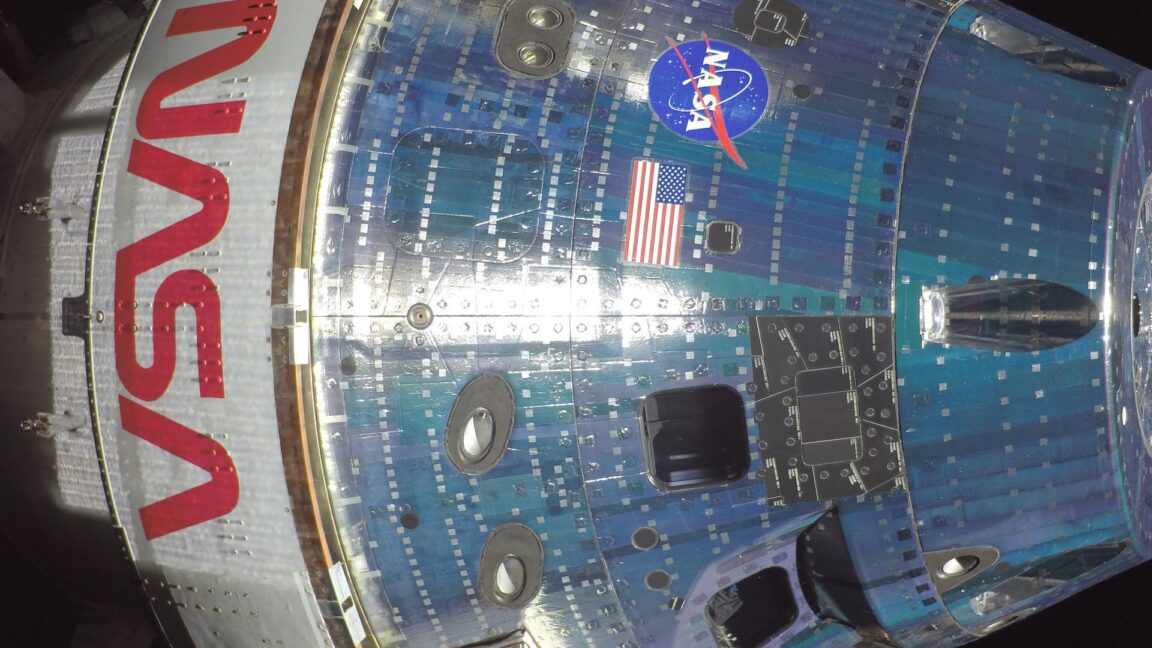
Orion will hit the atmosphere at nearly 24,000 mph (38,600 kph), accelerating all the way as it succumbs to Earth’s gravity. Outside the spacecraft, temperatures will steadily increase, approaching 3,000° F (1,650° Celsius). The crew will be comfortable inside their entry suits, which include temperature-controlled air.
About 24 seconds after reentry, the spacecraft will largely be engulfed in plasma, leading to a six-minute blackout period. During this time, the astronauts will not be able to speak with Mission Control. And on Earth, we’ll be left in the dark about what’s happening above, when what is absolutely the most critical phase of the mission unfolds.
NASA’s new administrator, Jared Isaacman, also had questions when he took the job in December 2025. But in January, after a review, Isaacman announced he had “full confidence” in Orion’s heat shield using the new entry profile. He invited Ars Technica to Washington, DC, to sit in on a technical briefing at the time. From this detailed information, it sure seemed like NASA had put in the hard work and testing to back up its decision.
Even so, you’ve got to go fly to be sure. And that’s what will happen this evening.
“There’s no question that I’ll be anxious,” said Amit Kshatriya, the space agency’s top civil servant, this week. “We’ve done the work. It’s impossible to say you don’t have irrational fears left. But I don’t have any rational fears.”
After the heat shield bears the brunt of the heating, Orion will jettison the “forward bay cover” at the top of the spacecraft at about 35,000 feet. This protective cover must be cast off for three small, drogue parachutes to deploy at about 22,000 feet. After three pilot parachutes deploy, the mains are due to come out at about 6,000 feet. The aim is to slow the spacecraft to 20 mph at splashdown.
Parachutes have been deploying from returning spacecraft for nearly seven decades. Even so, it’s a nervous moment since there is no backup. If they fail, the mission fails.
Under a nominal reentry, the crew will experience two brief periods of 3.9 Gs. However, in some scenarios, these G-loads could reach 7.5 Gs, entry flight director Rick Henfling said.
After splashdown, recovery crews from the USS John P. Murtha will approach Orion and deploy an inflatable device at Orion’s hatch, known as the “front porch.” Winds and seas at the recovery area are forecast to be calm. Recovery crew members, in a nominal scenario, will extract astronaut Christina Koch first, followed by Victor Glover, Jeremy Hansen, and finally Wiseman.
They will then be transported by two helicopters back to the recovery ship for an initial checkout. If all goes well, the triumphant astronauts will fly back to Houston on Saturday morning to be reunited with their family members.