
Development
Could United Launch Alliance's money problems finally force its owners to sell?
September 11, 2026 Development Source: Ars Technica
Share this article



Rocket Lab’s financials paint a similar picture. It reported $434 million in revenue for the first half of 2026 and credited a quarter of it to launch services.
Given all this, what are we to make of the company that SpaceX supplanted as the country’s leading launch provider?
United Launch Alliance, founded in 2006, was born in an era when the US government was the dominant force in the domestic launch market. Commercial launch demand was on the wane, and what demand there was often went to launch providers in Europe or Russia. Executives at the two leading US launch companies—Boeing and Lockheed Martin—knew they were in trouble. Boeing’s Delta IV rocket program, in particular, was in danger of going out of business.
The situation jeopardized the US government’s policy of ensuring two separate rocket types are available to launch national security payloads into orbit. With the government’s blessing, Boeing and Lockheed entered into a 50-50 joint venture, merging their Delta and Atlas rocket programs under one roof. The merger all but erased competition from the US launch market. However, the sole-source paradigm proved lucrative for ULA’s corporate parents, which each reported hundreds of millions of dollars in earnings from ULA per year in the first decade of the company’s existence.
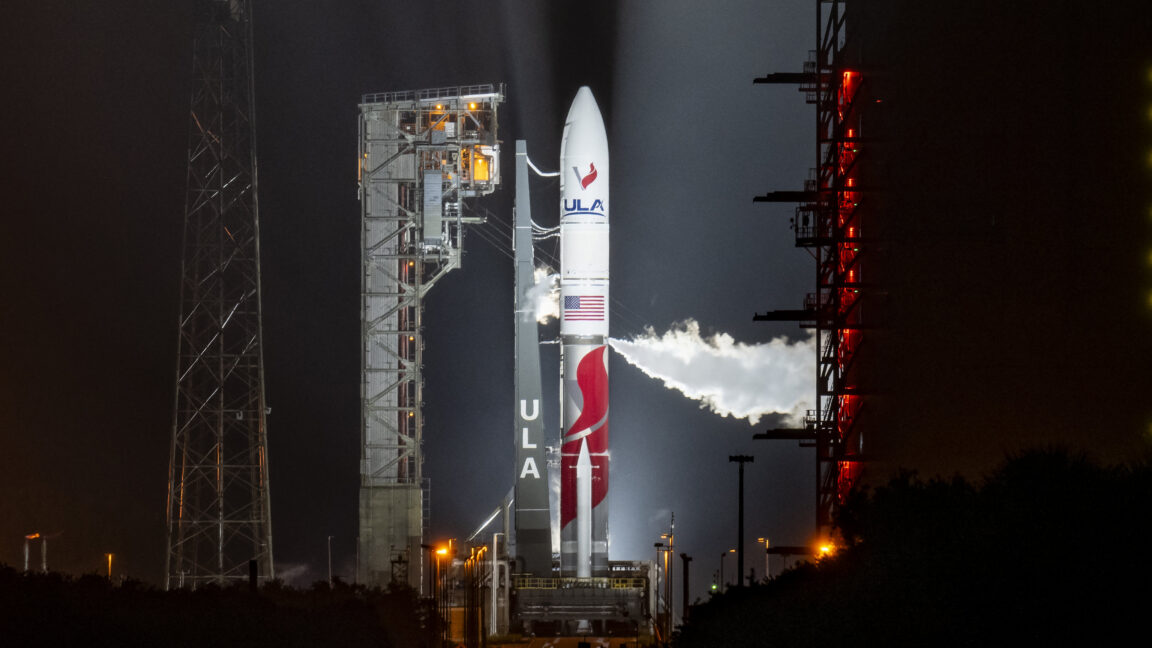
But the nozzle problem wasn’t actually fixed. A similar failure on the fourth Vulcan launch last February has grounded the rocket for more than six months. ULA aims to return to flight with the Vulcan rocket soon, perhaps by the end of this month, on a commercial flight with a batch of Amazon Leo broadband satellites. The US Space Force has not cleared Vulcan to resume launches with military payloads, and the program’s cumulative delays have forced military officials to reassign several missions from ULA to SpaceX. Military officials aren’t happy, and they’ve let Boeing and Lockheed know.
Boeing and Lockheed’s shareholder equity in United Launch Alliance in 2025 was half of what it was 10 years ago, adjusted for inflation. Shareholder equity, or book value, is a measure of a company’s assets minus liabilities. It’s the amount of money a company’s shareholders would receive after liquidation. The chart below shows the change in how Boeing and Lockheed have valued their equity stakes in ULA since 2016.
Bloomberg reported last month that ULA was looking to raise $1.5 billion, three times the original amount. It’s a remarkable turnabout for Boeing and Lockheed Martin, which have long tapped ULA for a steady flow of revenue.
Boeing and Lockheed’s efforts to shore up ULA’s finances come after a multiyear sales pitch shopping ULA to potential buyers. None agreed to pay the sum of roughly $5 billion that ULA’s owners were originally asking. Speculation in the launch industry at the time was that a fairer selling price might be $2 billion to $3 billion.
Blue Origin, Jeff Bezos’ space company and a key supplier for the Vulcan rocket, appeared for a time to be the leading contender for buying up United Launch Alliance. That was when ULA was riding high, soon after the successful first flight of Vulcan in 2024. Industry chatter about the potential sale quieted after Vulcan’s recent booster woes.
Other candidates for taking over ULA included Amazon, Vulcan’s biggest commercial customer. Amazon has already funded a significant expansion in ULA launch capability to support the Amazon Leo constellation. Two other ULA suppliers, Northrop Grumman and L3Harris, could also be interested, as could a private equity firm or even a buyout by one of ULA’s current owners. The list of prospective buyers is largely conjecture. Company officials usually don’t speak publicly about mergers and acquisitions until they’re ready to announce them.
A Boeing spokesperson responded to questions from Ars, saying, “Consistent with our corporate practice, we don’t comment on potential market rumors or speculation about financial activities.” Lockheed Martin and ULA did not provide a statement by late Thursday.
Engine-builder Aerojet Rocketdyne, now split into separate companies, submitted an unsolicited offer to buy ULA for $2 billion in 2015. Boeing and Lockheed dismissed the bid. $2 billion was probably below market value at the time.
Today, the sale price for any potential acquisition of ULA is almost certainly lower than it was a few years ago, but ULA still has a strong pedigree, with a rocket that is actually (kind of) flying, something many US launch companies can’t say. This could open the possibility of new dark-horse contenders for purchasing United Launch Alliance.
There are reasons to question AST’s long-term business outlook, especially as it goes head-to-head against SpaceX and Amazon, two of the most well-capitalized US tech firms. However, vertical integration has served most space companies well, and the same may be true with AST. But there’s a catch. ULA itself is not vertically integrated, with suppliers providing key parts, like engines, payload fairings, and avionics.
AST would surely improve its position with more control of its own access to space. AST already builds its own satellites—each with enormous 2,400-square-foot phased-array antennas—and manages much of its frontend connectivity service, working alongside mobile phone telcos like AT&T and Verizon. T-Mobile is SpaceX’s largest domestic partner on Starlink direct-to-cell.
A buyer for ULA outside of the launch business would also maintain competition in the US launch market. Any sale would have to be approved by the Federal Trade Commission and Department of Justice to ensure it does not substantially reduce competition. Some companies in other sectors are aiming to complete mergers and acquisitions under the Trump administration, which they see as providing a favorable regulatory environment for such transactions.
The launch market would lose a competitor if a company like Blue Origin, with its own heavy-lift rocket, acquired ULA. This would be unwelcome news for the US military as SpaceX prepares for the retirement of its workhorse Falcon 9 and Falcon Heavy rockets in favor of the newer, more powerful Starship rocket. Starship is unlikely to be certified any time soon for the US government’s most critical national security missions.
ULA hopes to resume burning down its backlog in the coming weeks, with the return-to-flight of Vulcan slated for as soon as the end of September. This will be the first of 38 launches Amazon has reserved on the Vulcan rocket and comes as the company faces a bottleneck in launch capacity due to Vulcan’s grounding and the explosion of Blue Origin’s New Glenn rocket on the launch pad in May.
The upcoming launch will be ULA’s first under the direction of its new CEO, Mark Peller, who was named to the position last month. Peller replaces Tory Bruno, who retired from ULA last December to take a job overseeing national security business at Blue Origin. Peller is a 36-year veteran of the launch industry, including 20 years at United Launch Alliance, where he led development of the Vulcan rocket from its inception through its certification for US government missions in 2025.
“ULA has a tremendous history of launching some of the nation’s most important national security and exploration missions, and the future is limitless with the new capabilities and performance of our Vulcan rocket,” Peller said in a statement announcing his new role as CEO.
In the near term, this “limitless future” is in the hands of the engineers preparing to return the Vulcan rocket to flight. The next launch of Vulcan will require the thrust from six solid rocket boosters, the most ever on a Vulcan flight to date. That means six data points to show ULA and Northrop have a path to overcoming the booster nozzle problem.
Upon clearing that hurdle, ULA needs a buyer willing to invest in innovation. It would help if the presumed new owner had some skin in the game as an anchor customer for the Vulcan launch vehicle, and more importantly, for what should undoubtedly come next—a reusable rocket.