
Development
Europe will go it alone on Venus mission after NASA yanks radar instrument
September 11, 2026 Development Source: Ars Technica
Share this article



Most prominent among the cuts in the latter category are NASA’s contributions to three European-led science missions. Two of the missions are big, new space-based observatories, LISA and New Athena. LISA will be the first space mission to measure gravitational waves, ripples in the fabric of spacetime emanating from cataclysmic cosmic events like mergers of black holes. New Athena will be the largest X-ray telescope ever built, a successor to NASA’s Chandra X-ray Observatory, still operational after launching in 1999.
Before NASA’s contributions were in doubt, LISA and New Athena were on track for launches in the late 2030s.
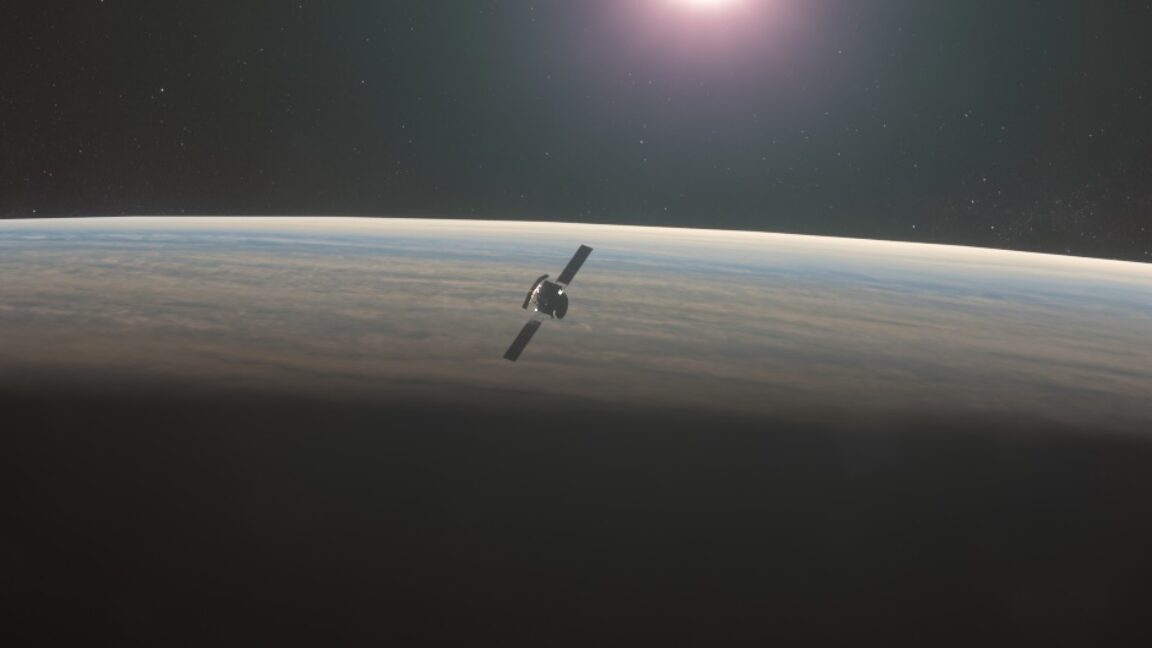
But the most pressing impact for ESA is how to fill the void left by NASA in the Envision mission, which was supposed to launch in 2031. NASA and ESA signed an agreement in early 2024 detailing each partner’s role on Envision, and contracts were awarded for construction of the Envision spacecraft and its instruments. NASA had spent more than $50 million on its contributions to the mission as of 2025, when the Trump administration first proposed canceling it.
With NASA’s fulfillment of its part of the agreement in doubt, ESA officials issued contracts to begin technology development on a European radar payload for Envision. Industrial teams in the United Kingdom and Italy are now studying radar designs under contract with ESA, with the goal of delivering a radar for Envision with similar capabilities as the NASA-funded radar, which was to be built at the Jet Propulsion Laboratory in California.
“We don’t know what the final design will be, but we have the same requirements, so we’re expecting that we can do exactly the same science,” said Anne Grete Straume-Lindner, ESA’s project scientist for Envision, in a presentation at the Europlanet Science Congress. “We’ll have the same modes, but in detail, of course, there can be differences.”
Carole Mundell, ESA’s director of science, told Ars earlier this year that the agency’s 23 member states committed “unprecedented” funding for ESA science at a meeting of government ministers last year. The member states agreed to increase ESA’s science budget by 3.5 percent per year through 2028, plus inflation. Still, ESA’s science budget is a fraction of that of NASA, averaging out to about 750 million euros (less than $900 million) each year.
That’s enough to start work on a European radar for Envision, even as ESA still awaits a formal notification from NASA on the status of its contribution to the mission. “NASA conversations with ESA regarding Envision are ongoing,” a NASA spokesperson said.