
Development
Is Russia's rival to Starlink failing? Here's what we know.
September 2, 2026 Development Source: Ars Technica
Share this article



Some technical anomalies were expected. About 5 percent of SpaceX’s first batch of Starlinks failed almost immediately after launch. Over time, this group of 60 Starlink prototypes suffered a failure rate of about 13 percent, according to McDowell. With more experience, SpaceX’s next 420 Starlink satellites had a failure rate of about 3 percent. SpaceX’s current generation of Starlink Version 2 satellites has a failure rate of about 0.01 percent, according to McDowell’s tabulations.
The US military’s Space Development Agency is fielding its own constellation of data relay satellites for applications in missile targeting and command and control. Some of the agency’s first 42 operational satellites encountered thermal and propulsion problems after launching last year, and they have taken longer than anticipated to raise their orbits.
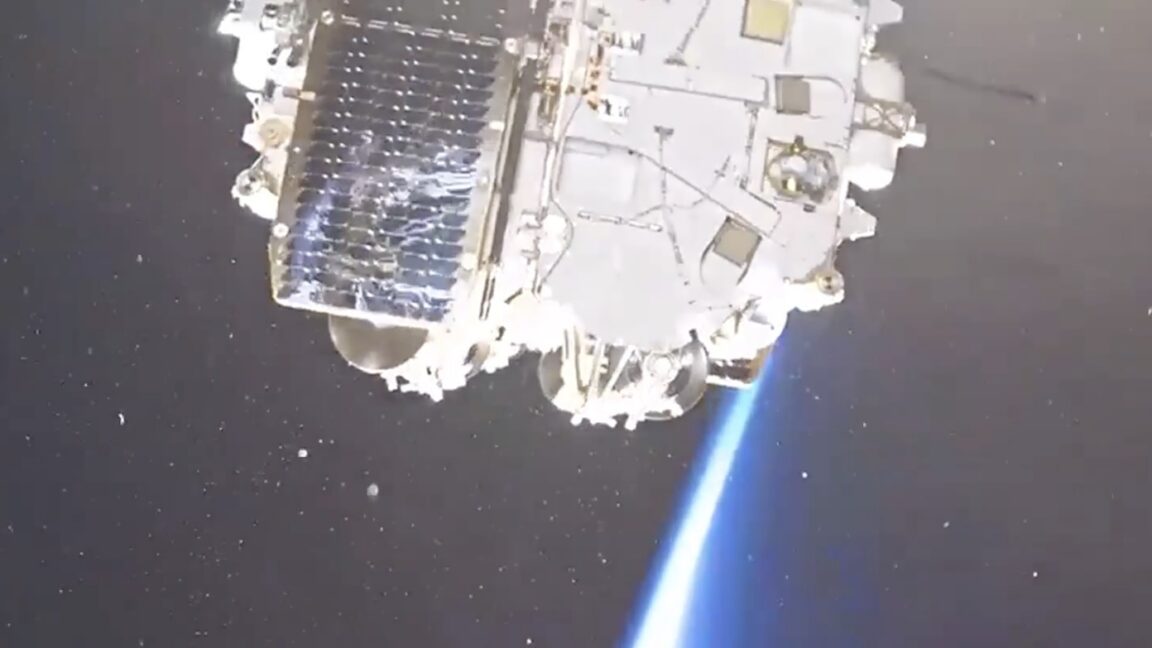
In its assessment on Monday, the Institute for the Study of War wrote that the second batch of Rassvet satellites “appears to have failed to reach intended operational altitudes.” Zero Rassvets have reached 500 miles, and none of the second group have climbed above 300 miles, whereas much of the first cluster seems to have settled into stable orbits.
However, there’s a lot we don’t know. Perhaps, for untold reasons, Russian officials decided to abandon plans to orbit the Rassvet satellites at 500 miles. Starlink satellites, after all, fly closer to 300 miles. This would put the Rassvet satellites closer to users on the ground, which comes with performance benefits. But there’s a trade-off in that lower-altitude constellations require more satellites for seamless global coverage.
It’s not all that surprising that those hopes failed to materialize. Russia’s satellite industry has long suffered from chronic underfunding, corruption, production bottlenecks, and reliability problems. Russia’s war in Ukraine has brought on new threats, from Ukrainian cyber, drone, and missile attacks on space industry infrastructure to personnel and funding redirected from the Russian space program to support the war effort.
The 12 Rassvet satellites currently flying at 300 miles are lined up in a formation to bring them over Ukraine twice per day for communication windows of up to 90 minutes.
“The existing Rassvet satellite constellation still presents a threat to Ukraine as it may allow Russian forces to conduct more precise strikes against Ukraine using remotely controlled unmanned systems and leverage Rassvet satellite communications even during limited windows of connectivity,” the Institute for the Study of War wrote in its assessment.
It will take 16 more launches to bring Rassvet’s coverage over Ukraine anywhere close to continuous, and the Ukrainian military is taking steps to make it more difficult for Russia to launch more Rassvet satellites.
Earlier this month, Ukraine struck the factory that builds the Soyuz rockets needed to launch Rassvet payloads. Soyuz rockets are the workhorse for Russia’s space program, launching navigation satellites, spy spacecraft, and crew missions to the International Space Station. Ukraine has dispatched drones to attack the Plesetsk Cosmodrome in far northern Russia, home to the Soyuz launch pad used for Rassvet missions. So far, the drone strikes have not landed a direct hit on Plesetsk.
“Ukrainian strikes against facilities and sites key to Russia‘s satellite and space industry may hinder Russia’s ability to launch satellites and further delay Russia’s goal to establish its own analogue of Starlink in the near-term, including for use on the battlefield in Ukraine,” the Institute for the Study of War wrote in its report this week.