
Development
Pocket's AI made my game ideas real. Now Meta controls the results.
August 31, 2026 Development Source: Ars Technica
Share this article



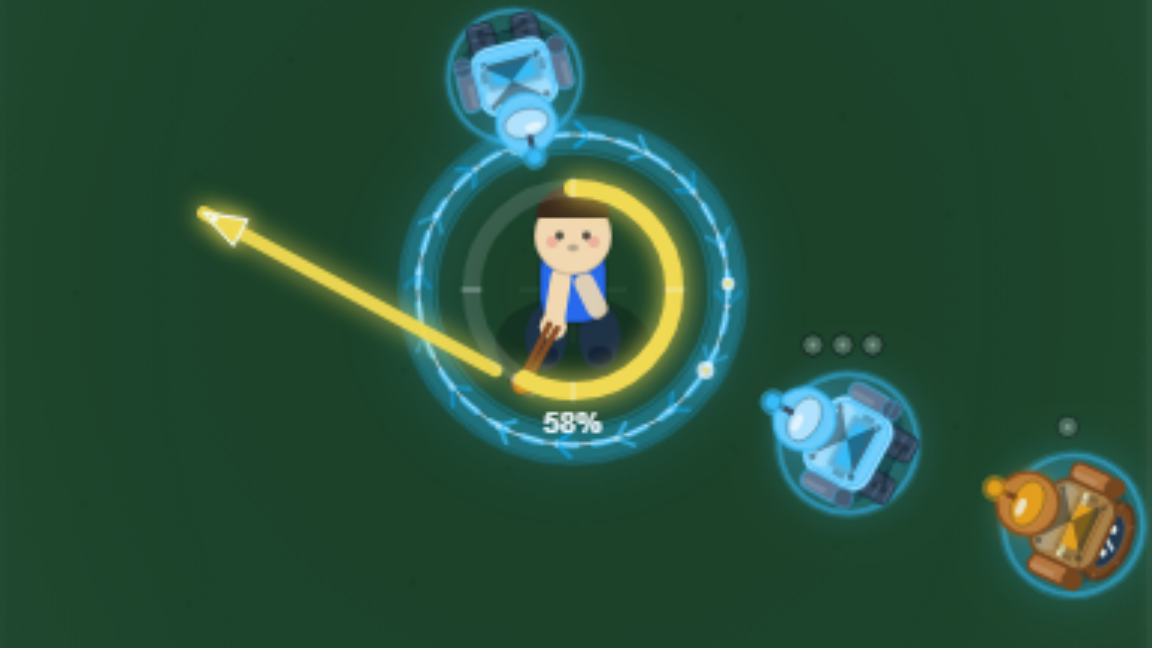
I tried to be at least somewhat detailed in my baseline “engine” prompt to Pocket:
“An overhead shot of a man in the center of the screen. When you tap and hold he rotates a sling around him in a circle. When you lift your finger the sling sends out a ball perpendicular to the sling. The longer you hold the faster the ball comes out.”
As magical as Pocket’s game-creation process feels, the limited way Pocket lets you share those games with the world feels the opposite. The only way to let other people experience your Pocket creation is by sharing it as a Post, pairing your little interactive gizmo with a small caption and a cover photo.
You can share a link to that post anywhere you’d usually share links online, and those following the link can even play an HTML5 “preview” version of your gizmo in their browser without having to download the Pocket app. This can even work on desktop browsers, as long as your app doesn’t rely on mobile-focused inputs like multitouch or tilt-sensing.
Despite these issues, some people seem to be finding at least some semi-viral success for their gizmos, if the dozens of comments and hundreds of likes on the most popular posts are any indication. Unfortunately, the two gizmos I spent a few hours tinkering with are not among those viral success stories, amassing just a few hundred “views” and a handful of likes between them in the little time they’ve been available.
That’s OK. I didn’t go into this expecting to achieve instant fame and success by letting an AI craft my brilliant game design ideas (though I do think the ball-juggling game ended up being somewhat compelling). The real problem is that, even if my gizmos were a success, that success would be completely trapped on the Pocket platform. There’s no way to export the code Pocket generates and post it to my own webpage or develop it into a fully realized mobile app, for instance. There isn’t even any way to look at whatever code Pocket has generated, as far as I can tell.
Maybe there’s a future where Pocket gets popular enough that the prospect of getting an AI creation noticed by its massive audience is reason enough to commit to its specific flavor of powerful, AI-assisted mini-game coding. For now, though, Pocket has helped convince me of both the value of AI-powered coding agents and the value of having full control of the output those agents can generate.