
Development
Satellite operators are in panic mode due to a worsening launch crisis
August 17, 2026 Development Source: Ars Technica
Share this article



Myriad factors are driving this crunch, but the principal concern of late has been SpaceX.
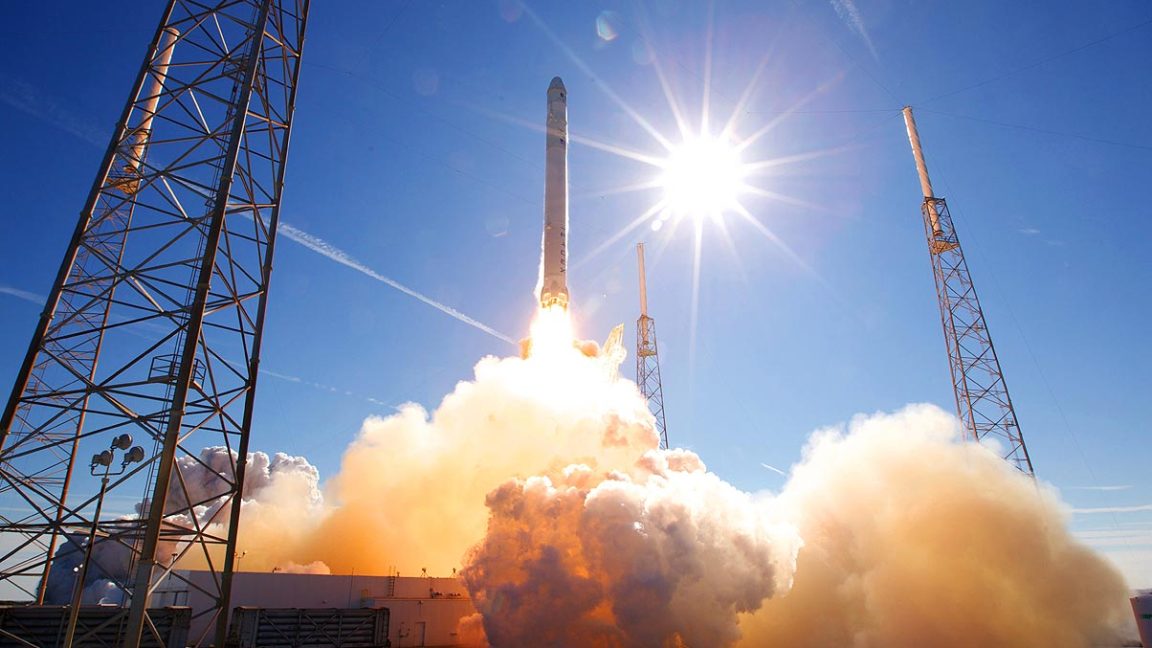
The company that is almost exclusively responsible for the dramatic increase in launch availability in the 2020s has signaled that it intends to wind down Falcon 9 operations as quickly as possible in favor of the larger Starship rocket. Some might see that as a good thing due to Starship’s enormous payload capacity. But there are growing concerns that SpaceX will largely focus on its own payloads—Starlink v3 satellites and orbital data centers—because of their potential to drive far greater profits. The Starship rocket’s PEZ satellite dispenser, optimized for Starlink, is an indication of the company’s priorities.
In financial documents, it’s clear that SpaceX views commercial launch as a rounding error compared to revenues from its own satellites in space. A majority of the company’s revenue ($4.3 billion out of $7.8 billion) during the second quarter of 2026 came from Starlink, whereas less than 12 percent was due to space services, of which commercial launch is but a fraction. This disparity is only likely to widen.
SpaceX has already moved beyond “peak” Falcon 9 operations. The company flew the rocket 165 times last year, and it will probably fly about 20 fewer missions this year. SpaceX is already making ground system changes to reflect these reductions.
The company’s president, Gwynne Shotwell, has previously said the operational lifetime of the Falcon 9 may end in 2030 or 2032. However, more recently, commercial satellite customers have been running into difficulties when trying to purchase a launch after 2028. One source said SpaceX has told the US government that it intends to end commercial launches after 2028 but will continue flying the Falcon 9 rocket for a limited number of federally contracted missions after that.
This is because of an inescapable reality: Without SpaceX, the Western launch market would have been completely screwed over the last half-decade.
On February 24, 2022, Russia launched a full-scale invasion of Ukraine. This took Russian rockets off the table for Western countries, including European nations. Most immediately impacted was OneWeb, which lost some satellites already in Soyuz launch processing and eventually had to turn to a direct competitor, SpaceX and its Falcon 9 rocket, to complete its constellation.
The loss of the Soyuz and Proton rockets for Western commercial purposes came at the same time that two other leading providers were shutting down their older rockets for newer models. In Europe, the transition from the Ariane 5 to Ariane 6 rocket was underway. Across the pond, United Launch Alliance sought to end its dependence on Russian engines for the Atlas V rocket by migrating to the new Vulcan rocket.
Both projects had initially targeted completion by 2020, but by the time of the war’s outbreak, neither new vehicle was close to flying for the first time. Effectively, this meant that Arianespace and United Launch Alliance had a dwindling number of older rockets that were already spoken for.
As SpaceX’s main competitors struggled to bring new vehicles online, the Falcon 9 rocket flew and flew. It backstopped the entire Western hemisphere’s launch needs, boosting everything from Europe’s prized Galileo satellites to NASA astronauts to Jeff Bezos’ Amazon LEO vehicles into orbit.
The Ariane 6 rocket made its debut flight in July 2024 and has had a nice track record. But with a production goal of ten vehicles a year, the rocket won’t make a meaningful dent in the global need for launch capacity.
That left just two large rockets, the Vulcan vehicle and Blue Origin’s New Glenn booster, as the key vehicles to bring competition to SpaceX and help ease the growing demand for launch capacity in the mid-2020s.
So nearly half a decade after the onset of the Ukraine War, the Western launch market has not changed much. Ariane 6 has made a difference for Europe, but for the rest of the commercial launch industry, a holding pattern remains as Falcon 9 backstops all.
Vulcan and New Glenn are heavy lift rockets, but beyond them, a new generation of US medium-lift vehicles is in development.
The smallest is Stoke Space’s Nova rocket, which is intended to be fully reusable with a capacity of up to 7 tons to low-Earth orbit. Stoke’s chief executive, Andy Lapsa, has been careful not to release a target date publicly. However, during a recent visit to the company’s factory in Kent, Washington, company officials told Ars that they hope to deliver the flight version of the first stage to the launch site in Florida for testing this fall. A launch seems possible during the first half of 2027 if things go well.
Rocket Lab’s Neutron vehicle can loft 13 metric tons to low-Earth orbit in a reusable model and 15 tons in expendable. This vehicle’s launch target, which was once the year 2024, has slipped multiple times. According to its latest guidance, the company plans to ship Neutron to its launch site in Virginia before the end of this year. A debut launch in 2027 seems plausible but not guaranteed.
Since being acquired by Google billionaire Eric Schmidt, Relativity Space has been making steady progress on the large Terran R vehicle, which is intended to have a reusable mode lift capacity of 23.5 metric tons and 33.5 metric tons in expendable mode. Given recent progress with Terran R, a debut launch is plausible within the next 12 months, but since this is such a big rocket, there may be additional delays.
Even if one or more of these rockets makes its debut in 2027, none of the companies above have much experience with medium-lift growing pains. It will take time to scale up operations to produce more than a handful of launches per year. For this reason, Stoke’s vice president of business development, Devon Papandrew, thinks the launcher crisis will worsen in the next couple of years before conditions improve.
“I think it’s fair to say there’s more than a bit of a panic about the availability of launch,” Papandrew told Ars. “Even if the four medium-lift new entrants all achieve their goals in terms of flight success and cadence, it’s actually not going to make that much of a difference in demand right away. I’ve been saying for a while that I think 2028 is when this problem becomes really acute.”
SpaceX founder Elon Musk would also have a massive war chest to oppose any such action, and because he is a large donor to Republicans, he would have considerable political capital to deploy.
And does it make sense to make war on SpaceX? The company’s success in launch and low-Earth orbit communications offers the United States its best weapon in the civil and national security contest with China, and lawmakers would likely be reluctant to kneecap that effort. For these reasons, space policy experts do not expect a serious conflict between the government and SpaceX over the future of the Falcon 9 rocket.
“Any government effort in this area to keep Falcon 9 flying would have to be mutually agreeable and beneficial to both parties,” said Scott Pace, director of the Space Policy Institute at George Washington University.
Pace and other policy experts said the US government could be taking actions now to address these problems, such as increasing the number of spaceports and being more accommodating of expansion at existing US launch facilities. Efforts could also be made to sign “technology safeguards agreements” with nations like Japan to allow US rockets to launch commercially from there and elsewhere in the world.
But the fundamental problems are not going away.
Over the last decade, many people in the US launch industry have issued forecasts that have been far too optimistic, and so far, only SpaceX has been able to rapidly increase its cadence. Demand has outstripped supply, and that will probably continue for some time.
“The way I think this pans out is we have a slow and eventual introduction of new vehicles and a slow and hopefully steady ramp up of rockets from incumbents,” Henry said. “And come the 2030s, we get some semblance of balance. But I don’t see it happening quickly, unfortunately.”