Development
Samsung Galaxy Z Fold 8 Ultra review: The ultra foldable with an ultra price
August 14, 2026 Development Source: Ars Technica
Share this article



Samsung’s One UI is a known quantity at this point. It comes loaded with some duplicative apps and junk you may not want, like Facebook and LinkedIn. The interface can be a little cluttered, and there are features buried in the settings that you’ll probably never touch. But Samsung doesn’t change much year-to-year, so if you’ve used a Samsung phone in the past few years, the learning curve will be minimal.
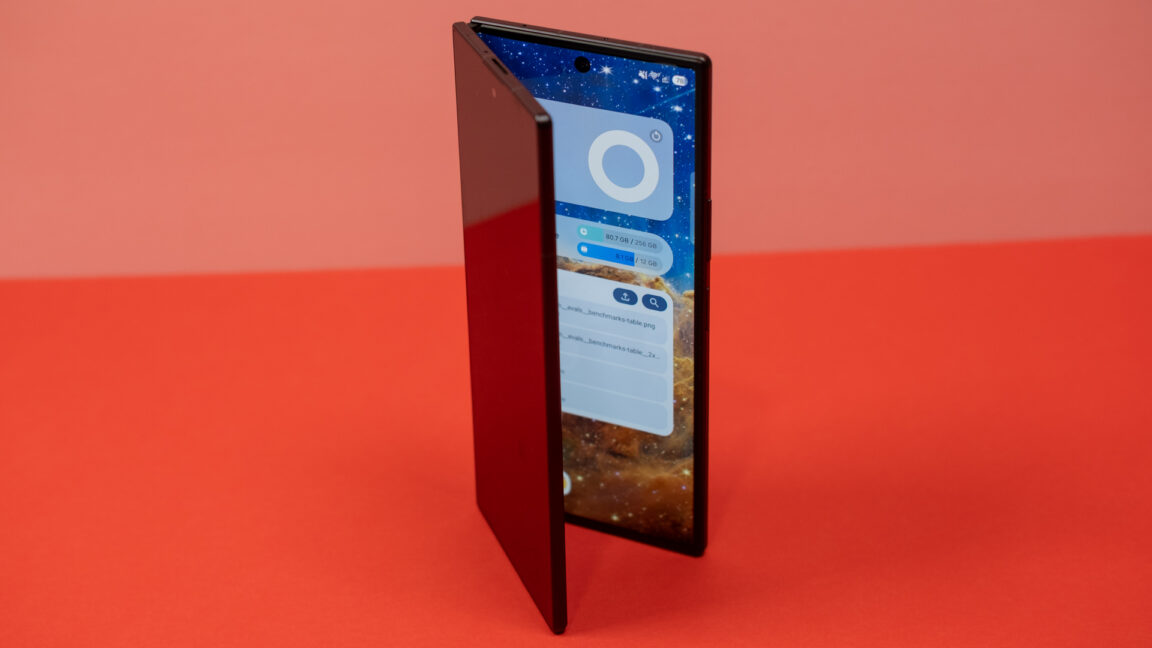
Samsung makes a big deal out of multitasking on its foldables, offering robust window management that goes beyond what you get from Google or Motorola. It’s a snap to move apps around, break them out into floating windows, and save configurations. You can also have three apps running live in split-screen on the Fold, whereas most other foldables limit you to two.
Samsung’s Now Nudge feature offers proactive suggestions powered by on-device AI. For example, you may see a suggestion to add an event to your calendar based on a text conversation. In general, this feature seems better at completing tasks correctly, but it still doesn’t show up very often. It is, however, nice that nudges now open apps in split-screen instead of taking you away from the content you’re viewing.
As on Pixel phones, you have the option of directing a robot to answer a suspicious call. It transcribes what the caller says, giving you the option of answering or getting more information before picking up. This alone almost makes up for the issues I have with One UI.
Like the Galaxy S26 Ultra, Samsung’s new flagship foldable runs on a version of the Qualcomm Snapdragon 8 Elite Gen 5 optimized specifically for its devices. This is functionally the fastest mobile processor in the world, featuring eight high-speed Oryon CPU cores and an Adreno GPU that can rival some laptop chips.
You won’t find yourself waiting on the Z Fold 8 to get things done (unless you ask Gemini to use an app). It’s a snappy experience, even when running multiple apps side by side. Games also run flawlessly on this device, as long as you don’t mind a toasty phone.
In benchmarks, the Galaxy Z Fold 8 Ultra scores very near the top of all current phones (see below). While the chip is identical to the one in the S26 Ultra, it doesn’t quite match that phone’s scores. This is most likely due to thermal constraints in the foldable.
Samsung’s new foldable still comes with 12GB of RAM in the base model. You can upgrade to 16GB with more storage, but the phone is already very expensive. Overall, apps remain in memory long enough, and I haven’t noticed issues with multitasking. Still, at this price, 16GB of RAM would make more sense. Perhaps if we were not in the midst of the great AI RAM shortage, Samsung would have stepped up to 16GB.
Capture speed has always been a challenge for Samsung phones, which seem to lean toward being brighter, even at the expense of some blur. Things are better than they once were with the Z Fold 8 Ultra, but you should take a few snaps of any subject that is moving around to make sure you get one that’s crisp. Luckily, Samsung’s burst mode is quick and reliable.
The slow pace of change in mobile technology has prompted many of us to become a bit jaded, but if foldables of this caliber were somehow remarkably cheaper, they would be in everyone’s pocket. But that’s the problem—they’re not cheaper. In fact, all computing devices are getting more expensive.