
Development
Research roundup: 6 cool science stories we almost missed
August 4, 2026 Development Source: Ars Technica
Share this article



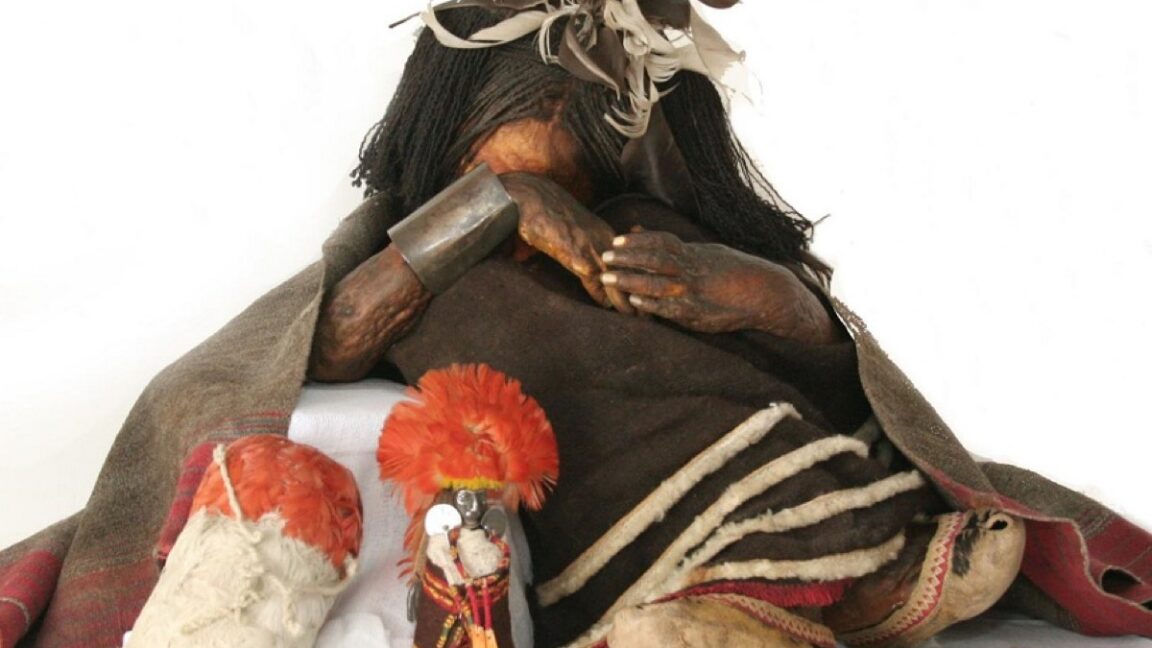
The team also analyzed the remains of two young girls found at another site, Cerro Esmeralda, previously believed to have died by strangulation. While they weren’t able to identify an exact cause of death because of the condition of the remains, the authors concluded that the marks on the two girls’ necks were not consistent with strangulation and were more likely caused by textiles, i.e., clothing. CT scans showed that the hyoid bones were still intact with no evidence of fractures and in their correct anatomical position.
Science Advances, 2026. DOI: 10.1126/sciadv.adz9055 (About DOIs).
Credit: Zeinab Hashesh et al., 2026 Credit: Zeinab Hashesh et al., 2026
Frontiers in Environmental Archaeology, 2026. DOI: 10.3389/fearc.2026.1844402 .
Betelgeuse has surprised astronomers yet again. Observational data from the European Southern Observatory’s Very Large Telescope (VLT) has provided the first firm evidence that Betelgeuse has a faint orbiting companion star, dubbed Betelgeuse B, according to a paper published in the journal Astronomy and Astrophysics. Astronomers have been looking for a companion star since its existence was first predicted nearly a century ago. A 2024 paper noted that the star would likely be easiest to observe in December of that year when Betelgeuse was farthest away from its companion.
The authors of this latest paper were able to directly image Betelgeuse B with the VLT’s SPHERE instrument, giving scientists the clearest view of the companion star yet. One reason they were able to spot it is that the companion star is much more massive than previously thought—about two to three times the mass of our Sun. There is one more step for full confirmation: Astronomers will attempt to make a direct observation one year from now on the other side of the star. But little doubt remains that Betelgeuse B exists, and now the big question is what impact the companion star will have on Betelgeuse’s future transition to supernova.
Astronomy and Astrophysics, 2026. DOI: 10.1051/0004-6361/202661023 (About DOIs).
Credit: Valentina Giuffra/University of Pisa Credit: Valentina Giuffra/University of Pisa
Yale University researchers collaborated with a paleopathologist from Italy’s University of Pisa to perform the analysis on four rib bones from the brothers, part of an ongoing project to track the spread and evolution of the disease from Renaissance central Italy to the 20th century. They identified a strain of Plasmodium falciparum, the cause of the deadliest forms of malaria in humans, in Giovanni’s bones, and a second species, P. malariae, in Francesco’s. This is consistent with contemporary archival records noting symptoms consistent with malaria, as well as the Pisan team’s earlier immunological analysis of the remains.
iScience, 2026. DOI: 10.1016/j.isci.2026.116371 .
Credit: Stéphane Granzotto Credit: Stéphane Granzotto