
Development
Rocket Report: Lightning strikes in China; Starship launch on deck
July 24, 2026 Development Source: Ars Technica
Share this article



Robotic servicing mission launches from Cape Canaveral. A spacecraft fitted with two flexible robotic arms is on the way to geosynchronous orbit after launching earlier this week on a SpaceX Falcon 9 rocket, kicking off a planned decade-long mission to open new frontiers in satellite servicing, Ars reports. The Mission Robotic Vehicle, owned and built by Northrop Grumman, rocketed into orbit from Cape Canaveral Space Force Station in Florida on Tuesday. Three small propulsion pods, each functioning as standalone spacecraft, accompanied the MRV aboard the Falcon 9 rocket.
First of its kind… The Mission Robotic Vehicle is arguably the most advanced servicing satellite ever launched. It’s certainly the most sophisticated orbiting servicer we know anything about. Developed in a public-private partnership between Northrop Grumman and DARPA, the MRV uses its two robotic arms to install the propulsion pods onto other satellites in geosynchronous orbit and extend their lives.
Relativity announces new plans for Florida. Relativity Space plans to expand its operations at Cape Canaveral and add thousands of high-paying new jobs by the end of 2034, Florida Today reports. The company plans to expand test and launch support infrastructure across NASA’s Kennedy Space Center and Cape Canaveral Space Force Station, according to Space Florida, an economic development agency chartered to attract aerospace business to the state. Relativity’s plans for Florida include the construction of an additional factory for the company’s Terran R rocket, which will launch from a pad already under construction at Cape Canaveral. Relativity’s current factory is in Long Beach, California.
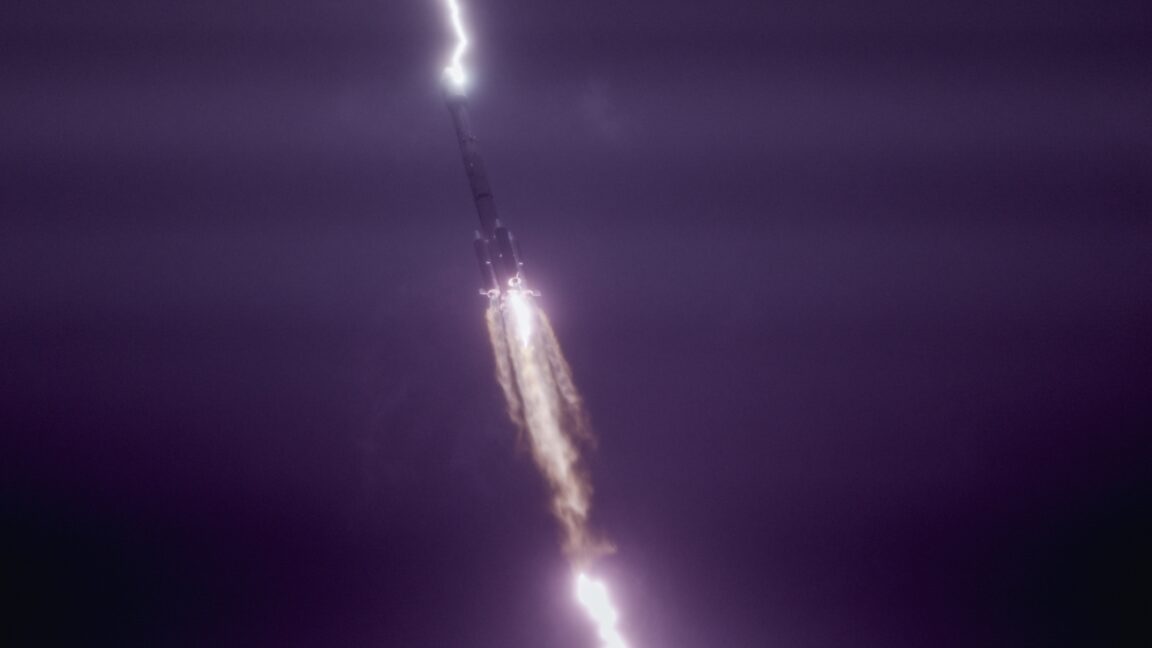
Chinese rocket overcomes lightning strike. China launched one of its most successful rockets Thursday, sending a Long March 3B launcher to orbit with a Tianlian data relay support to link Mission Control with the country’s Tiangong space station. The Long March 3B is a dependable rocket, with nearly 120 flights since entering service in 1996. But the rocket was tested on Thursday when a bolt of lightning struck the vehicle shortly after liftoff from the Xichang Satellite Launch Center in southwestern China. The rocket continued the climb into space without incident.
An occasional occurrence… It’s not every day that lightning hits a rocket during launch, but it has happened before. Most famously, lightning struck the launch of the Apollo 12 mission to the Moon in 1969, but the crew and the spacecraft persevered to complete their mission. Not all missions were so lucky. An Atlas-Centaur was destroyed by lightning during a launch from Cape Canaveral in 1987. There was no one onboard, but the incident resulted in the loss of a naval communications satellite. More recently, a Russian Soyuz rocket survived a lightning strike during a 2019 launch and delivered its payload to orbit.
Artemis III is getting more real. Stacking of the Space Launch System rocket for the Artemis III mission is underway at Kennedy Space Center in Florida, NASA reports. The monthslong stacking sequence began with the placement of the lower segments of the rocket’s solid-fueled boosters on the Mobile Launcher inside the Vehicle Assembly Building (VAB). Ground teams will stack the five-segment boosters in the coming weeks, then lower the core stage between the boosters. That will be followed by the installation of a “spacer” structure on top of the core stage to connect it with the Orion spacecraft, which will carry a crew of four astronauts to low-Earth orbit to rendezvous with prototypes of commercial Moon landers developed by SpaceX and Blue Origin.
Core stage status… Workers are completing the integration of the SLS core stage itself elsewhere in the VAB. The main structure of the core stage arrived at Kennedy in April from a factory in New Orleans. Since then, ground teams have connected the engine section to the bottom of the core stage. The next step will be the installation of the core stage’s four RS-25 main engines. NASA officials would like to complete the initial stacking of the SLS rocket for Artemis III, without the Orion spacecraft, in time to begin fueling tests at the launch pad by the end of the year.
July 24: Starship | Flight 13 | Starbase, Texas | 22:45 UTC
July 25: Falcon 9 | Starlink 17-51 | Vandenberg Space Force Base, California | 14:00 UTC
July 29: Falcon 9 | Starlink 17-52 | Vandenberg Space Force Base, California | 02:00 UTC