
Development
The Pentagon's Space Development Agency hasn't moved as fast as anyone would like
July 18, 2026 Development Source: Ars Technica
Share this article



The capabilities foreseen for SDA’s satellite constellation predate President Trump’s announcement of Golden Dome last year, and are far less controversial than the White House’s push to include space-based weapons as part of the missile shield.
SDA’s history has been marred by schedule delays, production and supply chain bottlenecks, and technical issues with the organization’s first batches of operational data relay satellites after their launch last year. The purpose of the data relay, or “transport,” satellites is to receive tracking data from SDA’s missile-warning satellites via inter-satellite laser communication links and relay the information to the ground for action.
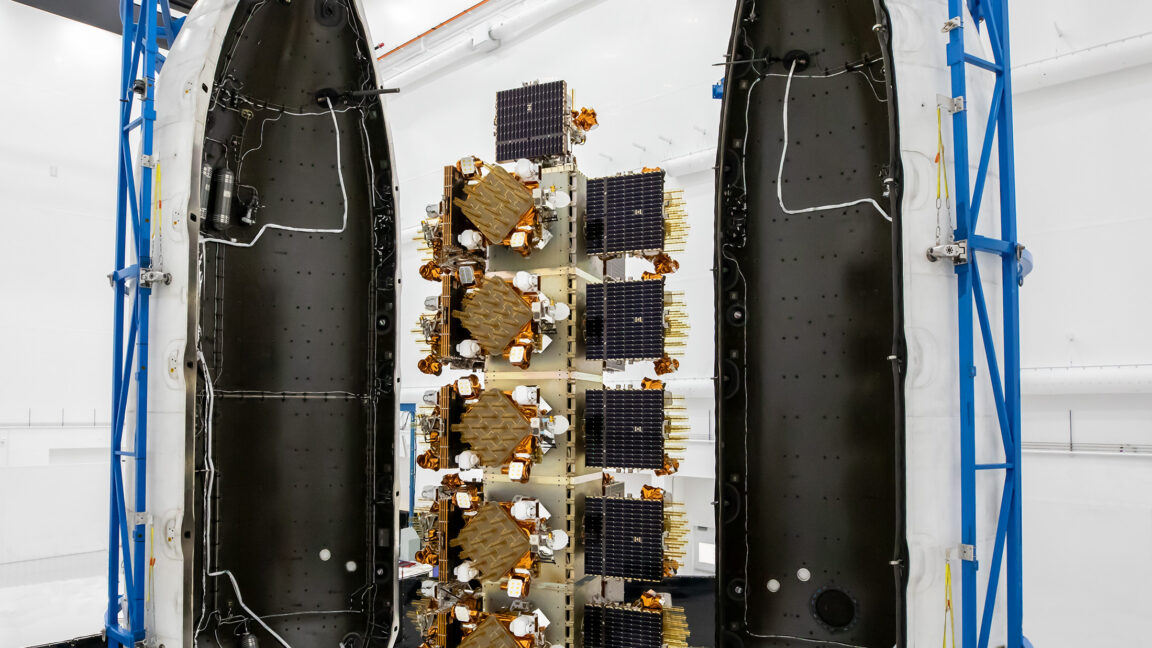
SDA started launching prototype tracking and data transport satellites in 2023 and launched its first two batches of transport satellites last year. The third group of data transport satellites launched Thursday on a SpaceX Falcon 9 rocket from Vandenberg Space Force Base, California, bringing the total number of transport satellites launched in Tranche 1 to 63.
“This launch continues to expand warfighting capability to deliver persistent tactical satellite communication for the warning and tracking of advanced missile threats,” said Gurpartap “GP” Sandhoo, director of the Space Development Agency, in a statement. Sandhoo also serves as the Space Force’s portfolio acquisition executive for missile warning and tracking, which would keep him in charge of much of the SDA’s mission after the agency’s dissolution.
“The deployment of Tranche 1’s proliferated capability will soon deliver continuous overwatch—neutralizing any first-mover advantage by delivering data to warfighters around the world, nearly instantaneously,” Sandhoo said.
Thursday’s launch marked the resumption of SDA satellite deployments after standing down for nine months due to issues with the spacecraft on the first two Tranche 1 launches last September and October. Those launches were successful, but ground teams ran into problems activating and commissioning satellites made by York Space Systems and Lockheed Martin.
If all the Tranche 1 satellites had launched as originally scheduled, the constellation’s enhanced missile warning capability might have been available to military commanders today. That might have proven useful for US and allied forces to counter Iranian ballistic missiles launched during the current war in the Middle East.
“That’s what I think the nation needs right now, to face the threat that we are in,” Sandhoo said. “If you see what’s going on, I wish we were on orbit and supporting this mission right now because, literally, missiles are being launched at the joint force every single day in [Operation] Epic Fury.
“We are where we are,” Sandhoo said. “But we are doing everything we can to solve these technical challenges to get these systems on orbit, so we can deliver these capabilities.”
In all, SDA’s Tranche 1 constellation will number 154 operational satellites when complete. Tranche 2, set to begin launching next year, will include more than 250 transport and tracking satellites supplied by six manufacturers. SDA has ordered 108 satellites in the Tranche 3 tracking layer due to start launching in 2028.
The transport layer will end after Tranche 3. It will be superseded by the Space Force’s Space Network. The Space Force announced in May that it selected SpaceX to build the SDN “backbone” using technology originally developed for SpaceX’s Starlink broadband constellation. SDA’s transport satellites will fold into the Space Data Network to work alongside SpaceX’s satellites, Sandhoo said.