
Development
Like a cheat code for your car: We investigate ECU tuning
July 10, 2026 Development Source: Ars Technica
Share this article



In the early 2000s, APR went further with its Enhanced Modular Chipping System, or EMCS.
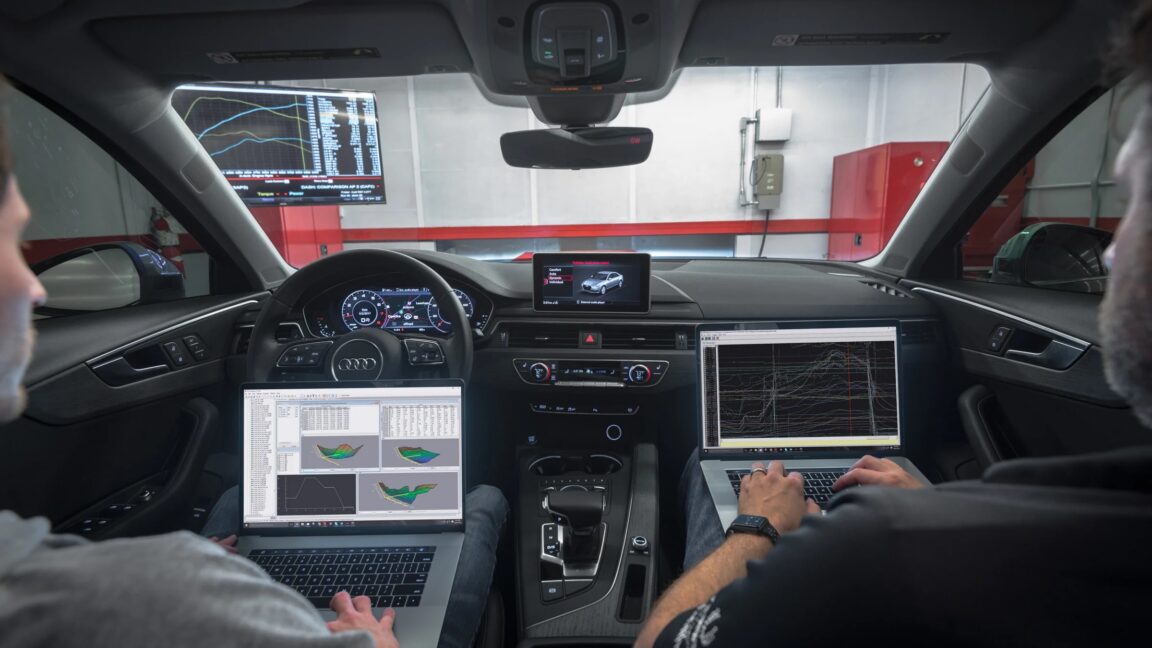
When APR and other tuners are working on a new tune, there are so many unknowns that require extensive poking and prodding. “I can’t even roadmap how many layers of security we have to break through, let alone how long it’s going to take to break through,” said Gorton. “Up until the day it’s released, we honestly don’t know how long we have until it’s ready because there are so many unknowns.”
The process is tedious, to say the least.
It can even brick the ECU. As Harvey noted with a chuckle, APR ends up making a lot of “$1,800 lawn ornaments.” He also clarified that the company often holds on to them, as they could potentially be recovered and used for future R&D.
Despite the growing complexity of ECU tuning, it has brought some advantages to motorsports. The first year APR fielded a race team in the Grand-Am KONI Challenge Series (IMSA’s Michelin Pilot Challenge is the modern equivalent), it had a calibration engineer present at every event. “If he needed to, he could make a change to the file in the car to meet the conditions,” Gorton said.
In the second year, the company began adjusting the boost levels. Because of how complex modern ECUs are, you can’t just add a manual boost controller anymore since the system is constantly monitoring conditions and will respond by triggering errors or going into limp mode.
Of course, the first time this push-to-pass function was used, it raised some eyebrows. At one event, “I was faster than the GS [meaning, the fastest class] cars,” Baas shared with a laugh. “We were fastest overall in one [practice] session.”
As technology advances, new models arrive, and new powertrains—including hybridized ones—enter the market, giving tuners more software than ever to dig into and modify. But not before breaking through the constantly evolving security measures that OEMs implement.
And even when automakers use the same hardware, each approaches security in its own way. BMWs were once easy to break into and tune, but once that changed, it took tuners a long time to regain entry. The same is true for Ford, which has recently begun implementing more robust security measures. APR’s sister companies under the Holley umbrella have run into the same problems, and while APR can share general approaches to cracking, it can’t provide specifics since the process varies so much by manufacturer.
During our chat, the team understandably couldn’t share details of what’s next. But as Gorton put it, “You gotta keep pushing the envelope. You can’t just sit back and do what you’ve been doing and expect the business to keep growing.”