
Development
Is an air-conditioning revolution coming to Europe?
July 10, 2026 Development Source: Ars Technica
Share this article



“We will need more cooling to protect people”, says Miranda, a senior lecturer in engineering and carbon reduction manager at the university. “The question is how to provide it in a way that is efficient, equitable, and smart. Not by panic-buying inefficient, energy-intensive portable ACs.”
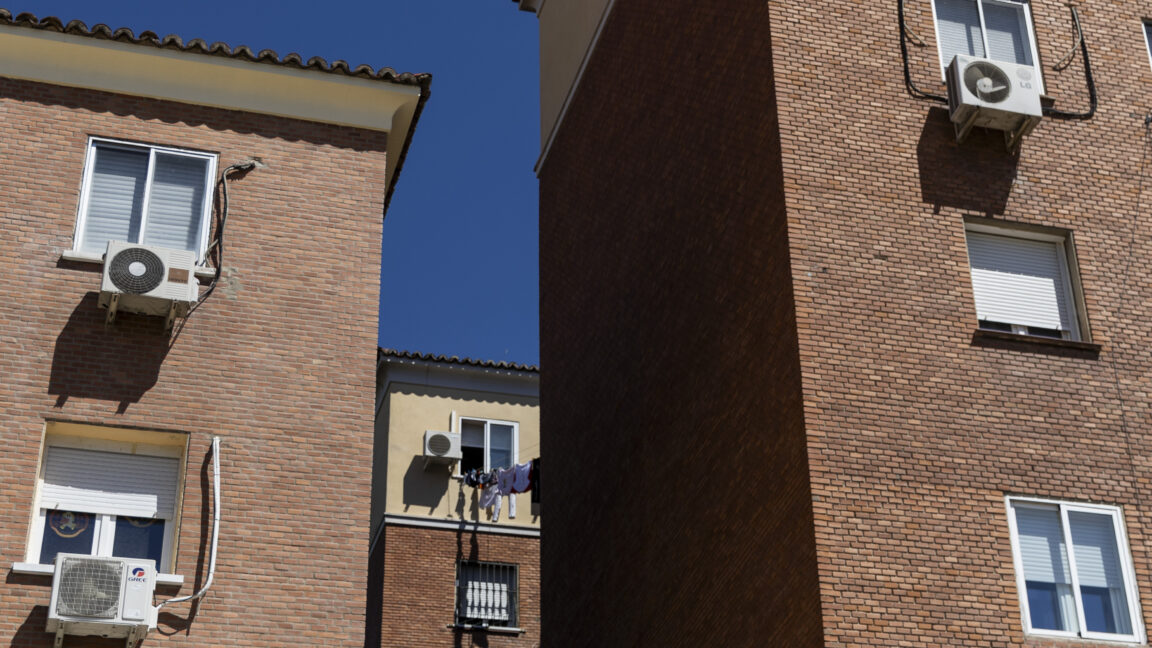
June’s record-breaking heat wave offered a glimpse of what lies ahead. In northern Europe, homes and offices built to retain heat during long winters turned into ovens. A recent report by the UK’s Climate Change Committee warns that by mid-century, over 90 percent of existing homes could overheat during severe heat waves. Even further south, centuries-old architectural adaptations—such as thick stone walls, white-painted façades, blinds and small windows designed to block the sun—are reaching their limits. People in Europe are already fed up with the extreme heat.
But simply adding more air-conditioning is not necessarily the answer—at least not in its current form. Because air-conditioning is built on a paradox: The machines that keep us cool are also heating the planet. The electricity they consume already accounts for roughly 3 percent of global greenhouse gas emissions, slightly more than the aviation industry. “We expect cooling to become one of the biggest drivers of electricity demand growth worldwide, along with data centers,” says Fabian Voswinkel, an energy-efficiency policy analyst at the IEA. With new units being installed worldwide every minute, electricity demand for space cooling could more than triple by 2050.
Solar power will help cut emissions, but it won’t clear air-conditioning’s bad reputation. Conventional ACs still run on a century-old principle: refrigerants cycle between liquid and gas to pull heat out of rooms and dump it outside. Manufacturers continue to refine the technology, but many of the refrigerants remain problematic. Fluorinated gases, for instance, have a global warming potential thousands of times greater than CO2 if they leak into the atmosphere. The EU therefore introduced a regulation in 2024 to phase them out gradually. “In the next few years, air conditioners and heat pumps using these gases won’t even be able to be sold here”, says Voswinkel. But alternative gases bring their own trade-offs: Propane is highly flammable, while ammonia is toxic.
This impasse has led some scientists and companies back to the drawing board to ask: Instead of searching for a better refrigerant, what if air-conditioning systems didn’t need one at all? Their answer lies in materials that change temperature when exposed to external forces—a field known as solid-state cooling, which could revolutionize how we cool the air around us.
Lindsay Rasmussen sees the same potential. At Third Derivative, a climate-tech accelerator founded by the US nonprofit Rocky Mountain Institute, she works with startups such as Mimic Systems and Magnotherm on next-generation cooling. She stresses that solid-state cooling technologies are still in their early stages—promising, but unproven at scale. But “the space can move quickly if the right capital and partnerships are in place.”
The real question is not just whether these new technologies will work, but who will scale them and how quickly. History suggests the path won’t be linear, nor will it necessarily stay in Europe. Solar photovoltaics, for instance, began with research breakthroughs in Europe, moved into commercialization in the US, and ultimately scaled in Asia through vertically integrated supply chains. Solid-state cooling could follow a similar trajectory. As Rasmussen explains, innovations typically leave the lab and startups once they become commercially viable and are picked up by major manufacturers. Today’s cooling market is already dominated by multinational conglomerates such as Daikin and Samsung, which closely track emerging technologies and are ready to move quickly.
As the world rushes to cool itself, one reality risks getting lost: Installing more air conditioners will not, on its own, solve Europe’s overheating problem. Many of its cities trap heat in tightly packed buildings and concrete streets, and the challenge is how to cool them without compromising the aesthetics that make them so distinctive.
Both University of Oxford researcher Miranda and IEA analyst Voswinkel call for a “cooling hierarchy”: The priority should be preventing buildings from overheating in the first place—through trees, shade, reflective materials, and natural ventilation. Active cooling should come later, focused on the places that need it most, such as schools, hospital wards, and care homes. From Paris, where he is based, Voswinkel points to one efficient example: Ahead of the 2024 Summer Olympics, the city expanded its district heating network to also distribute chilled river water through underground pipelines, cooling public buildings. “I think that these heat waves are making more and more policymakers realize that we have to face this new reality and make good plans,” he says.
This story originally appeared at wired.com.