
Development
Flores Hobbits' eating habits offer clues about their evolutionary past
July 10, 2026 Development Source: Ars Technica
Share this article



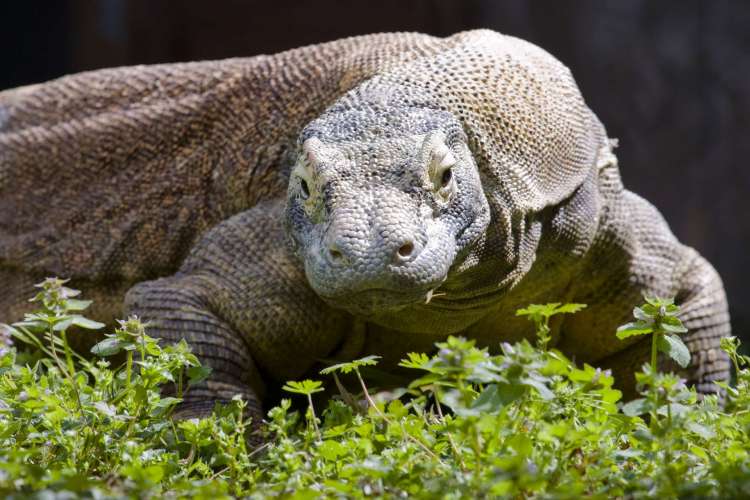
Stone tool marks, on the other hand, showed up on the less desirable parts. The pattern didn’t match what you would expect if hominins had first dibs on an elephant they’d just killed, but it did match what you’d expect if they were scrounging for leftovers after the Komodo dragons had eaten their fill. Veatch and her colleagues also found no evidence of fire in the Homo floresiensis layers of the site, which means they probably ate their leftover elephant bits raw. (At least one source claims that elephant meat can be tough to chew if it’s cooked over an open fire, so maybe the Hobbits were onto something.)
That challenges the earlier idea that Homo floresiensis organized and equipped themselves well enough to bring down something as large as a Stegodon. And it may add an interesting angle to an ongoing debate about where Homo floresiensis came from and which hominins were the first to migrate out of Africa. That debate has implications not only for understanding the Hobbits, but for how we make sense of 2-million-year-old stone tools at sites in China.
Stone tools from two sites in China seem to be older than Homo erectus. At Shangchen, a site on the southern edge of China’s Loess Plateau, archaeologists unearthed stone tools from a 2.1-million-year-old layer of sediment. And at the Xihoudu site in northern China, stone tools date to 2.43 million years ago. So either Homo erectus is older than we thought, or some other hominin species got there first. If that’s the case, then an even older member of our genus, like Homo habilis or Homo rudolfensis—species that anthropologists previously surmised weren’t adaptable enough to gain footholds in so many different parts of the world—may be the real ancestor of the Hobbits.
Veatch and her colleagues’ study, along with several previous studies of Homo floresiensis‘ anatomy and behavior, may lend some support to that idea.
On the other hand, despite having a smaller brain than Homo erectus (even relative to its body size), the contours of the inside of Homo floresiensis‘s skull suggest that its prefrontal cortex—an area of the brain associated with cognitive feats like planning and executive function—may have been fairly similar in size and structure to ours.
And it’s hard to say whether hunting Stegodon is a good measure of the Hobbits’ intellectual prowess anyway. Wielding projectile weapons, strategizing group hunts, and bringing down big prey all point to well-developed cognitive abilities (exactly the kind suggested by that hefty prefrontal cortex, in fact), and so does using fire to cook the meat afterward. However, hunting pygmy elephants may simply not have been worth the effort, even for a species that was otherwise capable of doing it.
When you calculate the cost, in time and energy, of killing, butchering, and transporting a carcass (which Veatch and her colleagues did, based on ethnographic data from people who live near modern elephants), elephants just aren’t worth the effort, let alone the risk.
“Although Homo floresiensis could gain a large total calorie return by successfully hunting Stegodon, the costs involved could potentially outweigh any social and/or caloric advantages,” Veatch and her colleagues suggest. Giant rats offered a much better return on investment; they rank ninth on Veatch and her colleagues’ list of Flores most appealing prey species, with Stegodon clocking in at 17th. And that’s probably why giant rat remains are so abundant at Liang Bua, in the layers of the cave associated with Homo floresiensis and the later Homo sapiens layers.
Even though it’s now clear that the Hobbits were not big-game hunters, and it doesn’t look like they used fire at Liang Bua, it’s much less clear what those facts tell us about the Hobbits’ brains or which branch of our family tree they actually belong on. As always, we need more evidence to fill in the details.