
Development
Ocean rift zone saw spreading happen in a sudden burst
July 8, 2026 Development Source: Ars Technica
Share this article



Now, over a century after that, the French government maintains research stations on the islands and sporadically sends ships to maintain equipment, deliver and return scientists for seasonal fieldwork, and perform supply and maintenance duties. The team behind the new work took advantage of one of these ships to deploy a series of underwater monitoring stations along the spreading zone. These included hydrophones that could provide rough locations of seismic events, and transmitters that allowed them to track any changes in the distance between monitoring sites. Latter visits from the French supply ships performed three-dimensional mapping of the seafloor in the area to determine the outcome of any events that were detected.
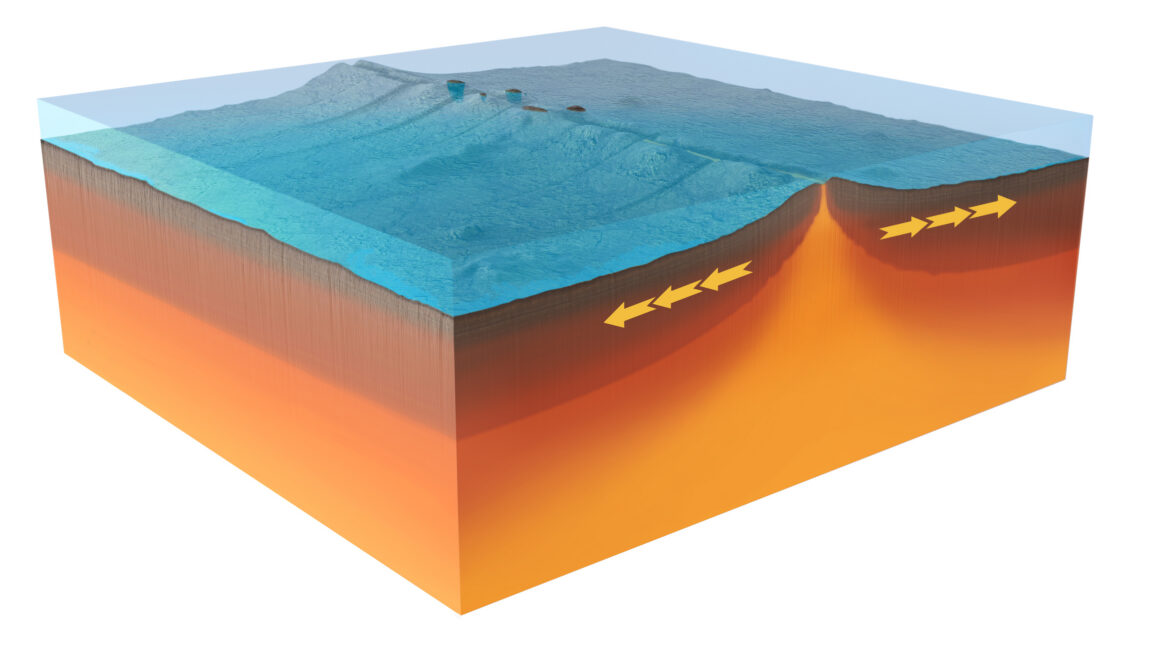
Earlier study of the region had shown that the spreading in the area occurs at an average rate of a bit over 60 millimeters a year. That occurs along a very typical-looking site that has a roughly 2,000 meter depression at the location of spreading, flanked by a series of rugged ridges.
All of the hardware was in place when the fault it was on rumbled to life in April 2024. The first cluster of events occurred progressively farther south along the main spreading area, with the last of them over 8 kilometers south of the first. That was followed by a series of events that moved to the north, this time extending out over a distance of 9 kilometers. The researchers say that this sort of activity is typical of the formation of dykes, thin but long and tall structures formed by the intrusion of molten rock.
At the same time that was going on, sensors located in the valley at the center of the spreading region started experiencing a drop. As the dyke events continued, the drop accelerated until the sensors were sinking at a rate of about 5 centimeters a minute before slowing. But subsidence continued well after the initial events, with a total of 4.2 meters over a six-day period.
The researchers interpret this as a magma reservoir beneath the ridge draining. Consistent with that, the temperature of the water at the nearby instruments started rising at the same time, suggesting that magma was interacting with the seawater.
That’s already a lot, but the list of events doesn’t end there. While all of this was going on, instruments on opposite sides of the central valley started moving farther apart, in some cases by well over a meter.