
Development
Katalyst's satellite rescue mission is now in pursuit of NASA's Swift
July 6, 2026 Development Source: Ars Technica
Share this article



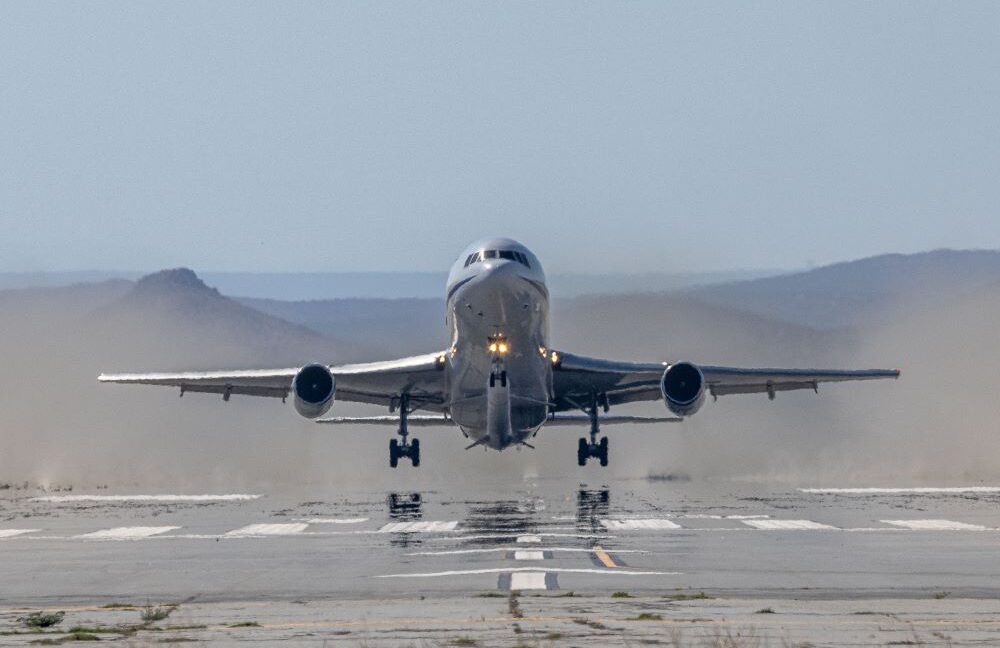
It took just shy of eight minutes for the Pegasus XL’s three solid-fueled motors to accelerate to orbital velocity. The rocket’s upper stage completed a preprogrammed sequence to deploy the Link satellite nearly 13 minutes after launch. NASA confirmed later Friday that ground teams from Katalyst established communications with the Link satellite, confirming the spacecraft survived the ride on Pegasus.
Katalyst selected the rarely used Pegasus rocket, which has flown just once in the last seven years, because the Swift rescue mission needed to launch into an unusually low-inclination orbit to reach its target. Swift’s orbit is inclined 20.6 degrees to the equator, and the Link satellite would have required a launch on an oversized, more expensive rocket to reach that orbit from a spaceport like Cape Canaveral, Florida. Launching from the equatorial Pacific solved that problem.
There are more trials ahead for Katalyst. The Swift rescue mission is the first time the company has flown this version of its Link satellite. In addition to the standard satellite systems required to generate power, maintain attitude control, and communicate with the ground, the Link spacecraft has cameras and sensors to guide itself toward Swift and three robotic arms to grab onto the observatory. Three plasma thrusters will propel Link and Swift to a higher orbit once Katalyst confirms a firm connection.
“Over the next several weeks, Katalyst will perform checkout procedures for Link, including assessments of its propulsion, sensor, and navigation systems,” NASA said in a statement. “Link will then approach Swift and complete a survey of the 21-year-old observatory, before capturing and lifting it over the course of several months.”
But Swift was never designed to meet up with another spacecraft in orbit. Engineers are unsure of the condition of Swift’s thermal insulation, and ground controllers will take a cautious approach to determining where and when Link’s robotic arms can capture the satellite. Officials from NASA and Katalyst acknowledge the unknowns.
NASA has a clear interest in saving the Swift mission. The $500 million observatory’s primary mission is detecting gamma-ray bursts, the most powerful explosions in the known Universe. Despite its age, astrophysicists still rely on Swift’s multi-wavelength instruments to identify and locate gamma-ray bursts for follow-up observations by other observatories.
But part of the reason for launching a rescue mission to Swift is simply to see if it can be done. NASA launched Space Shuttles to service and upgrade the Hubble Space Telescope, but those missions required hands-on work from spacewalking astronauts. A safer, cheaper robotic servicing platform would have a broader set of applications.
“This is a historic mission,” said Robert Lamontagne, vice president of strategic partnerships at Katalyst. “Some would call it the first of its kind, a robotic spacecraft that can go and capture an unprepared satellite. It’s a commercial mission, first and foremost. It’s doing an operational, real-world objective. It’s not just a demonstration. We’re doing this as a service.
“At Katalyst, we are very passionate about the idea of dynamic space operations,” Lamontagne said. “What I mean by that is, for years and years, folks have thought about space as something where you build a satellite, you launch a satellite, it does its mission, and at the end of the mission, it gets disposed of, either it re-enters, or it goes to a graveyard orbit. That’s a throwaway type of model.
“We think the spacecraft operator should no longer be constrained by the silly decisions that we made before launch,” he said. “You should be able to refuel, reposition, repurpose, repair, and even upgrade satellites, even if they were never prepared for it, and that’s where Katalyst is trying to change everyone’s mindset.”