
Development
Rocket Report: Indian startup nears first launch; SpaceX's millenary milestone
July 3, 2026 Development Source: Ars Technica
Share this article



NASA taps Rocket Lab for three launches. NASA has selected Rocket Lab to launch a pair of science missions on three Electron rockets in 2027, Space News reports. One of the missions is the Polarized Submillimeter Ice-cloud Radiometer, or PolSIR, which consists of two suitcase-sized satellites to measure the rise and fall of ice crystals in tropical clouds. The PolSIR satellites will launch on back-to-back Electron rockets from Rocket Lab’s spaceport in New Zealand no earlier than June 2027.
Going solo... The other launch NASA awarded to Rocket Lab is for the Total and Spectral Solar Irradiance Sensor-2, or TSIS-2, mission set to fly from New Zealand in early 2027. The TSIS-2 spacecraft will be the successor to TSIS-1, an instrument mounted on the outside of the International Space Station to measure the amount of solar energy entering the Earth’s atmosphere. NASA decided to build a dedicated satellite for TSIS-2 and launch it on a rideshare mission on a SpaceX Falcon 9 rocket. Now, TSIS-2 will also get a dedicated ride to space with Rocket Lab.
Isar Aerospace announces all-German mission. Planet Labs is placing a bet on startup Isar Aerospace, signing up to launch at least one of its satellites on the Spectrum rocket that has yet to make orbit, Aviation Week & Space Technology reports. The launch from northern Norway could come as early as this year, Isar Aerospace said in an announcement Thursday. It would involve one of Planet’s Pelican high-resolution Earth observation satellites assembled in the US-based company’s new Berlin manufacturing facility. “With both satellite and rocket being built in Germany, this launch will be a national first for the country, demonstrating rapid advancements in the nation’s sovereign space capabilities,” Isar said in a statement.
How about that next launch?... Isar has not provided any update on the next test flight of its Spectrum rocket, which has missed several opportunities to launch since January. Officials scrubbed the most recent launch attempt June 15 after “detecting off nominal behavior in the vehicle’s fluid systems.” This mission will attempt to place a batch of CubeSats into orbit after lifting off from Andøya Spaceport in Norway. The first Spectrum launch failed in March 2025.
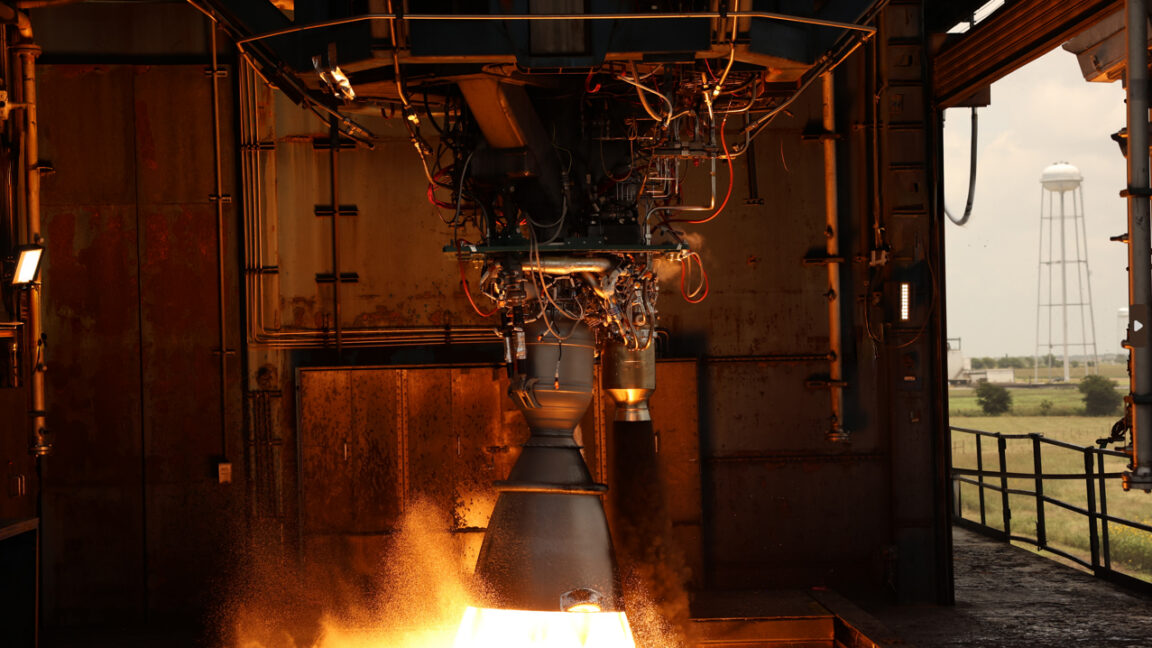
Refurbishment over production… The production of 1,000 Merlin 1D engines is a remarkable milestone for any rocket engine, but it’s important to note that the Merlin 1D is reusable. The Merlin 1D has logged more than 6,000 engine flights with 1,000 units. “With Falcon’s reusability, recovering these engines has enabled continued reliability enhancements, making Merlin one of the most reliable rocket engines ever manufactured,” SpaceX wrote on X. Another highly reliable, but single-use, rocket engine with similar thrust is Russia’s RD-107/108. Five of those have powered each variant of Russia’s R-7 rocket family since the 1950s, a legacy now carried on by the Soyuz launch vehicle. With more than 2,000 flights by Soyuz and its kin, that amounts to more than 10,000 RD-107 and 108 engines produced at a plant in Samara, Russia.
SpaceX launches rare GEO mission. A SpaceX Falcon 9 rocket launched Sunday carrying a multi-ton radio broadcasting satellite for SiriusXM to replace two aging satellites in geostationary Earth orbit, Spaceflight Now reports. The SXM-11 satellite is a behemoth as far as spacecraft go, with a launch mass of about roughly 7 metric tons (15,000 pounds). The satellite is destined for a position over the equator at an altitude of more than 22,000 miles (nearly 36,000 kilometers), where its velocity will match the Earth’s rotation to provide continuous radio broadcast coverage over the United States.
Still in business… Of SpaceX’s 78 launches of the Falcon 9 and Falcon Heavy this year, this was just the third carrying a payload heading for geostationary orbit, once the preferred destination for nearly all commercial communications satellites. Today, the trend is decidedly bending toward low-Earth orbit with megaconstellations like Starlink. But SiriusXM remains in business, as does the manufacturer of the SXM-11 satellite: Lanteris Space Systems, a subsidiary of Texas-based Intuitive Machines. The company, formerly branded as Maxar, was acquired by Intuitive Machines in January 2026 for about $800 million.