
Development
A space history mystery: What happened to the Viking arm used 50 years ago?
July 1, 2026 Development Source: Ars Technica
Share this article



“I can only add, let the experiment continue,” said Ford.
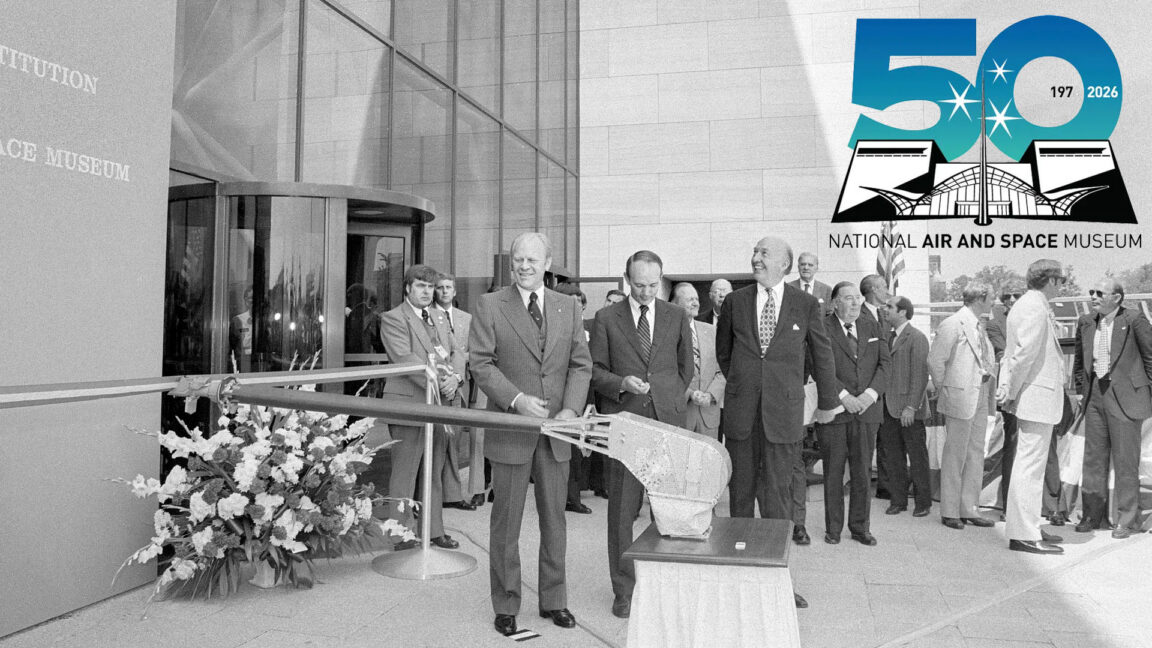
Everyone on the stage then moved over to the entranceway of the new building, the “Smithsonian Institution National Air and Space Museum,” as inscribed on a 12-foot-tall (4-meter) teal backdrop. Mounted atop the temporary wall were two sets of traffic lights, a pair of side-by-side green lights (currently off) and a set of red lights, now blinking.
Centered in front of the wall, about 11 feet (3.45 meters) away, was a small table draped in white cloth supporting a piece of NASA hardware. It may not have been clear to all of the ceremony’s guests and spectators, but mounted to a wood base sitting atop the table was the surface sampler arm from an engineering model of a Viking Mars lander.
A red, white, and blue ribbon was strung between the arm and the wall, passing through the center of the arm’s sampler end.
Part of the challenge was that the time of the opening kept changing. Originally, the museum was scheduled to open on July 4 as a birthday gift to the nation, but it was felt that it would compete with other bicentennial celebrations, and besides, the museum was ready to open.
It was not until a few years later (1979) that NASA donated the Viking that millions have since seen in the Boeing Milestones of Flight Gallery—the proof test article that was used on Earth during the Viking 1 and Viking 2 missions to gauge the probes’ behavior and to test their responses to radio commands.
The same model had earlier been used to verify that the landers could survive the stresses they would encounter during launch and landing. It is therefore unlikely, though not impossible, that NASA removed the arm from the test article in 1976 to be used in a ceremony.