
Development
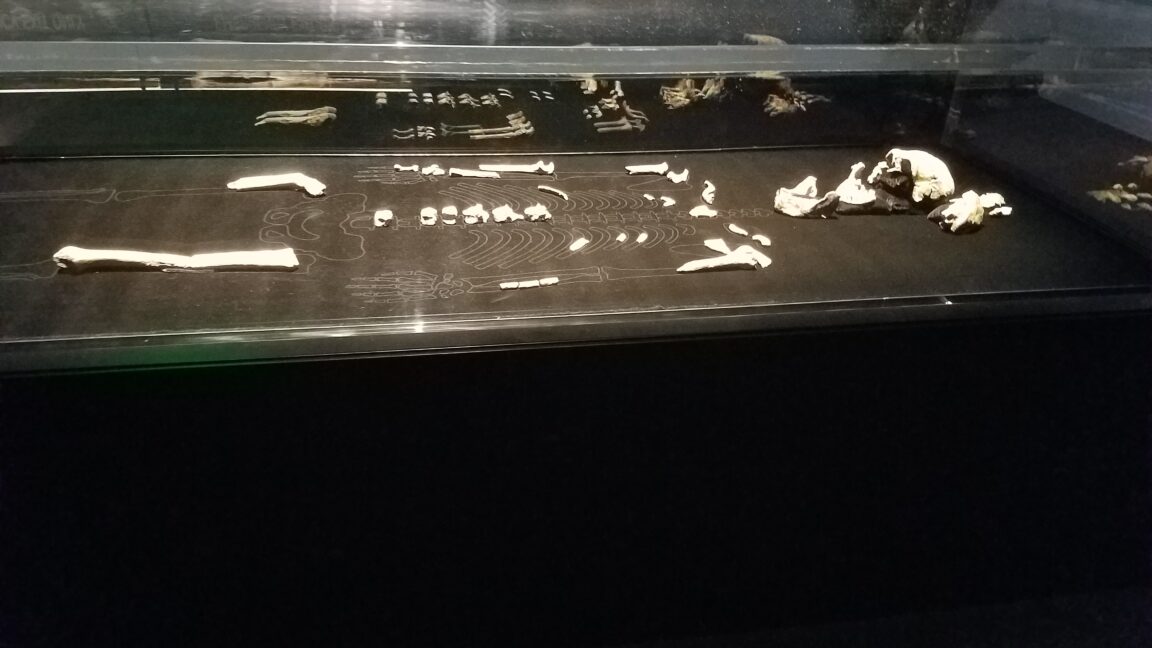
Every Homo naledi we know of is female, and the implications are fascinating
June 25, 2026 Development Source: Ars Technica
Share this article



“This was no longer chance, at this point,” Berger (also a co-author of the recent study) tells Ars Technica.
It’s technically possible that the code for AMELY just got deleted from the DNA; that happens sometimes in humans, and it has happened in at least one Neanderthal. But it’s extremely rare—so rare that it’s unlikely to explain what’s going on with Homo naledi. It’s much more likely that the dead hominins in Rising Star actually are all genetically female.
It’s not unusual to find mostly female groups of primates in nature: Chimpanzees and gorillas both live in groups where nearly all of the adults are female. Even so, the group inevitably includes children of both sexes. But even the babies in Rising Star are all female.
“It is rarely the case that we have such clear evidence of culture as this case is,” University of Wisconsin paleoanthropologist John Hawks, another co-author of the recent study, tells Ars Technica. “It’s like, there is no other process that can make this happen.”
It’s technically possible, perhaps, that Homo naledi divided up the work of hunting and gathering, or even some kind of ritual activity, in a way that meant females were the ones venturing deep into the cave and getting lost or trapped. But if they took the children with them, then we should see males among the tiny skeletons that make up half the sample. The most likely option now looks like Homo naledi buried its dead.
Berger and his colleagues have been arguing in favor of that point for years, but now there’s more: It also looks like Homo naledi, with its chimp-sized brain, even had a concept of gender as a part of an individual’s identity that mattered even in death.
Homo naledi’s face, hands, and legs look more like ours and other recent hominins, but its torso looks more like apes and earlier hominins called Australopithecines. It walked very much like us, but was also still built for spending more time in the trees than we do. And its brain is about the size of a chimpanzee’s, but it’s shaped and organized a lot like ours.
It turns out that five of the 20 Homo naledi in the study have a version of a particular protein in common with Paranthropus robustus, an even earlier hominin relative that lived between 2 million and 1 million years ago. And in 15 of the Homo naledi teeth, Madupe and her colleagues found another protein version that’s apparently unique to Homo naledi. That’s not quite enough to build a hominin family tree with, but it’s a tantalizing hint, and an indication that ancient proteins in teeth could reveal even more about extinct hominins.
University of Copenhagen paleoproteomics researcher Enrico Cappellini, also a co-author of the study, hopes the team will sequence proteins from other South African hominins, as well as species from Kenya, Tanzania, and Ethiopia in east Africa. That could reveal whether that protein variant is actually unique to Homo naledi; if so, it could be used to identify other fossils. And comparing the protein variants of Homo naledi to those in species like Homo erectus and Australopithecus africanus could help shed light on how all of these species are related.
“That’s the aspiration, to start to have molecular evidence that is rich enough to be informative for reconstruction of early hominin evolution in Africa and outside Africa,” Cappellini tells Ars Technica.
Getting that kind of evidence is going to require not just sampling more hominins from more species, but taking a risk on sampling that requires cutting deeper into fossil teeth. Dentin, the material inside teeth, contains more proteins than enamel, which means it might offer more answers—but at the cost of damaging rare and irreplaceable fossils.
“For now, we wanted to deliver these results and see the feedback from the scientific community,” says Cappellini. “Based on that, we will continue with further analysis.”
Some of that analysis may eventually include ancient DNA. Scientists have sequenced the genomes of our closest hominin relatives, Neanderthals and Denisovans, but the Homo naledi remains at Rising Star are older, and South Africa’s heat breaks down DNA faster and more thoroughly than where those other remains were found. A decade ago, Berger’s team tried sequencing Homo naledi DNA, but the material in the bones had broken down too much to get a sample. Since then, Hawks says, the team has unearthed other bones that might be better preserved, and sampling and sequencing technologies have also improved.
“We are assessing whether it’s now promising to do DNA sampling, and I am hopeful,” says Hawks. “I can’t yet predict what outcome we might get.”
“I do think that there are other fossils from other sites that we have previously ruled out as naledi, in some cases, because they’re bigger than naledi,” he says. “If the males are much larger, differently developed, we don’t know that we don’t already have a male that we haven’t recognized as Homo naledi, because we’re looking for something that looks much more like our small female sample.”
But the existence of culture in the hominins that preceded (and sometimes overlapped with) us isn’t really such an extraordinary claim anymore. That’s partly thanks to the evidence from other species like Neanderthals and partly thanks to other evidence at Rising Star that suggest that Homo naledi used fire, something that our species and Neanderthals were also doing by this point in prehistory. They even left behind engravings on the rock, which Berger, Hawks, and their colleagues described in a 2023 paper.
Those engravings in Rising Star stayed on Berger’s mind for months afterwards. “Those symbols weren’t meant for us. Whatever they’re meant for, it certainly wasn’t for a Homo sapiens,” he says. “They were meant either for them to come back to, their descendants to come back to, or some other purpose, but they weren’t meant for us.”