
Development
Report: Kennedy Space Center not ready for era of super heavy rockets
June 23, 2026 Development Source: Ars Technica
Share this article



NASA’s infrastructure at Kennedy Space Center, the crown jewel of US spaceports, is aging and approaching its limit due to increased demand from private companies, including SpaceX and Blue Origin, a new report finds.
“NASA’s launch infrastructure is vital to providing the agency, other government agencies, and commercial partners access to space for their most complex and expensive missions,” states the report, published by the NASA Office of Inspector General. “Nevertheless, NASA’s launch infrastructure is dated and often does not provide the capacity to meet the growing demands of the agency and its partners.”
The report covers NASA’s launch facilities at the Kennedy Space Center in Florida and Wallops Flight Facility in Virginia. However, the most noteworthy information in the report concerns the Florida spaceport, where demand from SpaceX’s Starship and Blue Origin’s New Glenn launch vehicles is expected to stress NASA.
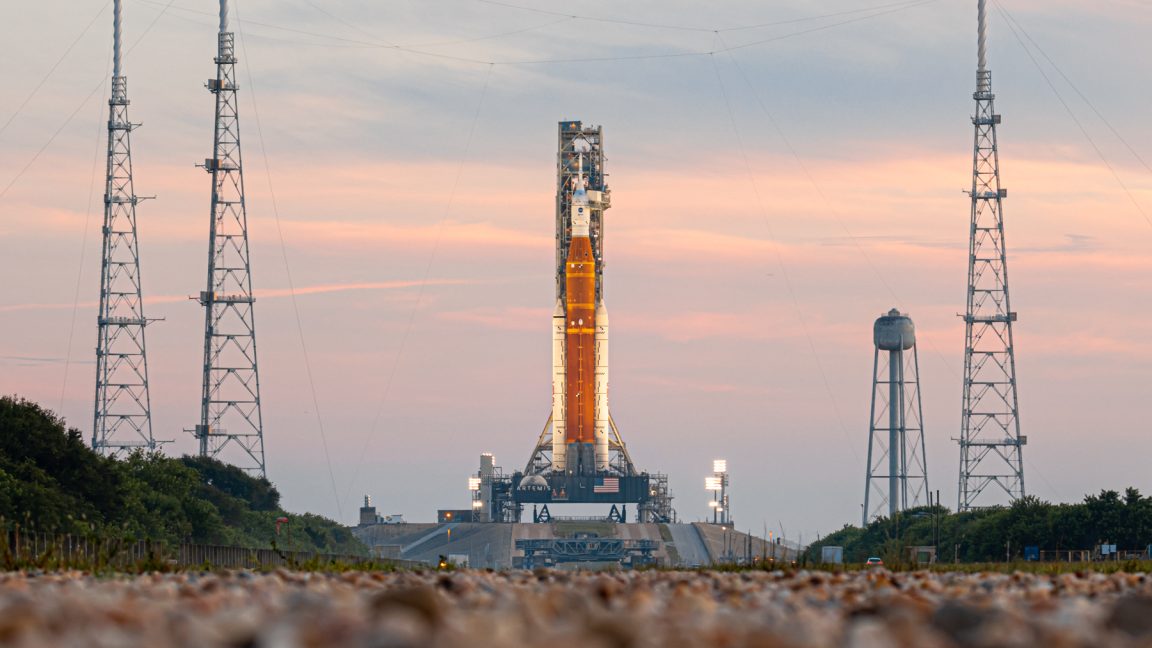
NASA only has a handful of launch pads at Kennedy. Launch Complex 39A is currently leased by SpaceX for Falcon 9 and Falcon Heavy launches, and also houses a new launch facility that will soon support Starship launches. Launch Complex 39B is home to NASA’s Space Launch System rocket, and Launch Complex 39C has not been used due to its proximity to this pad. Finally, NASA has built a 10-acre site, Launch Complex 48, that it may lease to small launch vehicle companies.
The space agency’s neighbor to the south, Cape Canaveral Space Force Station, has many more pads. This includes the Launch Complex 36A and 36B leased to Blue Origin for the New Glenn rocket.
Although the Space Force manages its own launch facilities, the military works closely with NASA and they share some responsibilities. Most critically, there are supply lines for helium and nitrogen, as well as 231 miles of paved roads and bridges that serve both Kennedy and Cape Canaveral. Additionally, the report cites serious concerns about a six-decade-old electricity distribution system for NASA’s launch pads.
SpaceX has told NASA it plans to launch Starship every eight days from Launch Complex 39A for the purposes of propellant depots in orbit. (The report states, in a footnote, that “at least” 15 Starships will be required to deliver propellant for a Starship lunar lander.) From all of its Florida pads, SpaceX estimates 120 annual Starship launches, and Blue Origin projects 120 annual launches of its super heavy-lift New Glenn rocket as well by 2035.
In addition, Blue Origin has expressed interest in a third New Glenn pad located north of NASA’s existing pads.
“Space for additional launch pads at Kennedy is also limited and may require extensive time and resources to develop a launch pad that can support super heavy-lift launch vehicles,” the report states. “While Kennedy officials identified a potential location north of LC 39A and LC 39B for a new super heavy-lift launch pad, the area is a protected wetland and would have to undergo lengthy and extensive federal and local review and approval processes.”
Despite aging infrastructure, since 2021, the budgets NASA uses to pay for construction projects and perform maintenance on launch-related infrastructure have decreased between 11 and 47 percent when adjusting for inflation, the inspector general found. Moreover, based on existing laws, it is difficult for NASA to accept contributions from commercial companies for large-scale, shared infrastructure projects.
The bottom line is that NASA’s launch facilities are aging and increasingly under high stress due to commercial activity. Those commercial launch activities, in terms of the largest and most impactful rockets, are only at the beginning of what is likely to be an exponential growth curve. And as the space agency faces tight deadlines in its space race with China, the budget for substantial repairs and upgrades is decreasing.