
Development
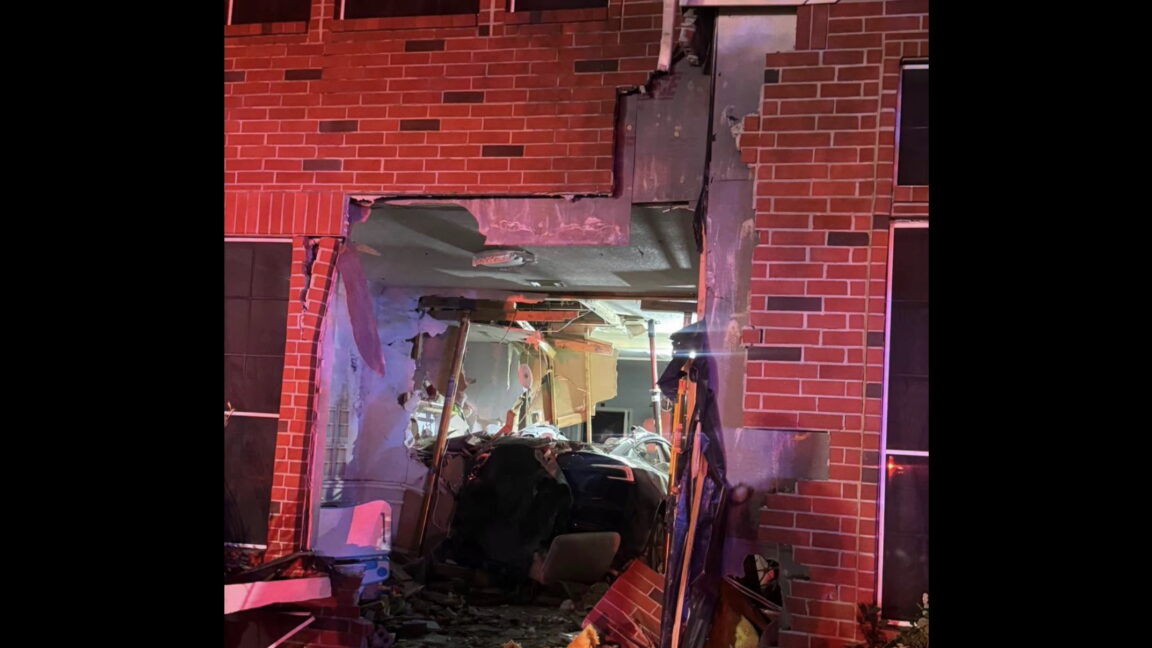
Doorbell cam filmed Tesla Autopilot crash that killed woman in her home
June 22, 2026 Development Source: Ars Technica
Share this article



Tesla did not immediately respond to Ars’ request to comment.
Tesla’s Autopilot feature is popular, but it cannot be fully trusted, with the owner’s manual reminding drivers that “they should keep their hands on the wheel and take over if anything goes wrong,” the Times noted.
However, Tesla’s marketing often sends a mixed message, critics think. As recently as May, Tesla’s X account posted an ad showing drivers with their hands off the wheel, goofing off while waving their fingers in the air or sipping a hot coffee from a ceramic mug with two hands. The day after Butler’s crash, the Tesla X account reposted a gushing comment from a Tesla fan who shared a pic of himself taking a photo of a sunset while driving. His caption claimed that Tesla’s technology “is both magical and life changing, relaxing and maybe even lifesaving!”
For years, Tesla has claimed that automated self-driving features will make roads safer by eliminating human errors that commonly cause crashes. And under the Trump administration, Tesla seems best positioned to rapidly advance its technology and get more cars on the road with fewer human controls and without regulatory delays.
Currently, the company is pushing for the National Highway Traffic Safety Administration (NHTSA) to relax two rules.
The other rule change follows similar logic: NHTSA proposed that AVs relying on ADS don’t need windshield wipers or defogging controls for humans to operate. As Tesla commented, “there is no safety need” because the ADS relies on cameras to operate, “not transparency of the windshield zones.”
If Tesla gets its way, NHTSA would approve that rule change not just for smaller vehicles but also for mid-sized and large SUVs. However, Advocates are recommending that NHTSA instead drop the rule change, since there are a “multitude of safety reasons” why it’s critical to ensure “passengers can observe their surroundings to exit or enter a vehicle during a routine operation.” Imagine if the car is involved in a serious crash or there’s a major obstruction in the road that passengers otherwise may not be able to see, Advocates suggested.
In both comments, Advocates emphasized that features like Tesla’s Autopilot remain “unproven,” while motor vehicle deaths remain “historically high.” Advocates urged NHTSA to consider that even a single fatality, such as Avila’s death, has a “horrific ripple effect forever changing the lives of children, parents, friends and communities.”
The group also took time to contradict claims from AV makers like Tesla, which often rely on a 2019 NHTSA study finding that 94 percent of car accidents are due to human error in order to suggest that AVs will make roads safer.
According to Advocates, these claims are “misleading” because NHTSA emphasized in that study that human error was documented as a “critical reason” linked to the crashes, but “it is not intended to be interpreted as the cause of the crash nor as the assignment of the fault to the driver, vehicle, or environment.”
“Many promises have been touted about AVs bringing reductions in motor vehicle crashes and resultant deaths and injuries, lowering traffic congestion and vehicle emissions, expanding mobility and accessibility, improving efficiency, and creating more equitable transportation options and opportunities,” Advocates said. “However, as auto industry leaders have acknowledged, these outcomes are far from certain.”
In 2023, Tesla recalled more than 2 million vehicles—every car with Autopilot—after regulators found the carmaker had not deployed the feature in a way that required drivers to remain attentive. That recall followed a 2021 NHTSA investigation into crashes and fatalities involving the technology.
Since then, Tesla CEO Elon Musk spearheaded the Department of Government Efficiency efforts that gutted NHTSA of staff with expertise in evaluating AV safety. Then, shortly after that team shrank, Tesla’s Full Self-Driving system (FSD) got worse. Alarming reports of Tesla FSD failing sparked a new NHTSA probe last October, which Tesla delayed responding to.
It’s unclear if the Texas crash will get Tesla into more hot water. NHTSA did not respond to Ars’ request for comment, but the agency appears more aligned with Musk on deregulating AVs.
In January, NHTSA Administrator Jonathan Morrison confirmed in a speech that the agency considers 2026 a “big” year for AV rulemaking. He said that NHTSA was moving fast to change the rules to pave the way for the future Tesla envisions, coming soon, where he expects human intervention won’t be needed “when they see things go weird.”
“I’m talking about vehicles that would never require human intervention—vehicles you can take a nap in,” Morrison said.
Morrison suggested the technology “is one of, if not the, most challenging engineering problems humanity has ever attempted” and acknowledged that it was “safety critical.” But he criticized the Biden administration for focusing too much on “enforcement against AV developers and safety research” and said that under the Trump administration, advancing American AVs would be a top priority.
“We’re not going to be shy when we see something that we believe presents a risk to the public,” Morrison said. “But the promise of this technology to society is far too great to ignore, or worse, discourage, or prohibit.”
According to Morrison, the “pathway” to this future requires prioritizing safety, while “moving with a sense of urgency” to remove “unnecessary regulatory barriers” and “enable the commercial deployment of AVs to enhance safety and mobility for the American public.”
“To be clear, this includes the commercial deployment of purpose-built AVs without traditional controls such as steering wheels or brake pedals,” Morrison said.