
Development
Screwworms in US: Human risk is low—but they can burrow through your skull
June 9, 2026 Development Source: Ars Technica
Share this article



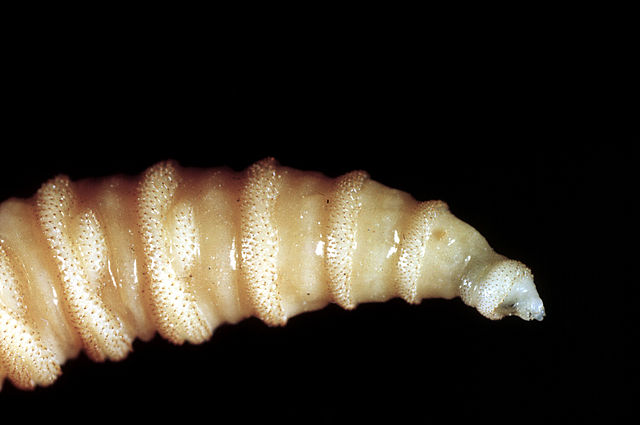
This sequence of events used to occur regularly in the US and Central America; screwworm was endemic here but was eradicated after a concerted, decades-long campaign to annihilate its populations. This was done using Sterile Fly Technique, which involves breeding millions of male flies in specialized facilities, sterilizing them with gamma radiation, then dropping them from the air like bombs. It works by exploiting the fact that females mate only once; if they do so with a sterile male, there will be no offspring, and the population will collapse.
The man was sent to an emergency department for wound care, where doctors found some more larvae. He was also diagnosed with two bacterial infections, Staphylococcus aureus and Pseudomonas aeruginosa. He was treated with antibiotics and creams and had healed by the time of his six-week follow-up.
In February 2024, a month after the man’s case, Costa Rica declared a national emergency over the screwworm resurgence. By October 10, 2024, the country had logged 8,671 animal cases and 33 human cases. Of those human cases, three died. The cases were said to be in people with significant underlying health conditions, including organ and immune system dysfunction, as well as debilitation.
At that point, Panama, to the south, had 18,553 animal and 79 human cases. And to the north, things were starting to pick up in Nicaragua, with 3,307 animal and two human cases. In Honduras, there were just 15 animal cases.
In March 2025, doctors in Canada reported that a resident in his 80s returned home from a trip to Costa Rica with myiasis. He had fallen during the trip, scraping up both knees and shins. While the wounds mostly seemed to heal, an ulcer formed on his right shin. He sought care while still in Costa Rica, and doctors there extracted 30–40 larvae. He then quickly returned to Canada. Back home, doctors noted a deep cavity had formed. They pulled at least 14 more larvae out and aggressively cleaned out the wound. (See a graphic image of the wound here.)
That same month, doctors in Chicago reported what might be the worst-case scenario. A 15-year-old girl developed a screwworm infestation in her head. The teen had a genetic skin condition that caused her to have chronic scalp lesions. When she returned home, she had an intense headache that wouldn’t go away and a 4.5-mm bulging, moving ulcer on the top of her head. When doctors smothered it in ointment, about 45 larvae crawled out. (A graphic image of the ulcer is here.)
Luckily, magnetic resonance imaging showed that the larvae hadn’t yet invaded her brain. Still, doctors removed the full thickness of her scalp in the region to ensure all larvae were removed. Her headache cleared, and she recovered fully.
Screwworm infestations “can be deadly, especially when involving the scalp,” the doctors wrote in their case report. “Larvae may burrow through the skull, dura [outer membrane around the brain], and into the brain, leading to an associated 8 percent mortality.” They called for physicians to remain vigilant, especially with scalp wounds.
If there is another case that could rival the horror of that scenario, it might be a case report from August 2025. Doctors in Honduras reported the case of a 55-year-old man who developed a screwworm infestation in his hemorrhoids. He was in such pain that doctors had to put him under general anesthesia to see what was going on, which required surgery. When the surgeons started removing the bulging, damaged tissue around his anus, they found 22 screwworm larvae.
The doctors attributed his infection to his occupational exposure as a septic tank worker. His “prolonged exposure to fecal sludge, poor hygiene, regular latrine use, and minor skin breaks,” as well as prolapsed hemorrhoids were risk factors in this case, they wrote. (We are not linking directly to an image of the surgical site, but an image of the 22 larvae extracted is here.)
The surgeons carefully dissected the area and extracted all larvae. They surgically removed his hemorrhoids and started him on antibiotics and the anti-parasitic drug ivermectin. Nearly two weeks later, his pain had resolved and his wound was healing well.
While these cases highlight the risks of wounds and vulnerabilities, many others show that the flies will happily infest in normal orifices, such as the ears and nose.
In March of this year, doctors in Ecuador reported the case of a 75-year-old man with epilepsy who developed a screwworm infestation in his mouth. The case was caught late, and he died eight hours after admission to a clinic, where more than 300 larvae were pulled from his gums, tongue, lower lip, and the roof of his mouth.
As the savage flies spread in the US, the Centers for Disease Control and Prevention urges people in areas where screwworms are spreading to prevent exposure by keeping wounds clean and covered, wearing insect repellent, covering up with loose clothing to block access, and avoiding sleeping outside, especially during the day.