World
BBC in Iran: 'Tehran does not think it has lost this war'
April 17, 2026 International Source: BBC World
Share this article



Lyse Doucet says Iranians want a solution to the long-running animosity with the US, but leaders is not willing to make a deal on Washington's terms.
Copyright current_year BBC. All rights reserved. The BBC is not responsible for the content of external sites. Read about our approach to external linking.
Copyright current_year BBC. All rights reserved. The BBC is not responsible for the content of external sites.
Read about our approach to external linking.
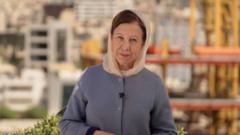
BBC's Lyse Doucet in Tehran wearing a blue top
BBC in Iran: 'Tehran does not think it has lost this war'
President Donald Trump has said that talks between the US and Iran to end the war could resume as early as this weekend, with Washington and Tehran "very close" to making a deal.
The BBC's chief international correspondent Lyse Doucet reports that whilst Iranians are keen to end the enmity with the US, leaders do not believe they have lost the war and are not willing to make a deal on Washington's terms.
Lyse Doucet is reporting from Tehran on condition that none of her material is used on the BBC's Persian Service. These restrictions apply to all international media organisations operating in Iran.
The BBC's Emma Simpson explains why fizzy drinks, salad and meat could be affected by the Gulf conflict.
While military targets have been struck in Iran, civilian areas have too, showing the stark reality of the war.
The BBC's chief international correspondent Lyse Doucet arrived in Tehran to what she described as 'life on pause'.
BBC’s Sarah Smith examines how the Iran war has led to discrepancies between the US president and UK prime minister.
BBC Security Correspondent Frank Gardner explains how the world's second-largest economy fits into the Gulf conflict.
BBC Verify has been looking into whether the US blockade of Iran near the Strait of Hormuz is working.
President Donald Trump said over the weekend that oil and gas prices "could be the same or maybe a little bit higher" in the coming months.
BBC foreign correspondent Nick Beake visits Metula, an Israeli town surrounded on three sides by Lebanon.
The BBC’s Michelle Fleury explains why oil, inflation and interest rates are key risks as the IMF warns war and soaring energy prices could hit the global economy.
BBC Middle East correspondent Hugo Bachega joins paramedics on duty in Nabatieh - a city that was once vibrant, but is now abandoned.
Some of the cheapest fuel in the country can be found on tribal land due to tax exemptions.
The BBC's security correspondent Frank Gardner explains how the US blockade of Iranian ports will work.
Trump attacked the first American leader of the Roman Catholic Church after he condemned the US president's threat against Iran.
President Donald Trump launched the attack on Pope Leo after the pontiff criticised the war in Iran.
The US vice-president made the announcement after 21 hours of negotiations in Islamabad, Pakistan.
BBC Middle East Correspondent Hugo Bachega hears from people affected by this week's attacks.
US President Donald Trump said the US had won a 'total and complete victory' after announcing a two-week ceasefire with Iran. The BBC's Ione Wells on what's next for the US and the region.
Pro-government demonstrators poured onto the streets of the Iranian capital after the announcement of the two-week conditional ceasefire between the US and Iran.
The BBC's Nick Marsh takes a look at whether fuel costs will get cheaper now the US and Iran have agreed a ceasefire.
More than one million people in Lebanon have been displaced since the start of the war as Israel expands its ground operation there.
The BBC's Orla Guerin travels to the edge of the critical waterway that Iran has put a stranglehold on.
BBC reports from the funerals of three journalists killed by a targeted attack in southern Lebanon.
The BBC's Hugo Bachega speaks to families in Beirut as more than a million people have been displaced in Lebanon.
Paul Adams explains why it is so dangerous to navigate the strait, one of the world's busiest oil shipping channels.
Violence began after a teenage settler was killed, reportedly after being hit by a vehicle driven by a Palestinian.
Israeli forces have been instructed to destroy the crossings over the Litani river that were being used by Hezbollah to send reinforcements.
The BBC's Sebastian Usher reports from Dimona in southern Israel, which was hit by an Iranian missile.
In footage from Russian state broadcaster RT, correspondent Steve Sweeney is seen diving off screen as a missile hits.
At least 10 people were killed and 27 injured, according to Lebanon's state-run National News Agency.
Iranians speak about life during the war with constant threat of bombs and regime crackdowns.
Ben Chu from BBC Verify has been looking at what role the Royal Navy could play in the Strait of Hormuz.
Displaced Palestinians were told to secure their tents to prevent them being blown away as a storm swept through the enclave.
Dan Johnson hears from Iranians at a crossing in north-west Iran about their thoughts on the war and regime.
BBC Verify explains how we verified a video of a fire at an oil depot in Iran.
The footage demonstrates the flow of ships passing through the Strait of Hormuz in the Gulf since the US-Israeli military offensive began against Iran on 27 February.
Trade at the Middle East's biggest port has been hit hard since Iran's blockade of the Strait of Hormuz began.
Foreign Secretary Yvette Cooper has hit back at President Trump's criticism of the UK response to the conflict in Iran.
Footage shows flames tearing through the building in the early hours of Sunday, following more attacks on the gulf state.
Social media footage shows flames leaping into the air and plumes of smoke above the city's skyline.